



? 研报客AI助手-AI报告总结
Global Energy and Climate Model Summary
Core Content
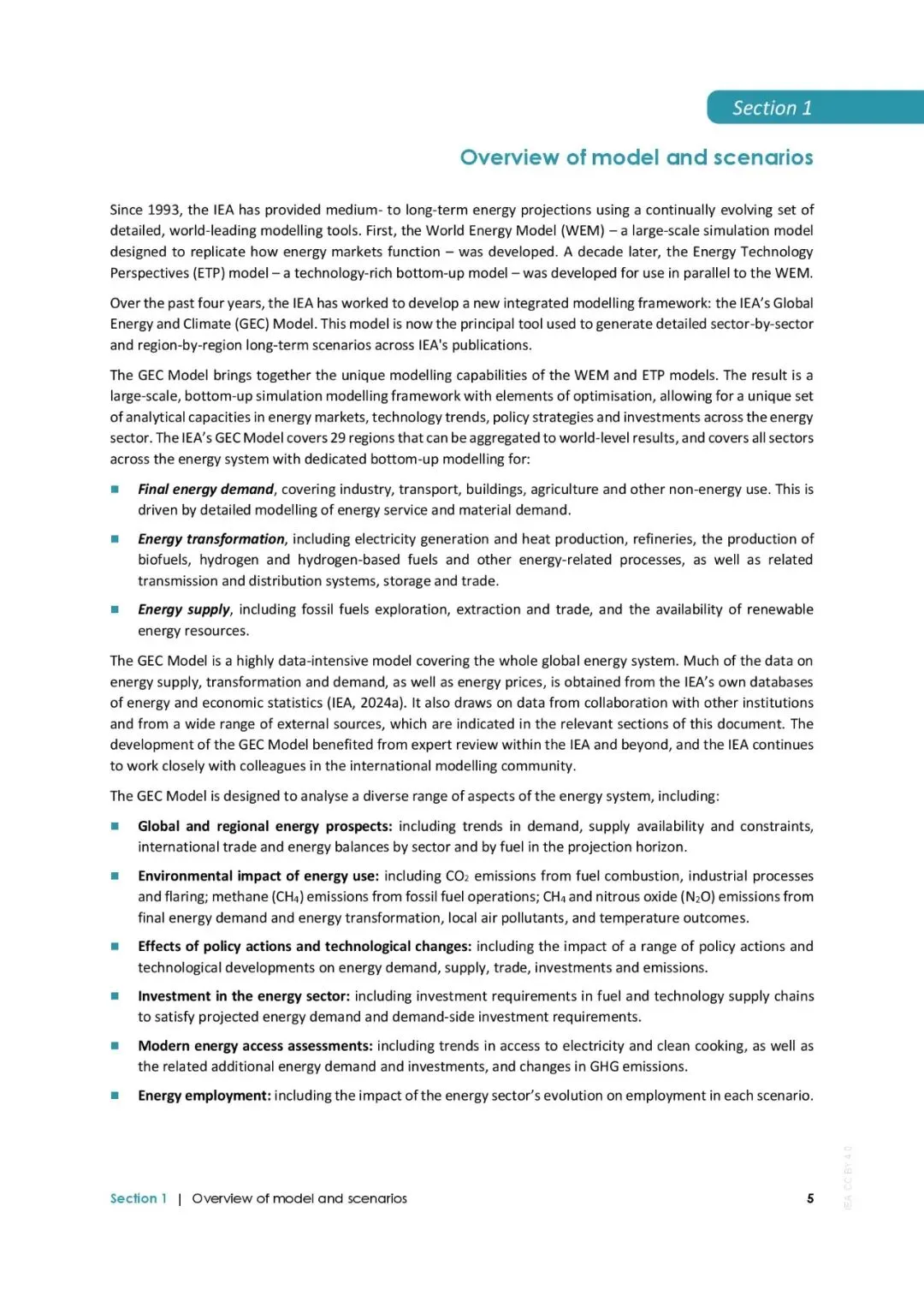
The Global Energy and Climate (GEC) Model is a comprehensive, integrated tool developed by the International Energy Agency (IEA) to generate detailed long-term energy scenarios. It combines the strengths of the World Energy Model (WEM) and Energy Technology Perspectives (ETP) models, offering a bottom-up simulation framework with elements of optimisation to assess energy markets, technology trends, policy strategies, and investment requirements across all energy sectors and regions.
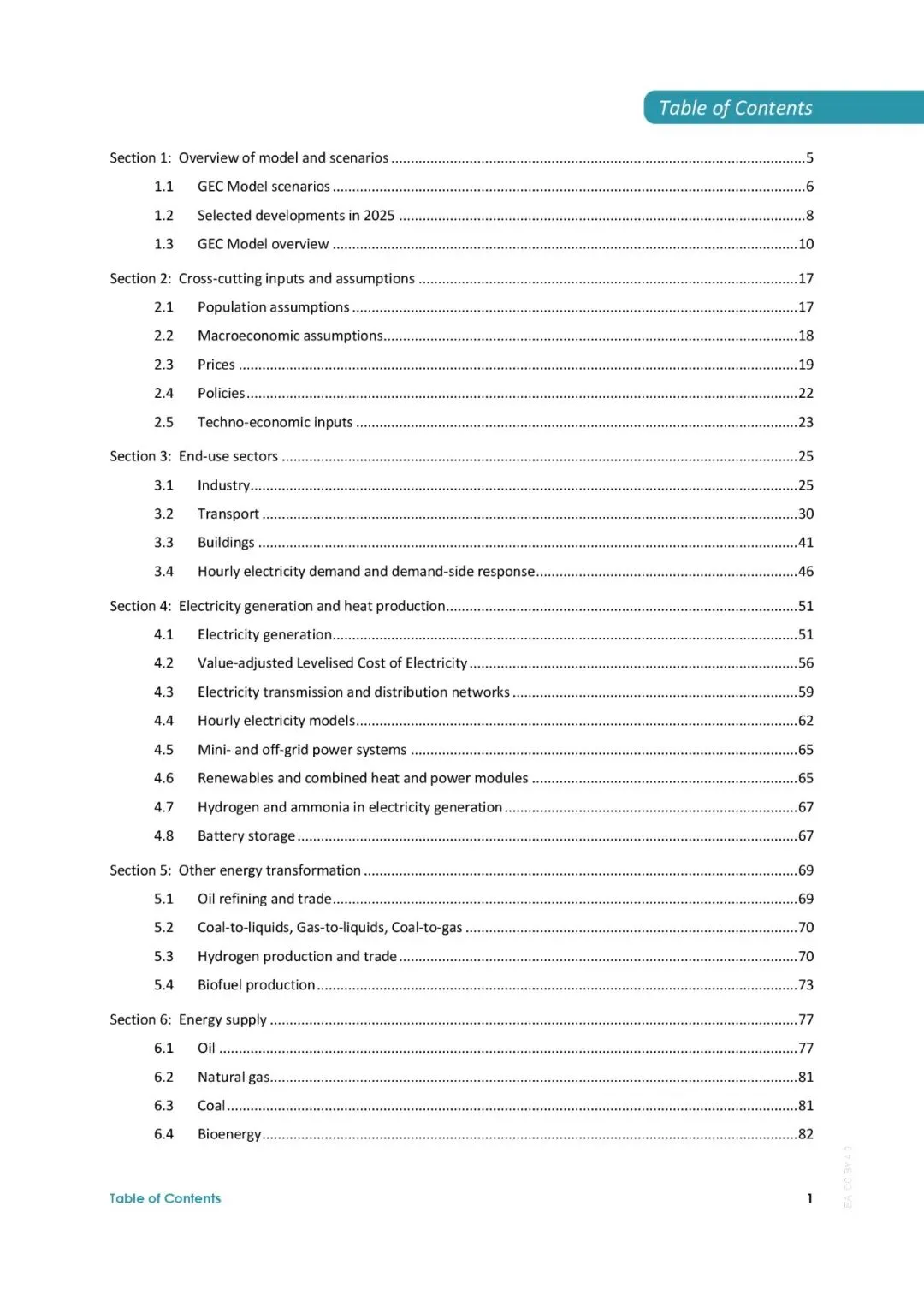
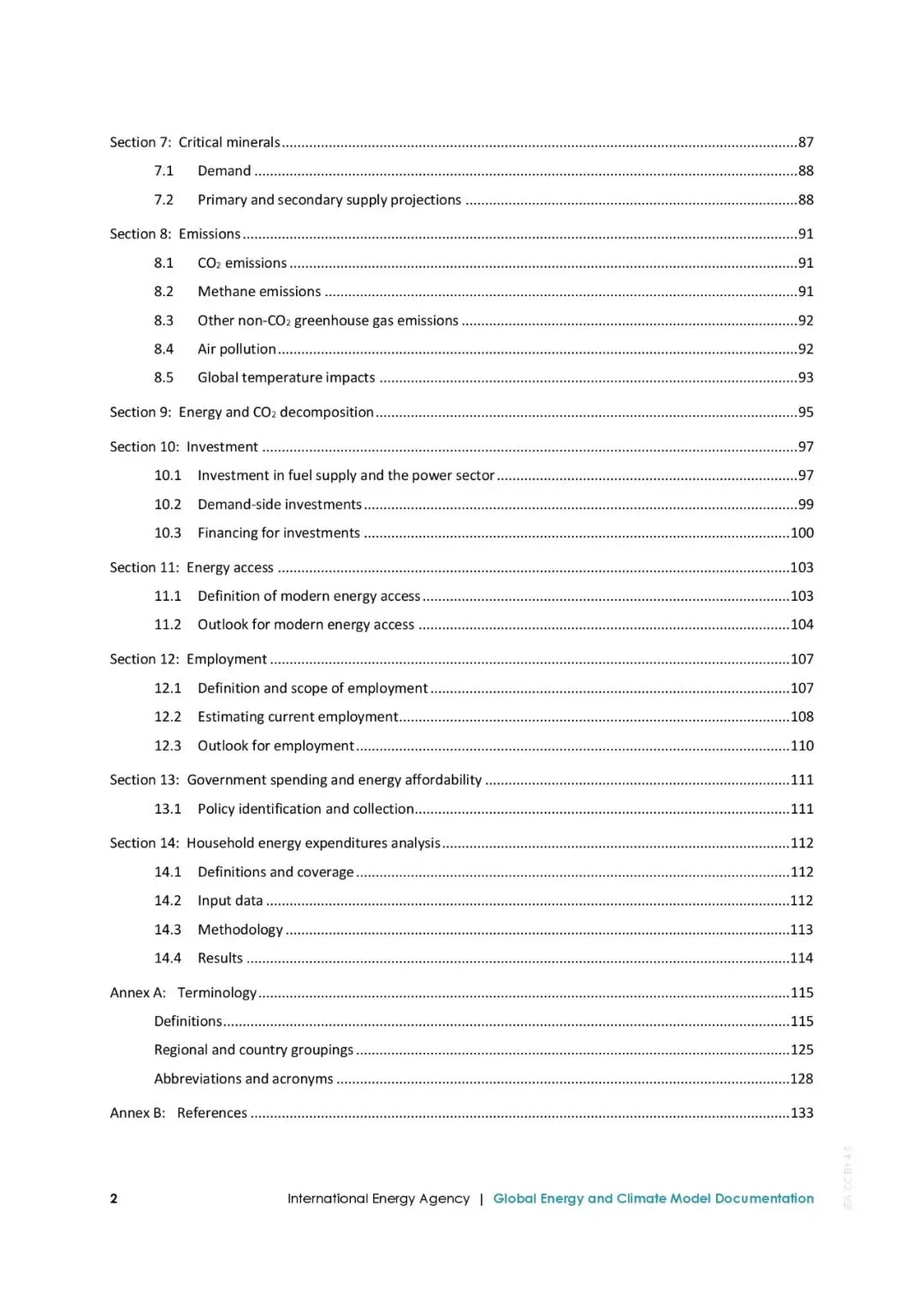
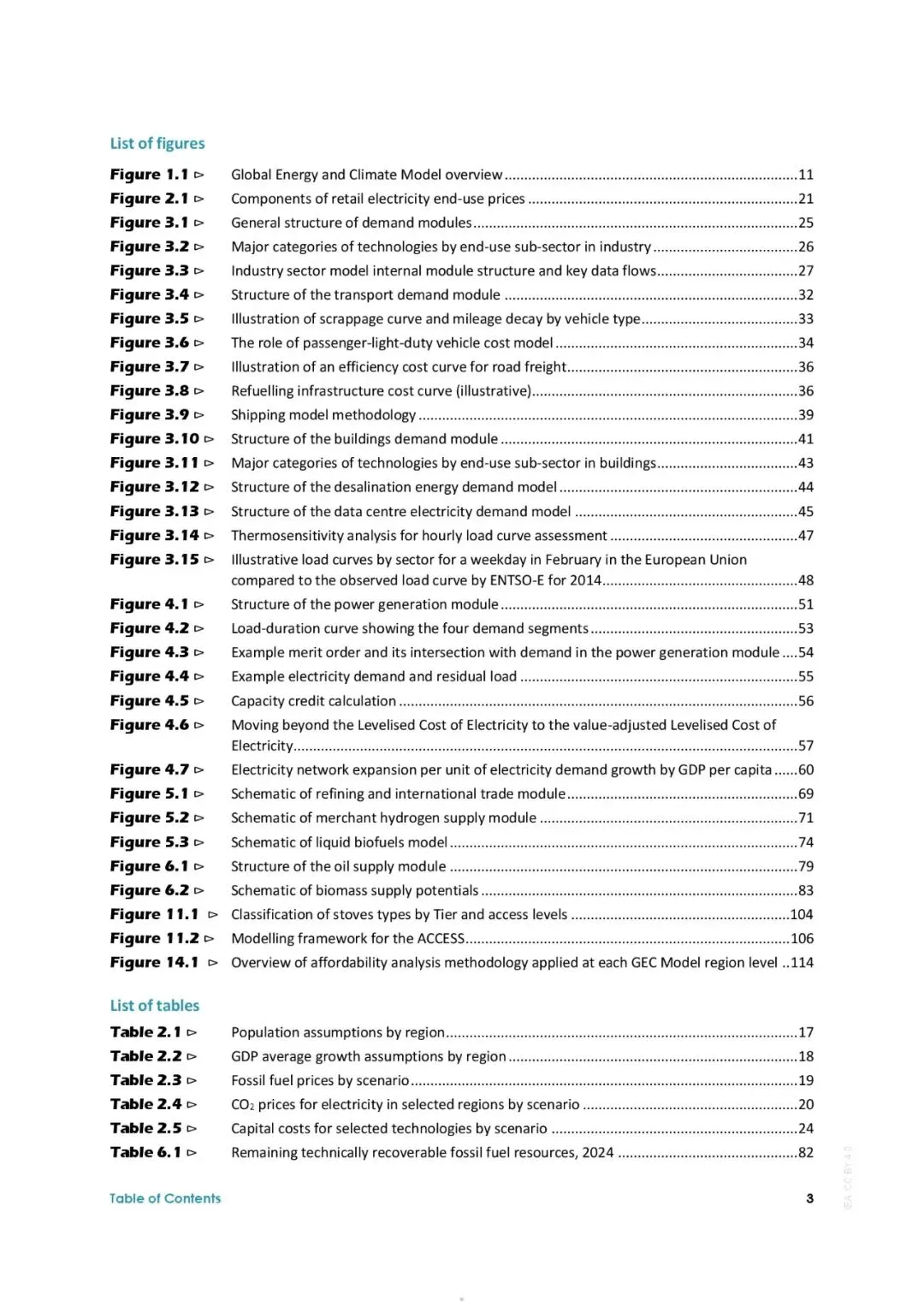
The GEC Model covers 29 regions and is used to produce sector-by-sector and region-by-region projections. It includes modules for final energy demand, energy transformation, and energy supply, with a focus on:
- Energy services (industry, transport, buildings, agriculture)
- Energy transformation (electricity generation, heat production, refining, hydrogen, biofuels, etc.)
- Energy supply (fossil fuels, renewables, critical minerals)
- Environmental impacts (CO₂, methane, other greenhouse gases, air pollution, temperature outcomes)
- Investments (fuel supply, power sector, demand-side)
- Energy access (electricity and clean cooking)
- Employment (sector-specific job creation and skills)
- Affordability (household energy expenditures)
The model uses data-intensive inputs, including energy and economic statistics from the IEA’s own databases, as well as external sources and collaborations. It is designed to analyse the future of global energy under various assumptions and policy contexts, enabling a comparison of different possible futures and the factors that influence them.
Main Scenarios
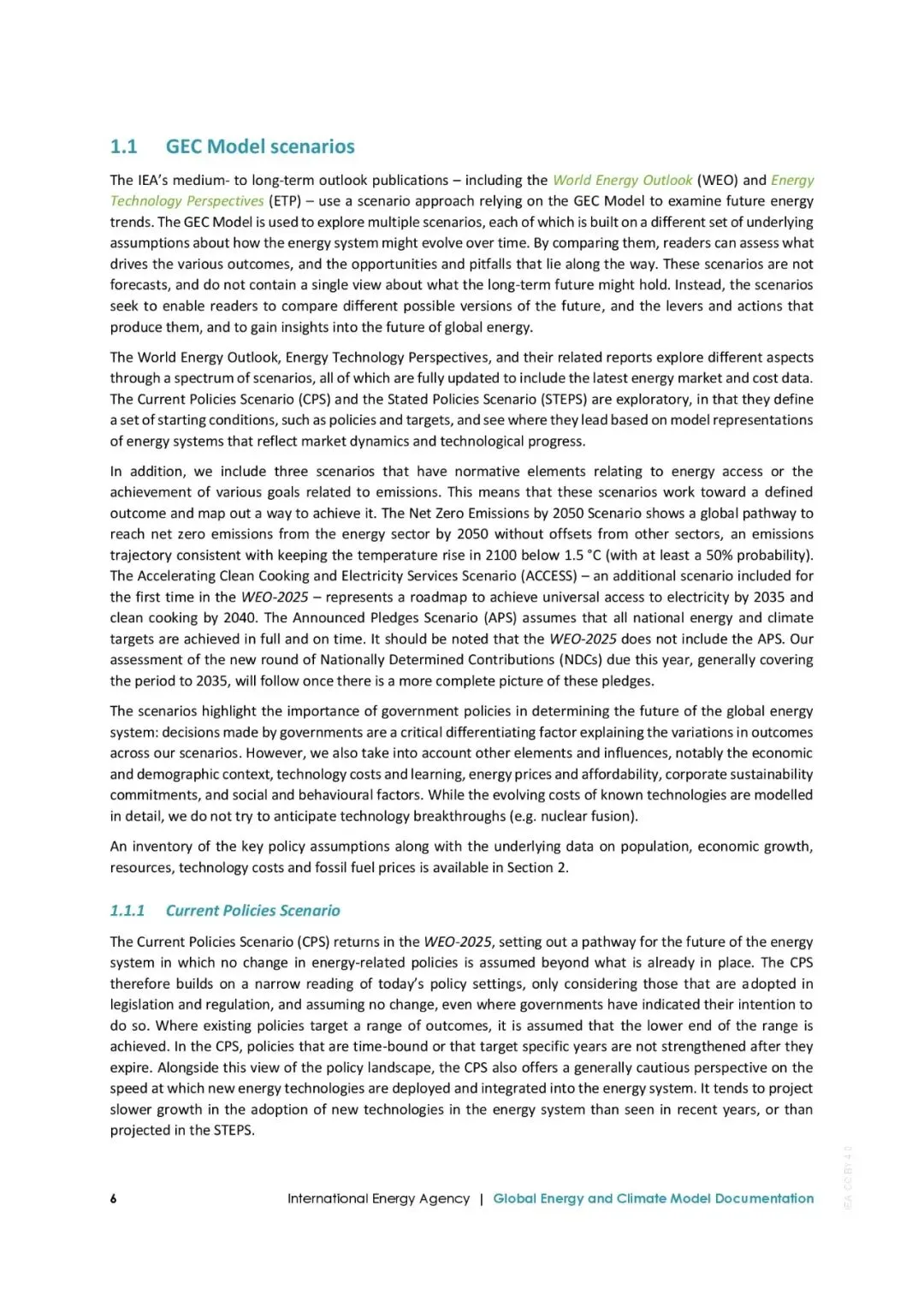
The GEC Model supports several key scenarios:
- Current Policies Scenario (CPS): Assumes no new energy policies beyond those already in place. It reflects a cautious outlook on technology deployment and policy implementation, with a focus on existing legislation and regulations.
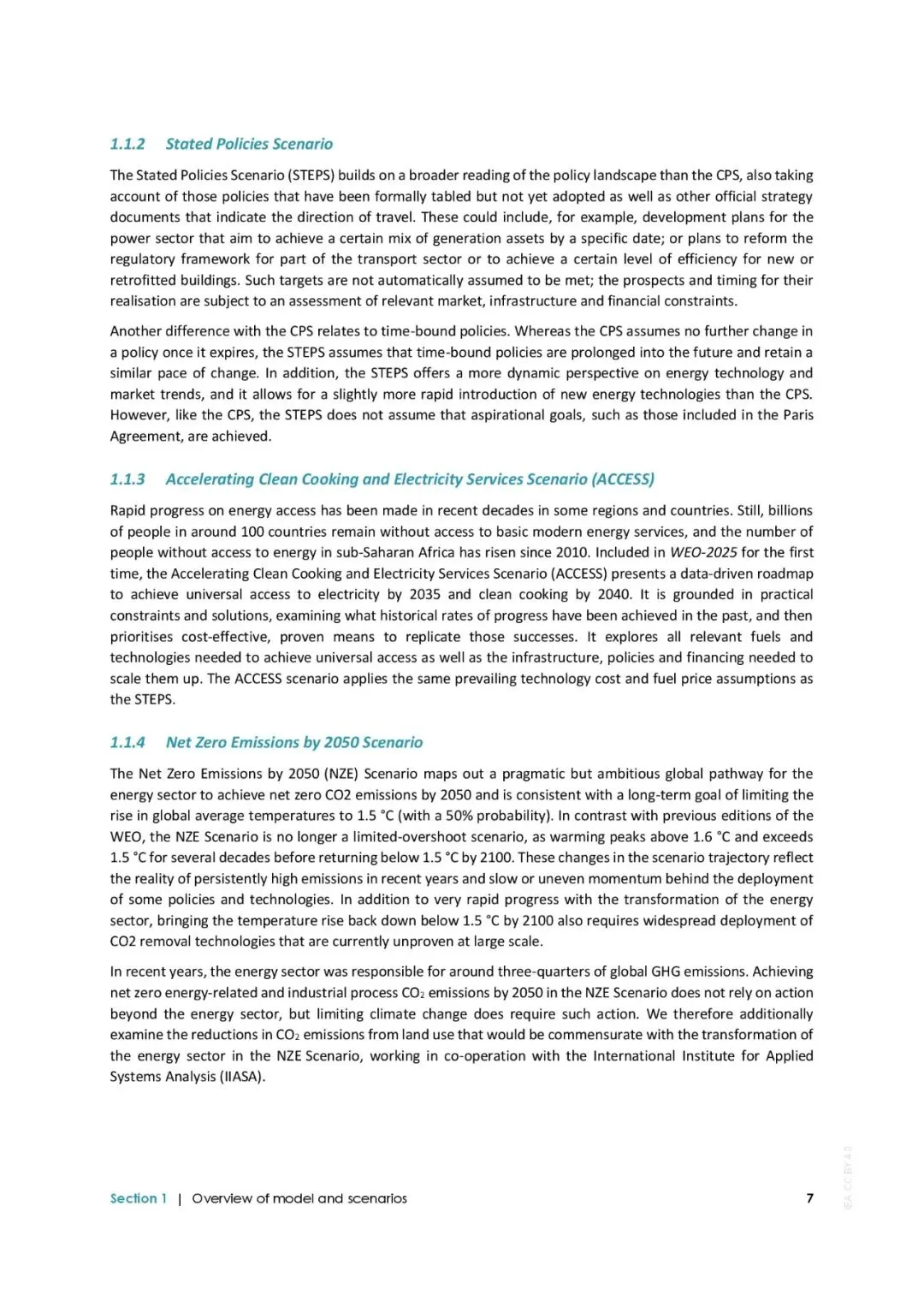
- Stated Policies Scenario (STEPS): Builds on a broader interpretation of current policies, including those that are formally announced but not yet implemented. It allows for a more dynamic projection of energy technologies and market trends.
- Accelerating Clean Cooking and Electricity Services Scenario (ACCESS): A new scenario introduced in WEO-2025, aiming to achieve universal electricity access by 2035 and clean cooking access by 2040. It is grounded in practical constraints and cost-effective solutions.
- Net Zero Emissions by 2050 Scenario (NZE): Aiming for net zero CO₂ emissions by 2050, this scenario includes CO₂ removal technologies and reflects a pragmatic but ambitious path to align with the 1.5°C temperature goal.
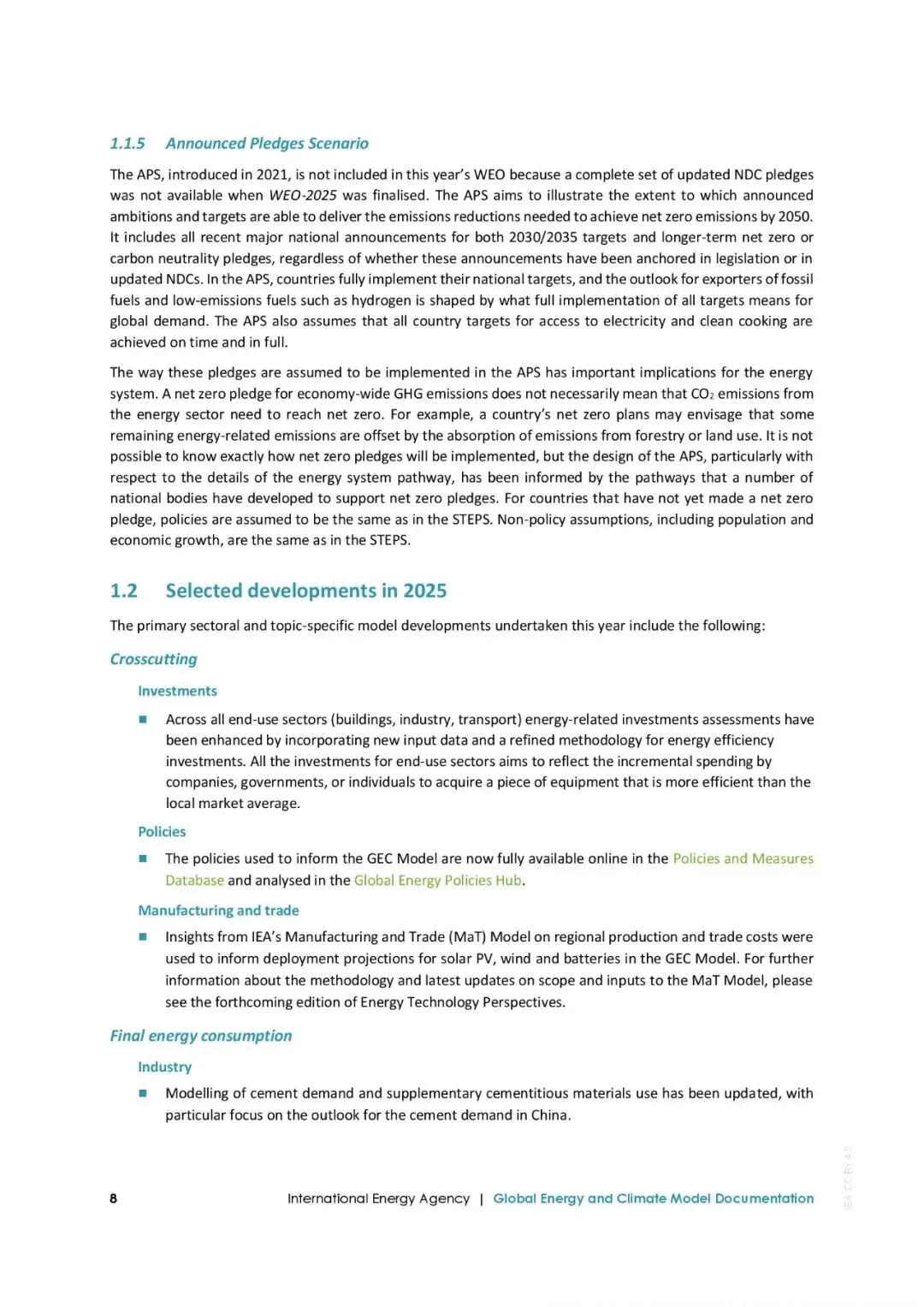
- Announced Pledges Scenario (APS): Not included in WEO-2025 due to incomplete data on updated Nationally Determined Contributions (NDCs). It assumes all national targets are fully implemented and explores the implications for global energy demand and emissions.
Key Inputs and Assumptions
- Population and economic growth: Assumptions are based on historical trends and future projections.
- Prices: Includes fossil fuel prices, CO₂ prices, and capital costs for various technologies.
- Policies: Fully integrated into the model, with policy assumptions available in Section 2.
- Techno-economic inputs: Reflect current and projected costs of technologies and fuels.
- Energy access: Assessed through the ACCESS scenario, which includes geospatial analysis and investment models for solar home systems.
- Critical minerals: Modelled with a focus on demand, supply, prices, and byproduct dependence.
Sector-Specific Developments
Industry
- Cement demand and supplementary cementitious materials are updated, with a focus on China’s outlook.
- Industrial heat pumps and thermal energy storage are modelled with enhanced representation of low-temperature heat demand.
- Capacity retirement is assessed with annual capacity additions for energy-intensive industries.
Transport
- Road passenger vehicles now include ownership patterns and Gompertz curves for future trends.
- Road freight is enhanced with diesel price and GDP data.
- Extended Range Electric Vehicles (EREVs) are modelled based on cost evolution.
- Rail efficiency is updated with type-specific benchmarks.
- Aviation includes a new model for freighter planes and sustainable aviation fuel.
- Maritime includes enhanced energy efficiency assumptions for the existing fleet.
Buildings
- Cooling model is upgraded with new technology granularity, revised cooled floorspace calculation, and updated AC ownership.
- Building envelope is modelled with new data on efficiency and building types.
- Lighting is enhanced with historical consumption estimates and updated efficacy.
- A new water desalination model is developed, tracking historical capacity, sector trends, and country-level technologies.
- A data centre model is introduced, using IT equipment shipments as a key driver for electricity demand.
Electricity Generation
- Hourly electricity dispatch model now includes reserve modelling.
- Wind and solar PV production profiles are estimated using technical characteristics and projected locations.
Energy Supply
- Methane emissions from biogas supply and abandoned mines/wells are updated.
- Oil and gas decline rates are revised based on conventional and unconventional field production.
Critical Minerals
- Modelled with a broader scope, including strategic minerals, supply ownership, refining, and battery recycling.
Employment
- Energy employment is now disaggregated into nine occupational groups, aligned with ISCO-08 classification.
Key Insights
- The GEC Model provides detailed, scenario-based projections for the global energy system.
- It integrates cross-cutting factors such as policies, prices, and economic growth.
- The ACCESS scenario is a novel approach to energy access, focusing on universal electricity and clean cooking.
- The NZE scenario highlights the need for CO₂ removal technologies to meet the 1.5°C target.
- The model is data-intensive and collaborative, drawing from IEA databases and external sources.
- Policy decisions are a key driver of different outcomes, with technological and economic factors also playing a significant role.
Conclusion
The GEC Model is a key analytical tool for the IEA, providing insights into future energy trends, policy impacts, and investment requirements. It supports a wide range of scenarios, including the CPS, STEPS, ACCESS, and NZE, and is continuously updated with new data and methodologies to reflect the latest developments in the energy sector. The model's comprehensive coverage of all energy sectors and its integration of environmental and economic factors make it a valuable resource for policymakers and stakeholders in the global energy transition.
报告正文
免费获取报告源文件,请点下方图片

? 文章推荐
? 2025年生成式+AI+投资回报率研究报告_44页_5mb.pdf
? 镍_钢和汽车_印尼的出口禁令和国内增值_48页_5mb.pdf
? 2025年华彩算力行业创新应用分析报告_62页_2mb.pdf
? 2026年人工智能与代理自动化趋势报告_32页_8mb.pdf
? 2025年全球人才流动趋势报告_48页_13mb.pdf
? 2025年AI驱动的组织重构与业务重构白皮书_75页_5mb.pdf
? 20260505-中国银河-建材行业4月月报_电子纱涨价延续_消费建材复价助盈利修复_18页_872...
? 20260505-国信证券-股指分红点位监控周报_市场情绪向好_各主力合约贴水幅度走阔_17页_5m...
? 20260505-太平洋-安徽合力-600761.SH-收入稳健增长_加速推进新兴未来产业_5页_3...
? 20260505-浙商证券-同程旅行-00780.HK-同程旅行2025年第四季度及全年业绩点评_2...
? 20260505-粤开证券-_粤开宏观_大国基建_空间在哪里_空间有多大_(2026)_28页_1m...
? 20260506-中邮证券-上峰水泥-000672.SZ-主业水泥26Q1承压_半导体投资进入收获期...
? 20260506-中邮证券-亚普股份-603013.SH-2026年一季报点评_营收_利润逆势新高_...
? 20260506-中邮证券-仙坛股份-002746.SZ-产能释放叠加成本下行_共同助力业绩增长_4...
? 智慧物流的目标_主要内容和场景研究报告_59页_2mb.pdf
研报客 - 全球行业报告 图表数据聚合AI平台
5000多家机构,五百万+报告 覆盖全行业深度研究
一站式行业研究报告平台,汇聚全球百强智库,百万中英文报告
✨ 核心功能
? 海量报告:覆盖全行业,AI搜索+全文检索
? AI翻译:多语言互译,保留原排版
? AI对话:智能研报助手,深度解读文档
? 实时推送:订阅关键词,更新主动通知
? 全平台:网页、APP、小程序数据同步
? AI能力
? 智能检索:快速理解问题意图,提供精准信息
? 多源整合:综合多个可靠来源,给出全面答案
? 语境理解:不只是字面翻译,更能理解上下文和文化差异
? 专业领域:适应技术、文学、商务等不同领域的翻译需求
? 自然交流:理解复杂对话上下文,保持连贯性
? 研报专家:深度理解文档,进行专业回复
⚡ 实时性:能够获取最新信息,主动推送更新
? 适用场景
? 投资分析:券商研报、市场分析、投资策略
? 市场调研:行业分析、市场趋势、竞争格局
? 行业研究:深度行业报告、产业链分析
? 趋势预测:未来趋势、技术发展、政策解读
? 访问方式
? 网页版:pc.yanbaoke.cn
? APP下载:各大手机商店搜索「研报客」
?️ 软件版:pc.yanbaoke.cn/pc2.html
? 小程序:微信搜索「研报客」
? PDF/DOC/PPT互转 | 文字版一键复制 | 支持下载分享
网页、APP、小程序多端同步,随时随地阅读研报
内容由ai生成,仅供参考