


Lyophilizer Leak Rate Testing − An Industry Survey and Best Practice Recommendation
冻干机泄漏率测试 — 行业调研与最佳实践建议
Abstract 摘要
The vacuum integrity of freeze dryers is critical for attaining adequate process control and maintaining confidence in sterility assurance which is key for the manufacture of sterile pharmaceutical products.
冻干机的真空完整性对实现充分的过程控制、维持无菌保证可信度至关重要,而这正是无菌药品生产的核心要求。
Although discussions on the topic have been published, there is no industry standard established that is based on empirical data or that has a justifiable scientific rationale.
尽管已有相关公开讨论,但行业尚未形成基于实证数据或具备充分科学依据的统一标准。
This article provides a review of the scientific literature in the public domain and most importantly, a perspective from 14 Pharmaceutical companies on the leak rate specifications commonly used in industry.
本文对公开领域的科学文献进行综述,更重要的是呈现 14 家制药企业对行业常用泄漏率标准的观点。
Using this information we recommend a best practice for the lyophilizer leak rate test which includes detailing necessary preparation activities following Steam-In-Place (SIP) sterilization, defining a period of stabilization to eliminate pressure and temperature fluctuations and details of the test conditions and the test period.
基于上述信息,本文提出冻干机泄漏率测试的最佳实践,包括在位灭菌(SIP)后的必要准备、消除压力与温度波动的稳定化时长,以及测试条件与测试时长的详细要求。
We conclude that for routine manufacturing practice the operational leak rate should not exceed 20 mbar L/s and we provide additional guidance for large volume and older lyophilisation equipment.
结论:日常生产中,运行泄漏率不应超过20 mbar·L/s;本文同时为大容积与老旧冻干设备提供补充指南。
Introduction 引言
Freeze drying is increasingly being employed for many biopharmaceutical products that are not sufficiently stable for long periods in an aqueous solution.Freeze drying offers low-temperature vacuum drying conditions providing a safe and effective means for removing the solvent, thereby converting the material to a solid with enhanced long-term stability.
对于在水溶液中无法长期稳定的众多生物制药产品,冷冻干燥应用日益广泛。冷冻干燥提供低温真空干燥环境,可安全高效去除溶剂,将物料转化为长期稳定性更强的固态。
To achieve low pressures required during the process, the equipment's functional capability and operational quality are vital.The leak rate test is a reference/standard measurement intended to assure that the leak rate before and after each batch has not exceeded a predefined maximum.
为达到工艺所需的低压环境,设备的功能性能与运行质量至关重要。泄漏率测试是一项基准 / 标准检测,用于确保每批次生产前后泄漏率均未超出预设上限。
The test denotes the degree to which non-sterile air may infiltrate the lyophilizer.There could be several sources of leak into the lyophilizer chamber where any one or a combination of sources can potentially contaminate the product by contributing to leakage of gases/vapors.
该测试表征非无菌空气渗入冻干机的程度。冻干箱存在多种泄漏源,任一或多种泄漏源共同作用,均可能因气体 / 蒸汽渗入而污染产品。
The leak sources could be water absorbed or trapped on the internal surfaces of the lyophiliser, the atmospheric air from either a graded space or an uncontrolled space, heat transfer fluid circulating through the shelves or the condenser coils, the refrigerant used in the condenser cooling surface, and oil vapors that may migrate/drift back from the vacuum pumping system.
泄漏源包括:冻干机内表面吸附或滞留的水分、A 级洁净区或非受控环境的空气、搁板或冷凝器盘管内的传热流体、冷凝器冷却面所用制冷剂,以及可能从真空系统返流的油蒸汽。
Failure of leak rate may be an incident or deviation that requires investigation.It brings into question all the cycles run since the last passed leak rate test.Additionally, it could put batches on hold, reject batches due to sterility concerns, reduce productivity, and impact the schedule with the time it takes to repair the leak, thereby affecting the total operational time.
泄漏率超标属于需调查的偏差或事件。一旦超标,自上一次合格测试后所有生产批次均需评估。此外,可能导致批次暂停、因无菌风险报废、产能下降,并因泄漏维修影响生产计划与总运行时间。
The vacuum integrity of the freeze dryer is critical for achieving adequate aseptic process control and sterility assurance during the manufacturing of sterile injectables.There is no universally recognized standard and no empirical standard or scientific rationale upon which to base a limit.Historically, the calculations were based on a single orifice, but this is no longer considered acceptable for modern practice.
冻干机真空完整性对无菌注射剂生产中实现充分无菌过程控制与无菌保证至关重要。目前尚无全球公认标准,也无支撑限值设定的实证标准或科学依据。以往计算基于单一孔道模型,已不适用于现代生产实践。
The purpose of this article is to provide a view from industry practitioners on the leak rate specification, to share the literature review and to provide recommendations on best practices for lyophilizer leak rate testing.
本文旨在呈现行业从业者对泄漏率标准的观点,分享文献综述,并提出冻干机泄漏率测试的最佳实践建议。
Literature Review 文献综述
Leak rates measured for any system are determined by observing a rate of pressure increase in the system.Two contributions to the rate increase need to be considered: real leaks which allow intrusion of external gases into the system, and virtual leaks due to desorption of gases adsorbed on the internal surfaces of the system.
任何系统的泄漏率均通过观测系统内压力上升速率测定。压力上升需区分两类来源:外部气体渗入的真实泄漏,以及系统内表面气体脱附导致的虚拟泄漏。
A system completely free of leaks can happen only at absolute zero, and therefore, a vacuum freeze dryer cannot be completely free of leaks.Leaks can be real or virtual.Actual leakage of gas or air into the drying chamber is referred to as real leak.The Rate of Rise (ROR) due to real leaks remains constant over time in a limited pressure range.A real leak is comprised of a base component resulting from the permeability of the gasket material and leakage along gasket-metal interface and a secondary component resulting from defective seals, nicks or cuts in the seals, and wire feedthroughs amongst others.Virtual leak, on the contrary, can be caused by outgassing of substances within the system or temperature changes during the test.Typical for virtual leaks is that the ROR decays over time.Virtual leaks can also be divided into a base component resulting from outgassing of walls and seals and a secondary component resulting from contaminants in the chamber.Some examples of virtual leaks are volatiles from gaskets, water in the drain, rough unpolished surfaces, and improper cleaning.
绝对无泄漏仅在绝对零度下存在,因此真空冻干机不可能完全无泄漏。泄漏分为真实泄漏与虚拟泄漏。气体或空气实际渗入干燥箱称为真实泄漏。真实泄漏导致的压力上升速率(ROR)在有限压力范围内保持恒定。真实泄漏包括:垫片材料渗透及垫片 - 金属界面泄漏构成的基础部分,以及密封件缺陷、划痕、破损及导线穿板等导致的附加部分。虚拟泄漏则由系统内物质放气或测试过程中温度变化引起。虚拟泄漏的典型特征是压力上升速率随时间衰减。虚拟泄漏也分为:腔壁与密封件放气构成的基础部分,以及箱体内污染物导致的附加部分。虚拟泄漏示例:垫片挥发物、排水口残留水分、粗糙未抛光表面、清洁不彻底。
Real leaks can allow potential ingress of microorganisms or particles from the non-sterile environment (area outside the dryer) to the sterile environment (inside of the dryer) and can compromise the sterility of the drying chamber and products contained therein.Therefore, it is important to place acceptable limits on the leak rates.
真实泄漏可能导致微生物或颗粒从非无菌环境(冻干机外部)进入无菌环境(内部),危及干燥箱与产品无菌性。因此,设定可接受泄漏率限值至关重要。
The Pharmaceutical and Healthcare Sciences Society has suggested a target specification of 0.02 mbar L/s for new, clean, dry, and empty freeze dryers, however, without any strong scientific backing.The current most frequent leak rate for both new lab and production scale dryers is 0.01 mbar L/s, which also lacks scientific justification.Dern reports finding an acceptance criterion in practice as high as 1 mbar L/s for a mid-size freeze dryer that can apparently yield product with acceptable sterility.Dern also explains possible reasons behind no evident risk to product sterility despite the leak rate on the order of 1 mbar L/s.
医药与保健科学协会建议,全新、洁净、干燥、空载冻干机的目标标准为0.02 mbar·L/s,但缺乏充分科学依据。目前新型实验室与生产型冻干机最常用泄漏率为0.01 mbar·L/s,同样缺乏科学论证。Dern 指出,中型冻干机实际可接受标准高达1 mbar·L/s,产品无菌性仍可合格。Dern 同时解释了泄漏率达 1 mbar・L/s 量级却未明显影响产品无菌性的可能原因。
First, the size of air molecules is significantly smaller than that of microorganisms, and therefore a leak can occur without contamination.
第一,空气分子远小于微生物,因此存在泄漏不一定发生污染。
Second, the leaks through loading door from Grade A may be less critical if the leaks are not large and do not impact the required vacuum set-point but still require an investigation into the sterility of the product.
第二,若泄漏量不大且不影响真空设定值,从 A 级区经进料门的泄漏影响较小,但仍需调查产品无菌性。
And third, because the vapor flows outward from a vial, the probability of ingress of microbes in the opposite direction into the vial is extremely low, especially during primary drying when sublimation is ongoing.
第三,由于蒸汽从瓶内向外流动,微生物反向进入瓶内概率极低,尤其在升华进行的一次干燥阶段。
The vapor flow profile and pressure gradients during the sublimation phase were investigated.Although the vapor flow rate and pressure distribution generally varies over the shelf, the observed pressure differences were very low for inter-shelf distances above 5 cm (typically used for vial freeze drying).No impact is expected for the ingress of contaminants into the product vials due to insignificant pressure differences.
已有研究考察升华阶段的蒸汽流场与压力梯度。尽管搁板上方蒸汽流速与压力分布通常存在差异,但搁板间距大于 5 cm(小瓶冻干常用间距)时,实测压力差极小。因压力差可忽略,污染物进入产品瓶内的影响可不计。
During the later stages of a freeze drying process − secondary drying or desorption, the flow of vapor from the vial is much lower.During backfill or aeration, the situation is reversed as gas flows into the vial.Product sterility is most at risk from when primary drying is completed until the stoppers are seated at the end of the process.Once the stoppers have been fully inserted into the vial, they limit subsequent potential ingress of microorganisms.
冷冻干燥后期(二次干燥 / 解吸阶段),瓶内蒸汽流出量显著降低。回充 / 充气阶段则相反,气体流入瓶内。产品无菌风险最高的时段为一次干燥结束至工艺终了压塞完成。胶塞完全压入瓶内后,可限制后续微生物侵入。
According to the ideal gas law, PV=nRT and from a differential form of the gas law, the area of a hole may be defined as:
根据理想气体定律 PV=nRT 及其微分形式,孔道面积可定义为:
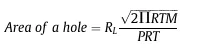
Where, RL is leak rate in Pa m³ s⁻¹, R is gas constant, room temperature (T) is 298 K, atmospheric pressure (P) is 1.013 ×10⁵ Pa and M is a mol of gas (for air =0.029 kg mol⁻¹).
式中:RL 为泄漏率(Pa・m³/s),R 为气体常数,室温 T=298 K,大气压 P=1.013×10⁵ Pa,M 为气体摩尔质量(空气为 0.029 kg/mol)。
Based on the above equation, a leak rate of 0.02 mbar L/s is equivalent to a hole with a diameter of 14.68 mm.Using the same equation, a hole diameter of 0.2 mm would correspond to a leak rate of 3.71 ×10⁻⁶ mbar L/s which is practically an unmeasurable leak rate.Moreover, there is still an uncertainty of the leak resulting from a single large leak or from multiple small leaks.The entire leak resulting from single large leak is a hypothetical consideration which will not be reflective of the reality and therefore leads to impractically small allowable leak rates.Assuming that increase in pressure is only caused by a singular leak is erroneous since the increase in pressure can result from the sum of all real and virtual leaks.Every gasket, o-ring, fitting, or area where two or more surfaces come together contribute to both real and virtual leaks.
按上式计算,0.02 mbar・L/s 泄漏率等效于直径 14.68 mm 的孔道。同理,0.2 mm 孔径对应泄漏率为 3.71×10⁻⁶ mbar・L/s,实际无法检测。此外,泄漏来自单一大孔还是多个小孔仍存在不确定性。将全部泄漏假设为单一大孔不符合实际,会导致可接受泄漏率限值过低而不实用。假设压力上升仅由单一泄漏导致是错误的,因为压力上升是所有真实泄漏与虚拟泄漏的总和。每个垫片、O 型圈、接头及多表面接合处均会产生真实泄漏与虚拟泄漏。
Efforts have also been undertaken to establish a leak rate limit based on a scientific approach where the volume of gas introduced was calculated for different drying conditions and durations, with limiting the period of risk to the time between completion of primary drying and setting of the stoppers.The microbial load of the environment (non-classified technical area) was applied to calculate a worst-case number of CFU (colony forming units) entering the freeze dryer in a given time.Based on the proposed methodology, the data-based leak rate limit would ensure that the Grade A microbial standards would be maintained over a period of 64 h of secondary drying, which is longer than what would be the case in many commercial processes.To our understanding, this rationale has not been accepted by any regulatory body.The approach, however, does not account for specific effects of for example hole size and shape or even presence of single vs multiple holes.Similarly, Jones argues that the leak rate limit proposed by Hardwick et al. is applicable.Jones.As his assumptions are comparable and are based on applying a similar method, this is not surprising.The same criticism applies here too.
已有研究尝试基于科学方法设定泄漏率限值:计算不同干燥条件与时长下的进气量,将风险时段限定为一次干燥结束至压塞完成。采用环境(非洁净技术区)微生物负荷,计算给定时间内进入冻干机的最大可能菌落形成单位(CFU)。按该方法得出的基于数据的泄漏率限值,可确保在 64 小时二次干燥期间维持 A 级微生物标准,长于多数商业化工艺时长。据我们所知,该依据尚未被任何监管机构采纳。但该方法未考虑孔道尺寸、形状及单孔 / 多孔等具体影响。同样认为 Hardwick 等人提出的泄漏率限值适用。因其假设相近且方法类似,结论一致并不意外。上述批评同样适用于该研究。
Another approach by Jennings is based on a relationship between rate of pressure rise (ROR) of the system and the density of microorganisms in the system.Key assumptions of this approach are that a) for microorganisms to enter the drying chamber, the leak paths must have diameters equal or greater than 0.001 cm and b) the nature of gas flow would be viscous for a leak path having diameters equal or greater than 0.001 cm and therefore the microorganism density (CFU/ft³) in the gas flow would be the same as that of the environment surrounding the dryer.For a given external CFU contamination level, this approach would result in a different cycle time before Grade A air quality limit would be exceeded compared to the approach described by Hardwick et al. and Jones.
Jennings 提出另一方法,基于系统压力上升速率(ROR)与系统内微生物密度的关系。该方法核心假设:a) 微生物进入干燥箱,泄漏通道直径须≥0.001 cm;b) 直径≥0.001 cm 的泄漏通道内气体为粘性流,气流中微生物密度(CFU/ft³)与冻干机周围环境一致。在相同外部 CFU 污染水平下,该方法计算的超出 A 级空气质量限值的工艺时长与 Hardwick 等人及 Jones 的方法不同。
Furthermore, as stated by Jones, the risk of exceeding Grade A air quality limit at the generally accepted leak rate limit of 0.02 mbar L/s is mostly relevant to freeze dryers with low internal volume (e.g. a dryer with internal volume of 1 m³) at external contamination rate of 300 CFU/m³ i.e. the bioburden level of non-classified area e.g. mechanical room where the condenser is located.
此外,Jones 指出,在通用限值 0.02 mbar・L/s 下,超出 A 级空气质量限值的风险主要发生在小容积冻干机(如 1 m³),外部污染水平为 300 CFU/m³(冷凝器所在机房等非洁净区微生物负荷)。
However, the risk of product contamination resulting from a leak located at the condenser is low because of the constant negative pressure difference between the lyophilization chamber and condenser, the long distance between the condenser and chamber in most production size lyophilizers and a hindered free particle gas flow or Brownian movement at the very low temperature and pressure in the condenser.Same set of calculations along with worst case assumptions regarding external contamination rate of 300 CFU/m³ for commercial scale freeze-dryers show that leak rates higher than the generally accepted limit of 0.02 mbar L/s would maintain Grade A conditions inside the dryers.
但冷凝器处泄漏导致产品污染风险较低:冻干箱与冷凝器间持续负压差、多数生产型冻干机冷凝器与箱体间距较远,且冷凝器内低温低压环境阻碍颗粒自由流动与布朗运动。对商业化冻干机,按外部污染 300 CFU/m³ 的最差条件计算表明:泄漏率高于通用限值 0.02 mbar・L/s 时,箱体内仍可维持 A 级环境。
In essence, the existing scientific justifications are based on differing underlying assumptions that could lead to disparate results.Ideally limits should be validated experimentally and accepted by authorities to allow widespread application to pharmaceutical production equipment.However, the current practices have resulted in products that are acceptable with respect to sterility.Sterility assurance is also constantly demonstrated by successful recurring aseptic process simulations, which are required by authorities.
本质上,现有科学论证基于不同底层假设,可能导致结论差异。理想情况下,限值应经实验验证并获官方认可,方可在制药生产设备中广泛应用。但现行实践已能保证产品无菌性合格。无菌保证也通过监管要求的重复性无菌工艺模拟(培养基灌装)持续验证。
Survey Results and Discussions 调研结果与讨论
An extensive survey was conducted comprising 14 Pharmaceutical industries − Abbvie*, Allergan*, Amgen, Bayer, Biogen, BMS, Lonza, Merck, Merck KGgA, Pfizer, Regeneron, Roche, Sanofi, and Takeda.The survey included the laboratory, clinical and the commercial scale lyophilizers with the chamber and condenser volumes ranging between 3.46−32.5 m³.The survey questions encompassed, although not limited to leak rate specifications and rationale, lyophilizer volume, frequency of testing and failures, data trending, and detailed leak test methodology practices.
本文对 14 家制药企业开展广泛调研:艾伯维 、艾尔建 、安进、拜耳、百健、百时美施贵宝、龙沙、默克、默克 KGaA、辉瑞、再生元、罗氏、赛诺菲、武田。调研覆盖实验室、临床及商业化规模冻干机,冻干箱与冷凝器容积范围 3.46−32.5 m³。调研问题包括但不限于:泄漏率标准及依据、冻干机容积、测试与故障频次、数据趋势分析、泄漏测试详细方法。
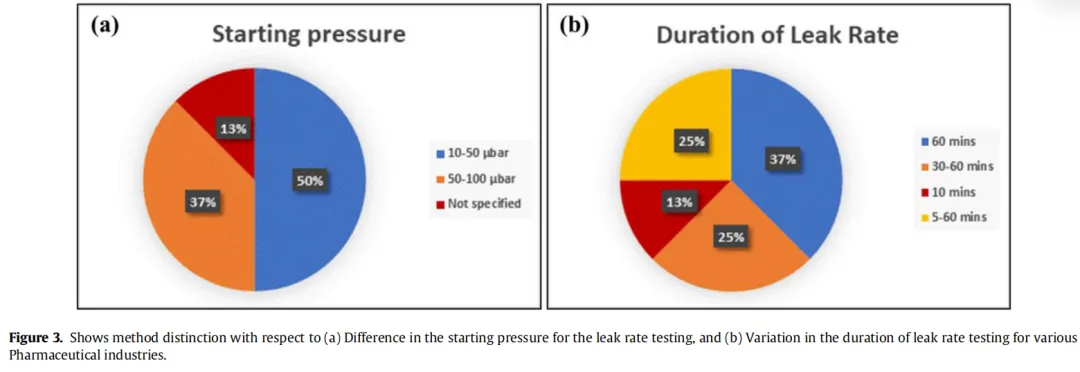
The survey results are shown in pie charts in Figs. 1-3 and dis cussed below, the results are presented as percentages to provide consistency as the number of responses to each question was different.
调研结果如图 1-3 中的饼图所示,下文将展开讨论;由于各问题的回收答卷数量不同,为保证结果一致性,均以百分比形式呈现。
The following questions for leak rate test methodology were evaluated.
对泄漏率测试方法的以下问题进行评估:
What practices do you use for evaluating how dry is the lyophilizer? 冻干机干燥程度评估方法? What practices do you use for the duration of pre-test equilibration time? 测试前平衡时长? What practices do you use for the starting pressure? 测试起始压力? What practices do you use for the length of test time/duration of measurement based on the test itself? 测试时长 / 测量持续时间?
It was revealed from the survey review that most companies do not have a standard leak rate specification. Instead, it varies with lyophilizer (pressure over time) and is site-specific within a company.
调研综述结果显示,大多数企业并无统一的泄漏率标准限值;其泄漏率要求随冻干机(压力随时间变化特性)不同而存在差异,且同一企业内不同生产厂区的标准也各不相同。
*At the time the survey was completed Abbvie and Allergan were separate companies.
* 本次调研完成时,艾伯维(Abbvie)与爱尔建(Allergan)仍为两家独立企业。
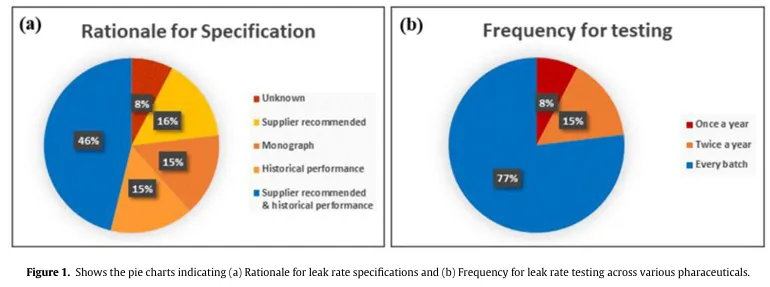
Fig. 1A and B display the results for the rationale for leak rate specification and appropriate frequency of leak rate testing, respectively.The explanation for leak rate specification (Fig. 1A) for a majority of 46% pharmaceuticals is supplier recommended and based on the historical performance of the dryers.For next 16%, the limit is established based on the supplier recommendation, 15% each is based on the historical performance of the dryer and utilizing the technical monograph.For the last 8%, the rationale is unknown.The frequency of leak rate testing (Fig. 1B) shows that 77% of the pharmaceuticals perform leak rate tests after every commercial batch, 15% execute the test bi-annually, and only 8% annually.
图 1A、图 1B 分别展示了泄漏率标准制定依据与泄漏率适宜测试频次的调研结果。由图 1A 可知,46% 的制药企业制定泄漏率标准的依据为设备供应商建议 + 冻干机历史运行性能,占比最高。另有 16% 企业仅依据供应商建议设定限值;15% 依据冻干机历史运行性能设定限值;还有 15% 参照技术专著制定标准。剩余 8% 的企业无明确标准制定依据。泄漏率测试频次方面(图 1B):77% 的制药企业每生产一批商业化产品后均进行泄漏率测试,15% 企业每半年测试一次,仅 8% 企业每年测试一次。
Fig. 2A shows the leak rate data trending distribution.Most of the companies (34%) do not trend the leak rate data.However, some use the data historians for data trending (22%), others trend the leak rate but not the evacuation times (22%) or perform the multivariate modeling (22%).Fig. 2B displays an equal percentage (46%) for short (frequent leak rate or Production Leak Rate) and extended (Maintenance Leak Rate Test) leak rate test, with 8% suggesting only some sites performing the maintenance leak test.
图 2A 为泄漏率数据趋势分析方式占比分布。34% 的企业未对泄漏率数据开展趋势分析,占比最高。其余企业中,22% 采用数据历史记录系统做趋势分析;22% 仅分析泄漏率数据、不分析抽真空时长数据;另有 22% 采用多变量模型开展数据分析。图 2B 显示,常规短时泄漏率测试(生产泄漏率测试) 与长时扩展泄漏率测试(维护泄漏率测试) 占比均为 46%;另有 8% 企业仅部分厂区开展维护级泄漏率测试。
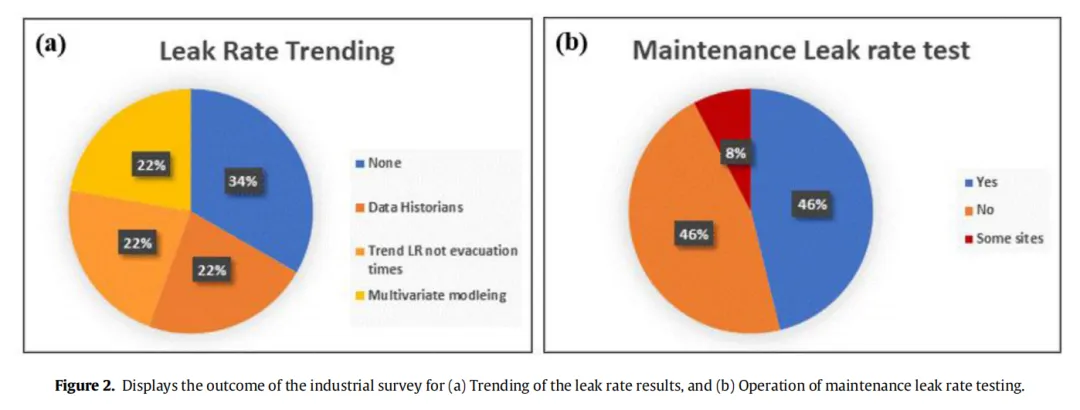
Fig. 3A and B show the percent allocation for starting pressure during the test and the total duration of the leak rate test, respectively discussed at length in the next section.For starting pressure (Fig. 3A), the following ranges are used: 10-50 mbar (50%), 50-100 mbar (37%), and not specified by 13%.Duration of leak rate test (Fig. 3B) ranges from 60 mins (37%), 30-60 min (25%), 5-60 min (25%) and 10 mins (13%).
图 3A、图 3B 分别为泄漏率测试起始压力与测试总时长的占比分布,具体细则将在下一节详细阐述。测试起始压力(图 3A)分布:50% 企业采用 10~50 毫巴,37% 采用 50~100 毫巴,13% 未明确规定起始压力范围。泄漏率测试时长(图 3B)分布:37% 设定为 60 分钟,25% 为 30~60 分钟,25% 为 5~60 分钟,13% 为 10 分钟。
In general, a vacuum leak rate test is implemented on clean and dry chambers, condenser and filters skid.The procedure follows by evacuating the chamber and condenser of the lyophilizer below 10^-2 mbar several hours to remove the gas.
常规而言,真空泄漏率测试需在洁净干燥的冻干箱、冷凝器及过滤撬装组件上开展。测试流程:先将冻干机箱体与冷凝器抽真空至10^-2毫巴以下,并维持数小时,以彻底排出内部气体。关闭真空泵且系统压力稳定后,正式进入泄漏率测试阶段。
Eliminating any vapors that may outgas (virtual leaks) may cause an increase in the pressure directly after stopping the vacuum pumps;therefore, the test should be done only after the system has been maintained at a very low pressure for few hours (stabilization phase).Below is a more detailed harmonized and recommended approach to perform the lyophilizer leak rate testing.
停机后,物料或腔体解析释放的蒸汽会造成虚拟泄漏,进而导致压力快速上升;因此必须先将系统维持在高真空状态数小时(压力稳定阶段),方可启动正式测试。下文给出一套更为详尽、可统一执行的冻干机泄漏率测试规范推荐方案。
Recommended Leak Rate Test Method 推荐泄漏率测试方法
Preparation 准备阶段
The guidance on the best practices for lyophilizer leak rate testing in the current section result from the discussion and best practices across Pharma industries and the scientific literature.
本节所列冻干机泄漏率测试最佳实践指导原则,源自制药行业业内研讨共识及各类专业文献总结的成熟实操规范。
The system to be leak tested consists of the chamber, condenser and piping up to the sterile boundaries, thus including the venting filter (s).
泄漏测试系统包括冻干箱、冷凝器及至无菌边界的管路,含排气过滤器。
An accurate leak rate test requires an isothermal system; any temperature change during the test period will alter the result.For example, improperly cooled chamber walls will mislead the leak test results as they continue to cool during the test.Incomplete cooling of the condensers prior to starting the test period will similarly lower the output.
准确的泄漏率测试要求系统等温;测试期间任何温度变化都会影响结果。例如,箱壁冷却不充分,测试中持续降温会导致结果失真。测试前冷凝器冷却不充分同样会降低测试有效性。
Moisture left in the system can freeze during evacuation and continue subliming during the leak rate test, falsely elevating the result.The walls of the lyophilizer are actively cooled following sterilization to achieve a stable wall temperature.
系统残留水分在抽真空时结冰,泄漏测试中持续升华,导致结果假性偏高。灭菌后对冻干机壁主动冷却,达到稳定壁温。
The condenser temperature (s) need to be either regulated to an adequately low setpoint or asymptotic to the ultimate low temperature which they can attain.
冷凝器温度需调控至足够低的设定值,或趋近其可达到的最低极限温度。
As Steam-In-Place (SIP) is the most likely operation to create a leak, the leak rate test is normally performed after SIP.Therefore, proper drying and cooling of the lyophilizer after SIP is a critical step in preparing to perform a leak rate test.
在位灭菌(SIP)最易引发泄漏,因此泄漏率测试通常在 SIP 后进行。因此,SIP 后对冻干机充分干燥与冷却是泄漏测试准备的关键步骤。
1.With the shelf temperature stabilized at the setpoint (20−40°C), cool the condenser, and then begin evacuation.
搁板温度稳定在设定值(20−40°C),冷却冷凝器,随后开始抽真空。
Note: A higher shelf temperature will promote degassing during stabilization.
注:较高搁板温度有助于稳定化阶段放气。
2.A vacuum level of 20 mbar or lower is preferred.The time required to reach a stable vacuum can vary significantly from run to run.The start pressure during the leak rate test should be at least as low as the lowest setpoint used in commercial operation.
优选真空度≤20 mbar。达到稳定真空所需时间批次间差异较大。泄漏测试起始压力应至少低于商业化生产所用最低设定压力。
Stabilization 稳定化阶段
3.When the vacuum level is reached, the stabilization period starts.The stabilization period needs to be sufficiently long to eliminate pressure and temperature fluctuations.The time needed is highly dependable on the preparation of the equipment, based on the survey results we see stabilization times commonly between 30 to 60 minutes. 达到目标真空度后,开始稳定化阶段。稳定化时长需足够长,以消除压力与温度波动。所需时间高度依赖设备准备状态;调研显示稳定化时长通常为 30−60 分钟。
Note: A dry and clean system that has been cooled down properly after sterilization will need less stabilization time.
注:灭菌后充分冷却、干燥洁净的系统所需稳定化时间更短。
If the stabilization time is insufficient, one may see either a lot of fluctuations on the leak rate in the beginning of the test period or a fast rise of the pressure in the first minutes.
稳定化时间不足会导致测试初期泄漏率大幅波动,或前几分钟压力快速上升。
Test period 测试阶段
4.With the condensers running and the shelf temperature stabilized, close the vacuum valve (between the condenser and the vacuum pump).The vacuum pumps may also be switched off.
冷凝器运行、搁板温度稳定后,关闭真空阀(冷凝器与真空泵之间)。真空泵亦可停机。
5. After closing the vacuum valve, wait 2−5 minutes to allow the pressure to stabilize, and then record the starting pressure.If stabilization is difficult to achieve it may be necessary to repeat system drying and stabilization.
关闭真空阀后,等待 2−5 分钟使压力稳定,记录起始压力。若难以稳定,需重新进行系统干燥与稳定化。
6. A test period of 30 to 60 minutes is typical depending upon the volume of the freeze dryer and resolution of the pressure gauge (measuring system) used with longer time for larger lyophilizers or where a lower resolution pressure gauge is used.
典型测试时长 30−60 分钟,取决于冻干机容积与压力表(测量系统)分辨率;大容积冻干机或低分辨率压力表需延长测试时间。
Note: Graphing the pressure or comparing incremental readings will reveal this.Extending the test duration or taking the initial pressure after an extended stabilization period will reduce the error due to outgassing and eventually yield the true leak rate.Typically, after maintenance works with potential impact a leak rate test with longer stabilization and/or test period will be performed to obtain a more accurate result.
注:绘制压力曲线或对比增量读数可判断是否充分稳定。延长测试时长或在延长稳定化后读取起始压力,可降低放气导致的误差,最终得到真实泄漏率。通常,在可能产生影响的维修后,采用更长稳定化与 / 或测试时长进行泄漏率测试,以获得更准确结果。
Evaluation 结果评估
7.The operational leak rate should not exceed 20 mbar L/sec. calculated as: 运行泄漏率不应超过20 mbar·L/s,计算公式: Leak Rate = ΔP × V / Δt 泄漏率 = 压力变化 × 容积 / 时间变化 where ΔP ⇒ Pressure Rise in μbar 式中:ΔP 为压力上升值(μbar) V ⇒ Net Volume in Litres (total − internals) V 为净容积(L,总容积−内部构件体积) Δt ⇒ Test Time in sec. Δt 为测试时间(s)
Conclusion 结论
The survey results demonstrate that the performance of leak rate tests for commercial lyophilizers in the participating companies follows common principles but is far from standardized.The basis for defining a leak rate is mostly not driven by scientific considerations or a regulatory requirement.Instead, it follows recommendations by equipment suppliers or maintains long-established specifications of e.g., The Pharmaceutical and Healthcare Sciences Society.Alternative suggestions based on the correlation of the leak rate limit to the size of a microorganism passing a single hole are not promising, as they lead to impractically low limits.The calculations provided by Hardwick could be a viable alternative but have not been applied broadly, partly due to uncertainty of regulatory acceptance.
调研结果表明,参与企业的商业化冻干机泄漏率测试遵循通用原则,但远未标准化。泄漏率设定依据大多并非基于科学考量或法规要求。而是遵循设备供应商建议,或沿用医药与保健科学协会等长期既定标准。将泄漏率限值与微生物通过单一孔道尺寸关联的替代方案不具可行性,因其导致限值过低而不实用。Hardwick 的计算方法可作为可行替代方案,但未广泛应用,部分原因是监管接受度不确定。
Most companies perform a leak rate test for each batch, to mitigate the risk and avoid putting several product batches in jeopardy in case of a failure.These frequent leak rate tests, often so-called "Production Leak Rate Tests" are employed, which have a comparably short duration and allow for a certain level of out-gassing.These results do not represent the real leak rate of the system but provide a good basis to detect changes in the system performance and trending the results.At a less frequent interval (e.g., semi-annually), an additional leak rate test, e.g., "Maintenance Leak Rate Test", is commonly performed.This includes a longer outgassing and testing duration, and therefore delivers a result close to the real system leak rate.Therefore, the limits for the Maintenance Leak Rate are typically lower.
多数企业逐批次进行泄漏率测试,以降低风险,避免泄漏超标危及多批次产品。此类高频测试常称为生产型泄漏率测试,时长较短,允许一定程度放气。其结果不代表系统真实泄漏率,但为监测系统性能变化与趋势分析提供良好基础。通常以较低频次(如每半年)额外进行维护型泄漏率测试。该测试包含更长放气与测试时长,结果更接近系统真实泄漏率。因此,维护型泄漏率限值通常更严格。
The leak rate limits applied by the respondents show wide variation connected to the age of the equipment.For most freeze dryers in operation, the leak rate limit is defined as 20 mbar L/s or even lower for newer units specified by the equipment suppliers with 10 mbar L/s or less.However, higher leak rate limits such as 50 mbar L/s or more are not atypical for the older equipment.As a scientific basis and clear regulatory expectations are missing, both approaches can be generally justified.
受访企业采用的泄漏率限值差异很大,与设备使用年限相关。多数在用冻干机限值为20 mbar·L/s;新型设备供应商标准更低,可达10 mbar·L/s及以下。但老旧设备采用50 mbar·L/s及更高限值并不少见。因缺乏科学依据与明确监管要求,两种做法均具备一定合理性。
Based on the findings of the literature search and the industry survey, the method described above can be regarded as suitable for frequent leak rate determination (Production Leak Rate) to avoid the loss of multiple batches in case of a leak rate failure.Besides, the performance of a more rigorous Maintenance Leak Rate Test is recommended at a less frequent interval, but also in case, the Production Leak Rate Test method shows a non-compliant result.
基于文献调研与行业调查,上述方法适用于高频泄漏率检测(生产型测试),避免泄漏超标导致多批次损失。此外,建议以较低频次开展更严格的维护型泄漏率测试;生产型测试不合格时也应执行维护型测试。
Limitations 局限性
Lyophilizer Leak Rate Testing methodology and specifications are mostly based on historical experience and operational practicality not scientific rationale.This leaves some freedom in defining the procedure and setting the limits, but also creates uncertainty if alternatives to the traditional approach are introduced.The applied methods reported within the survey section show considerable differences, but the responses are not detailed enough to allow conclusions about the advantages or disadvantages of specific methodologies applied.Today, the lower leak rates typical for new equipment cannot be easily translated to older units.The alternatives to the conventional approach to defining leak rate specifications suggested in the literature, are often regarded as impractical or associated with inspection risks and are therefore not adopted.To reach a more science-based and aligned procedure, additional research and discussion with regulatory agencies on an approach that is practical for the range of equipment in operation would be required.
冻干机泄漏率测试方法与标准主要基于历史经验与操作实用性,而非科学依据。这为程序制定与限值设定留有一定灵活性,但引入传统方法替代方案时也带来不确定性。调研中报告的所用方法差异显著,但回复细节不足,无法得出特定方法优劣的结论。目前,新型设备的低泄漏率要求难以直接套用于老旧设备。文献中建议的传统泄漏率标准替代方案,常被认为不实用或存在检查风险,因此未被采纳。要形成更具科学性与统一性的程序,需开展更多研究,并与监管机构讨论适用于各类在用设备的实用方案。
