


“ 听君一言,胜读十年书”
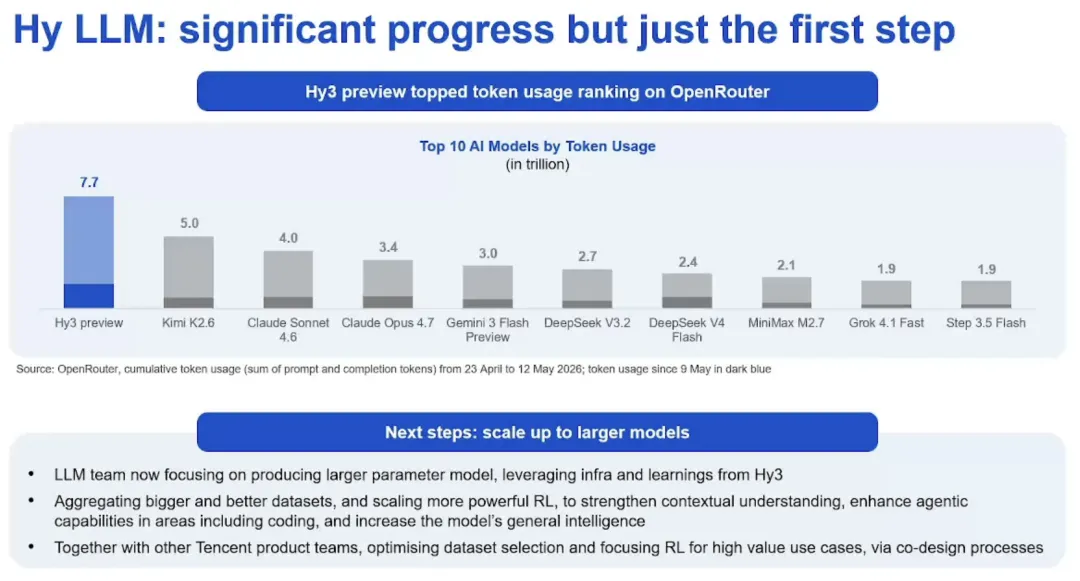
01
—
财报会问答环节才是精华部分
02
—
坦白说这次观感还不错
03
—
附:中英文对照原文
腾讯控股 2026年第一季度业绩电话会议
会议时间: 2026年5月13日(周三) 参会高管: 马化腾(董事长&CEO)、刘炽平(总裁)、詹姆斯·米歇尔(CSO首席战略官)、罗昕瀚(CFO)
Q1 Alicia Yap, Citigroup
Question on Hunyuan 3 Integration:
"Since the release of Hunyuan 3 Preview, management also mentioned the model has been deeply integrated to a lot of the internal core products, including Yuanbao, and WorkBuddy. Can management share some details on the performance enhancements that you have observed in these workflows since the adoption? And what is the road map of integrating Hunyuan 3 more broadly into WeChat workflows? Will Mini Programs enterprises be able to leverage these agent workflows to improve their productivity and maybe future monetization?"
Question on Advertising Future:
"Second question is with agents increasingly potentially replacing the traditional click-throughs on the web pages and also the apps, could management share your view on the future advertising pricing and also the resulting impact on advertiser budget allocation? In management's view, what types of digital content and online activities will still have strong resilience to continue attracting massive user participation going forward? And has management thought ahead and strategically positioned for new advertising formats to adapt to this potential shift in ad spending?"
中文翻译
混元3.0模型整合提问:
自从混元3.0模型以Hy3 Preview形式与用户见面以来,管理层在简报中也提到,混元大模型已经深度整合进腾讯许多内部的核心产品之中,包括元宝、ima、WorkBuddy等。能否请管理层与我们分享一下,随着混元大模型接入上述工作流,您观察到了哪些产品性能或者效率上的提升?另外,展望未来,随着混元3.0模型进一步整合进微信生态,对此管理层有哪些计划的产品路线图?比如,小程序企业未来是否也能够利用这些智能体工作流来提升效率、推动未来的数字化升级?
广告未来趋势提问:
随着AI智能体逐渐取代传统网页以及App中的"点击式交互工具",管理层如何看待未来广告产品定价的变化?这对广告主的预算分配可能带来怎样的影响?在管理层看来,哪些类型的数字内容、网络活动在未来仍会有较强的韧性,能够持续吸引大量用户的参与?另外,管理层是否已经提前思考,并在战略上布局新的广告形式,以适应这种潜在的广告支出变化趋势?
刘炽平回答(英文原文)
"In terms of Hunyuan 3, we have given a pretty comprehensive overview of Hunyuan 3. And as you can see from the prepared remarks, it's more intelligent and it's actually very strong in terms of reasoning despite being a smaller model. And at the same time, it has significant improvement vis-a-vis Hunyuan 2 on agent capabilities. So with that, when we actually integrate Hunyuan 3 into the different products, the performance was actually quite encouraging. The different products have all expressed and marked improvement in terms of the performance... And the total token usage is actually at least 10x compared to Hunyuan 2... Because it benefits from a co-designing process with some of the major products, for example, Yuanbao and WorkBuddy, right? So that's why it's well received by the products.
In terms of the integration into the Weixin workflow, I think it will be a step-by-step process... In some cases, they use different models and they evaluate different models and evaluate what's the best model to use for their users... As Hunyuan 3 continues to be getting better and better, then they will be adopting more.
For the enterprises, one benefit is actually that they would be using some of our Hunyuan-enabled products such as coding or such as CodeBuddy as well as WorkBuddy... And the other one is external. It can actually help their Mini Programs to be used by more users and more agents going forward."
刘炽平回答(中文翻译)
关于混元3.0模型,我们在前面的简报中其实已经较为全面地为大家介绍了它的功能。大家可以看到,混元3.0模型的智能化水平更高。虽然它的体量相对较小,但它在推理能力方面的表现实际上 k非常强。同时,相比混元2.0,混元3.0模型在智能体能力上的表现也有显著提升。
基于上述这些特点,随着我们将混元3.0模型整合进不同产品,我们发现,产品的整体表现可以说让我们相当振奋。各个产品团队都反馈产品性能有明显改善...相比混元2.0,混元3.0模型的token调用总量至少提升了十倍...这是因为它在开发过程中就已经与部分核心产品进行了协同设计,例如元宝、CodeBuddy、WorkBuddy等,因此获得了产品团队的广泛认可。
至于你问题中提到的,混元3.0模型将如何融入微信的工作流,我认为这是一个循序渐进的过程...在某些应用场景下,我们也会同时测试不同模型,评估哪一个模型最适合当前的用户需求...随着混元3.0模型的持续优化,我们也自然会拓宽其与微信产品的整合。
对于企业而言,一是通过使用我们的智能体产品(如CodeBuddy、WorkBuddy等)提升自身生产效率;二是外部层面——未来他们的小程序会被更多用户、更多智能体调用、使用,从而获得更多的增长机会。
詹姆斯·米歇尔回答(英文原文)
"On your question on advertising, which is an interesting question. It's certainly more of an issue potentially for e-commerce companies than it is for us because users actively choose and desire to spend their time watching short videos or listening to music or consuming content or chatting with their friends versus generally speaking, when users spend time on e-commerce, it's because they're trying to find the lowest price... To the extent that AI agents play a bigger role in the future in facilitating price comparison, then it's possible that users will spend less time on e-commerce sites and be less exposed to ads than they are today... All of that said, there's been many prior iterations of price comparison services, including search engines and the big e-commerce companies are generally thrived despite the existence of those price comparison services. So I think it's premature for us to sort of have a definitive view at this point on how it will affect our friends in the e-commerce industry. But we don't see it as a primary risk for Tencent."
詹姆斯·米歇尔回答(中文翻译)
关于你提到的广告问题,这其实是一个很有意思的问题。我认为,这种潜在的变化对电商公司的影响可能会比对我们这样的公司影响更大。
我之所以这么说的原因在于,用户会主动地、并且愿意花时间去看短视频、听音乐、消费内容,或者和朋友聊天;但一般来说,用户在电商平台上花时间,往往是因为他们想找到产品的最低价格,而不一定是真正享受这个过程。
如果未来AI智能体在价格比较方面能发挥越来越大的作用,那用户确实有可能减少在电商网站上的停留时间,也相应地会接触到更少的广告...
当然,话虽如此,其实从过往经验来看,业内已经出现过很多轮"比价服务"的迭代,包括搜索引擎等。而在这些比价服务存在的背景下,那些大型的电商公司总体上依然取得了成功和增长。
因此,我认为,如果现在就对"AI将如何影响电商行业的友商"这个问题给出一个明确结论还为时尚早。至少从目前来看,我们并不认为这会成为腾讯未来需要面临的核心风险之一。
Q2 Kenneth Fong, UBS
"If we look at the global peers, they have been allocating 80% to even 100% of their operating cash flow to AI CapEx compared to us, which we invest roughly 35% in the last quarter. But however, many of them have experienced decline in free cash flow, ROE as the business become more asset heavy. So could management share or provide more quantifiable guidance on the AI-related CapEx for this year? And what KPIs are being used to assess the value creation and return on this investment?"
中文翻译
看全球同行,他们已将运营现金流的80%甚至100%用于AI资本支出,而我们上个季度大约投资了35%。但其中许多公司因业务变得更重资产而经历了自由现金流下降和净资产收益率下降。管理层能否就今年的AI资本支出提供更可量化的指引?以及使用哪些KPI来评估价值创造和投资回报?
詹姆斯·米歇尔回答(英文原文)
"Kenneth, so we are seeing increased demand, both from internal products as well as from external users of our model for our AI-related services. And we had previously guided that we'll be increasing CapEx this year versus last year, and we're now more affirmative, more confident in that guidance. And you should expect a substantial increase in CapEx, especially in the second half of this year as more China designed ASICs become available to us month by month through the year. On the KPIs, they differ product by product and business by business.
At a high level, for our existing activities such as advertising and games, the KPIs would be more revenue and profit related. For our new AI products, the KPIs would be more capabilities — how intelligent is our foundation model — and usage — how much token consumption is happening on WorkBuddy related. And then for Tencent Cloud, where until now, we actually haven't had sufficient GPUs to begin to service the external demand, the KPIs will be more revenue and market share related."
詹姆斯·米歇尔回答(中文翻译)
Kenneth,我们看到来自内部产品以及外部模型用户对我们AI相关服务的需求都在增长。我们之前曾指引今年的资本支出会比去年增加,现在我们对这一指引更加肯定和有信心。你们应该预期资本支出会有显著增加,尤其是在今年下半年,因为更多国产AI芯片将逐月供应给我们。关于KPI,不同产品、不同业务各不相同:
现有活动(广告和游戏): KPI更侧重于收入和利润;
新AI产品: KPI更侧重于能力——基础模型有多智能,以及使用量——WorkBuddy等产品的Token消耗量;
腾讯云: 到目前为止实际上还没有足够的GPU来满足外部需求,其KPI将更侧重于收入和市场份额。
Q3 Alex Yao, JPMorgan
"When you allocate financial resource to CapEx and AI investment, how do you evaluate the AI infrastructure spend internally? What is the ROI framework or payback period that you are underwriting these investments against and over what time horizon?"
中文翻译
当你们将财务资源分配给资本支出和AI投资时,内部如何评估AI基础设施的支出?你们是基于什么样的投资回报率框架或投资回收期来评估这些投资的?时间跨度是多久?
詹姆斯·米歇尔回答(英文原文)
"I think that in the history of Tencent, we have generally sustained good returns, and you can quantify that by looking at our return on equity over the last couple of decades, which has been a consistently high return on equity. But we have not got there by limiting each new product, each new service to very near-term quantitative return on investment targets. We have got there by managing the portfolio as a portfolio and by managing products over their full life cycle, not over any specific quarter or 12-month period.
And so there's been many products within Tencent, whether it's our expansion into games, the launch of Weixin, movement into payments that went through lengthy incubation periods where they had no return on investment, but we were confident in the franchise value creation. And then over time, they had more lengthy harvesting periods where we've been able to drive very healthy returns on that sunk investment. And AI includes a range of sort of shorter cycle investments as well as longer cycle investments.
And so if we buy GPUs and we deploy them into our ad tech, then that's a relatively short-cycle investment. The GPUs yield better targeting, higher click-through rates and higher revenue and profit on a pretty accelerated basis. On the other hand, when we deploy GPUs into our Hunyuan foundation model, that's something which we view as important for our franchise and where we're taking a longer-term view. But again, we don't manage each product on a quarterly basis. We manage the portfolio and we manage the products on a full life cycle basis."
詹姆斯·米歇尔回答(中文翻译)
我想我们在上一个回答中已经就如何看待定量或定性的投资回报提供了一些思路。在腾讯的历史上,我们通常能保持良好的回报。你可以通过查看我们过去二十年的净资产收益率来量化这一点,我们一直保持着高净资产收益率。但我们并非通过对每个新产品、新服务设定非常短期的量化投资回报率目标来实现这一点的。我们是通过将业务作为组合来管理,并在产品的整个生命周期内进行管理来实现的,而不是针对任何特定的季度或12个月周期。
有很多产品,无论是我们向游戏的扩张、微信的推出,还是向支付领域的进军,都经历了漫长的孵化期,当时没有投资回报,但我们对长期的竞争优势创造有信心。随着时间的推移,它们进入了更长的收获期,我们能够从那些沉没投资中获得非常健康的回报。AI投资包括一系列较短周期的投资以及较长周期的投资:
短周期: 如果我们购买GPU并将其部署到广告技术中,GPU会带来更好的定向、更高的点击率和加速的收入和利润增长;
长周期: 当我们将GPU部署到基础模型时,我们认为这对我们的长期竞争优势很重要,我们采取了更长远的视角。
但我们不是按季度来管理每个产品,而是按全生命周期来管理整个组合和产品。
刘炽平补充回答(英文原文)
"I think just to elaborate on what James is saying, right, there's sort of a range of different ways to look at this... If you look at the model training, it's basically an investment for the future... Over time, the capability accumulates and it actually helps unlock a lot of different business opportunities. And then when you look at the products that we are launching, right, be it Yuanbao, WorkBuddy, CodeBuddy, right, there's process in which you have free services, right? And then over time, you may have revenue... the business-oriented revenue can come faster than the consumer-oriented revenues. So there will be sort of a return cycle on that. And then if you look at the business revenue sort of be it — or the cloud revenue in the sense of PaaS or rental of compute, then there's a clear ROI, right? You have a depreciation cost and you usually put on some kind of margin and then sort of you rent out. So that would be sort of having a clearer return. And then when we have advertising, as James pointed out, right, we usually see very good return from those investments. So I think for different computes, there's different ways to look at it."
刘炽平补充回答(中文翻译)
我认为可以从几个不同维度来看待这个问题:
模型训练: 基本上是对未来的投资,可能不会立即产生回报,但随着时间的推移,能力会积累,并有助于解锁许多不同的商业机会;
产品层面(元宝、WorkBuddy、CodeBuddy): 过程中会有免费服务,然后随着时间的推移可能会产生收入。商业导向的收入可能比消费者导向的收入来得更快,所以回报周期会相对较短;
云收入(算力租赁): 有明确的投资回报率,有折旧成本,通常会加上一些利润率,回报更清晰;
AI用于广告: 通常能看到非常好的回报。
Q4 William Packer, BNP Paribas
Question 1 (Gaming & AI):
"With domestic gaming our biggest revenue and free cash flow driver, could you help us think through how generative AI is impacting that business today? Is it driving incremental monetization by faster content creation cycles? Or is that a delayed benefit? And are you seeing cost efficiencies benefit the margins today? Or do you need to invest the initial phase limiting any benefit?"
Question 2 (Buyback):
"And I have a quick follow-up. Thanks for the commentary on the CapEx outlook. Could you talk through any implications for the share buyback in the second half of the year?"
中文翻译
游戏与AI提问:
首先,关于本土游戏——你们最大的收入和自由现金流驱动力——您能帮我们理解一下生成式AI目前如何影响这项业务吗?它是通过加快内容创作周期来推动增量变现,还是一个延迟的收益?您是否看到了今天已经提升了利润率的成本效率?您是否需要将初步节省的资金进行再投资,从而限制了任何收益?
回购提问:
快速跟进一下,感谢您分享关于资本支出前景的评论。能谈谈对下半年股份回购的影响吗?
詹姆斯·米歇尔回答(英文原文)
"Yes. So why don't I address those. As you hypothesize for our game business, generative AI enables us to produce more content faster. And that content is, in some cases, to enhance the overall player experience. But in some cases, it results in direct monetization. For example, if the content is a virtual outfit. And so that's what we are doing, and that's what we are seeing. And we think that we're a China leader and to some extent, even more so a global leader in terms of deploying that capability and achieving that benefit. And the objective at this point is really faster content creation and incremental revenue generation.
We're not prioritizing margin expansion per se. It's more that as we deliver the revenue uplift that we're seeing and if we can keep headcount fairly stable, then I suppose mathematically, that combination would tend to result in higher margins over time, but that's sort of a happy output rather than the intention of the process.
And then in terms of your question about capital returns, we will be stepping up our investments in AI in response to the increased demand that we're seeing. However, we do have a very cash-generative business, as you can see from the first quarter results. We also have a very substantial investment portfolio, and we're accelerating the process of liquidizing some of that investment portfolio and that will enable us to sustain buybacks going through the rest of this year. And at this point in time, we believe our share price is somewhat dislocated. And therefore, it's an opportune time for buybacks, a particularly opportune time for buybacks."
詹姆斯·米歇尔回答(中文翻译)
正如你假设的,对于我们的游戏业务,生成式AI使我们能够更快地生产更多内容。这些内容在某些情况下是为了增强整体玩家体验,但在某些情况下会直接带来变现,例如虚拟皮肤。这正是我们正在做的,也是我们正在看到的。我们认为在中国,甚至在某种程度上在全球,我们在部署这种能力和实现这种收益方面处于领先地位。目前的目标确实是更快的内容创作和增量的收入生成。
我们并没有优先考虑利润率扩张本身。更多的是,随着我们实现收入提升,并且如果能够保持员工人数相对稳定,那么从数学上讲,这种组合长期来看往往会导致更高的利润率。但这是我们乐于看到的结果,而不是这个过程的本意。
关于资本回报,为了响应我们看到的需求增长,我们将加大对AI的投资。然而,正如你从第一季度业绩中看到的,我们拥有一个非常能产生现金的业务。我们还有一个非常可观的投资组合,并且正在加速将其中的一些投资变现。这将使我们能够在今年剩余时间里维持回购。目前,我们认为我们的股价有些被低估,因此这是一个回购的好时机,尤其是现在。
Q5 Robin Zhu, Sanford C. Bernstein
Question 1 (AI Model Development Trajectory):
"In terms of the changes that we've made to our data pipeline and training RL and so on. Do you feel now that having seen the release of Hunyuan 3, we're now on a more sustainable upward trajectory where we can deliver major updates, one major update a year, several smaller ones in between like some of the other labs. Are we there? Or is that still more of a work in progress?"
Question 2 (AI Product Philosophy):
"And then second, just on the kind of philosophy of some of the AI product investments. I think one of the tensions in the U.S. has been — I think OpenAI has been the big DAU player, whereas Anthropic has kind of gone after a small pool of high-intent power users, highly willing payers effectively. Just curious on — I mean, Tencent obviously has historically been the former, but just curious your thoughts on the relative merits of going down one path versus the other. And to what extent does the current kind of tokenizing phenomenon play into that pool?"
中文翻译
模型研发轨迹提问:
第一个是关于我们在数据管道、训练、强化学习推理等方面所做的改变。您是否觉得,在发布了混元3之后,我们现在处于一个更可持续的上升轨道上,比如每年发布一次重大更新,中间穿插几个较小的更新,就像其他一些实验室那样?
AI产品哲学提问:
第二个问题关于AI产品投资理念。我认为美国市场的一个矛盾是,OpenAI拥有大量日活跃用户,而Anthropic则瞄准一小部分高意图、高付费意愿的深度用户。腾讯显然历史上属于前者,但我想听听您对走哪条路相对优势的看法?当前的"Token最大化"现象在多大程度上影响了这个考量?
刘炽平回答(英文原文)
研发流程部分:
"In terms of the production pipeline, I think we have gone in pretty at length to talk about sort of how we felt it's actually making very good progress. If you look at Hunyuan 3, we have revamped the entire team, the production process, the infra and all the different major modules in producing great models... including the data pipeline, the pretraining, the post-training, the RL as well as the eval. So — and we have deliberately actually built a smaller model to basically validate all these different points... And the combination of this, right, when it's all integrated into Hunyuan 3 Preview is that it produces a pretty competent model at its size.
And we clearly see in each one of these modules, there's a lot of work that we could be doing. So I think we're happy with the results. To some extent, we are actually surprised by the speed at which it's done and the fact that it's actually proved to be useful... For a long time, I think a lot of models would actually come up pretty high in terms of the benchmarks. But then when it's actually rolled out to different products, people complain. And when you put the model to the developers and the user, right, people will use it, right? So I think if you look at how this is received in the actual use cases, it's actually better than our expectation by quite a bit. And so with that, I think it builds a very solid foundation for us to scale the model to the next level."
产品哲学部分:
"In terms of how we think about the different products, we felt this is actually sort of a very early stage in terms of AI diffusion... Initially, it was chatbot and everybody felt chatbot is actually the king of the product. And then suddenly, you have a coding that came up and this becomes sort of even more eye-catching and less significant use case because it's very high value, right? And now we are seeing sort of Agentic capability proliferating right? And I think that would actually allow AI to be diffused to different industries... And I think to some extent, right, you actually have to — in the AI world, you actually have to find a high-value use case as opposed to sort of just purely focused on DAU because the difference between the AI revolution and Internet is that this is about intelligence and intelligence manifest its value in sort of how much people are willing to pay for it.
And at the same time, the intelligence is not free, right? In the Internet world, you basically sort of have mostly existing information... the variable cost for delivering is actually very small... But in this case, right, every single delivery of a DAU actually cost you quite a bit. And as a result, you can't just apply the same logic as Internet and apply it to AI. And I would say the ability to find high-value use cases is going to be as important, if not more important than just sort of blindly get a lot of DAU and user time."
刘炽平回答(中文翻译)
研发流程部分:
关于生产流程,我们已经详细谈了很多,我们觉得进展非常好。看看混元3,我们彻底改革了整个团队、生产流程和基础设施,以及生产优秀模型所需的所有不同主要模块,包括你提到的数据管道、预训练、后训练、强化学习以及评估。我们特意构建了一个较小的模型来验证所有这些不同环节。当所有这些环节整合到混元3预览版中时,结果是产生了一个在其规模下相当有能力的模型。
我们在每一个模块中都清楚地看到还有很多工作可以做。我们对结果感到满意,在某种程度上,我们对完成的速度以及它被证明如此有用感到惊讶。很长一段时间以来,许多模型在基准测试上得分很高,但真正推广到产品中时,人们会抱怨。当你把模型交给开发者和用户时,人们不会使用它。所以,看看它在实际使用案例中的接受度,实际上远超我们的预期。这为我们将产品和模型扩展到下一阶段奠定了非常坚实的基础。
产品哲学部分:
关于如何看待不同产品,我们认为现在还处于AI普及的非常早期阶段。最初是聊天机器人,每个人觉得聊天机器人是产品之王,然后突然出现了编程,这成为一个更引人注目、更有价值的用例。现在我们看到智能体能力正在激增,这将允许AI扩散到不同行业...我认为在一定程度上,在AI领域,你实际上必须找到高价值的用例,而不是仅仅关注日活跃用户。因为AI革命与互联网革命的区别在于,这是关于智能的,智能的价值体现在人们愿意为它支付多少。
同时,智能不是免费的。在互联网世界,大部分是已有信息...固定成本很低,交付的变动成本非常小...但在这里,每一次服务交付都会产生相当的成本。因此,不能简单地将互联网的逻辑套用在AI上。找到高价值用例的能力,与单纯盲目获取大量日活跃用户和用户时间相比,同样重要,甚至更重要。
Q6 Alex Liu, Bank of America
Question 1 (Mini Programs as AI Skills):
"I appreciate the sharing on the Agentic AI strategy. I'm especially interested in the context that Tencent's AI agents could access the Mini Program ecosystem and use Mini Program code as AI skills. Just wondering on that, is there any time line we should expect for this to materialize?"
Question 2 (Compute Capacity Balance):
"Given the tight supply of computing resources right now, I was wondering how is management balancing the pace of rolling out additional AI features such as leasing agent against the current pretty tight compute capacity on hand."
中文翻译
小程序智能体提问:
感谢您分享关于智能体AI战略的信息,我特别对"腾讯的AI智能体可以访问小程序生态系统,并使用小程序代码作为AI技能"这个概念感兴趣。我想知道这个想法何时能实现?
算力平衡提问:
鉴于目前计算资源供应紧张,管理层如何在手头计算能力有限的情况下,平衡推出额外AI功能(如语音助手)的节奏?
刘炽平回答(英文原文)
"Well, on Mini Program, I think this is something that will be coming. I think we need to figure out sort of what's the best way of presenting these and how to allow Mini Program owners to actually sort of actively engage this. So there's — we have a timeline. We're not going to be able to share with you with a definitive answer because there's a lot of design that needs to come into place, right? But at some point in time, I think it's a concept that our ecosystem can actually help each other out, and this is one unique advantage that we have.
And over time, a lot of potential ecosystem resources can be actually turned into skills for agents. And over time, agents would actually sort of have their own identity and be able to get accounts in some of the services, too, right? So I think that's a unique advantage that we have and we'll be providing that over time."
刘炽平回答(中文翻译)
关于小程序,这将会实现。我们需要找出最好的方式来呈现这些功能,以及如何让小程序所有者能够积极利用这一点。我们有一个时间表,但还无法给出确定的答案,因为还有很多设计工作要做。但在某个时间点,我们的生态系统可以互相帮助,这是我们拥有的一个独特优势。随着时间的推移,许多潜在的生态系统资源可以转化为智能体的技能。未来,智能体本身也会拥有自己的身份,能够在某些服务中获得账户等等。所以,这是我们独特的优势,并将随着时间的推移逐步提供。
詹姆斯·米歇尔回答(英文原文)
"And on your question about balancing between the various AI products we would like to develop internally. The reality is we've already made the choice and paid the price in that we have prioritized a multiplicity of internal services ahead of Tencent Cloud. And so I think most big tech hyperscale companies with cloud businesses have one flagship internal use case where they're allocating a large number of GPUs. We have multiple flagships. We have the Hunyuan foundation model. We have agentic developments within Weixin. We have Yuanbao support. We have the AI deployment for advertising for games, now also for the WorkBuddy and CodeBuddy use cases.
And the reason why we have been able to support all of these at once is because we have not been active in leasing out GPU capacity in Tencent Cloud. Now looking through the rest of this year, as the supply of China design GPUs progressively ramps up, then we'll be remedying that situation, and we will be making more capacity available in Tencent Cloud and consequently driving up Tencent Cloud's rate of expansion. But that's where the trade-off has been made — that we have been consciously late to monetize the AI opportunity through Tencent Cloud because we've been simultaneously supporting a number of AI initiatives internally."
詹姆斯·米歇尔回答(中文翻译)
关于你提出的在内部希望开发的各种AI产品之间如何平衡的问题。实际情况是,我们已经做出了选择并付出了代价:我们优先考虑了多种内部服务,而不是腾讯云。我认为,大多数拥有云业务的大型科技超规模公司都有一个旗舰级的内部用例,并为此分配大量GPU。而我们则有多个旗舰项目:混元基础模型、微信内的智能体开发、元宝支持、广告和游戏的AI部署,以及现在的WorkBuddy和CodeBuddy用例。
我们之所以能够同时支持所有这些项目,是因为我们一直没有在腾讯云上积极出租GPU容量。展望今年剩余时间,随着国产AI芯片供应逐步增加,我们将纠正这种情况,在腾讯云中提供更多容量,从而推动腾讯云业务的扩张速度。这就是我们所做的权衡:我们有意识地推迟了通过腾讯云从AI机会中变现,因为我们要同时支持内部的多个AI项目。
Q7 Charlene Liu, HSBC
Question 1 (2C AI Monetization):
"We're seeing Doubao starting to explore subscription models for their 2C users. I would like to understand how big the management thinks that the 2C subscription market looks like in China? And I guess, subscription aside, are — as and Mini Programs are shop key monetization avenue for 2C AI or there are more? And how much upside do you expect from Ads and Mini Programs?"
Question 2 (Compute Bottlenecks):
"The second question is on compute power bottleneck. The U.S. players obviously have sort of moved on to working on resolving bottleneck issues or shortages in CPU and networking chips beyond GPU. And has these issues begin to surface? Do we anticipate it to? And what are the management's plans to resolve them?"
中文翻译
C端AI变现提问:
我们看到豆包开始探索面向C端用户的订阅模式。我想了解管理层认为中国C端订阅市场有多大?除了订阅之外,广告和小程序是C端AI的主要变现途径吗?还有更多吗?您预计广告和小程序能带来多大的上升空间?
算力瓶颈提问:
第二个问题是关于算力瓶颈。美国玩家显然已经开始解决GPU以外的CPU和网络芯片的瓶颈和短缺问题。这些问题也开始浮现了吗?我们是否也预料到了?管理层有什么解决计划?
刘炽平回答(英文原文)
"In terms of the 2C monetization, I would say it's actually not easy, right? If you look at global standard in the Western market when the paid service is actually very well penetrated and the living standard is actually very high. So the subscription price in the Western market is multiple times of what the equivalent service in China is like, be it music service or be it video service. The paying penetration is probably in the single digit, right? And when you sort of applied it to China, I think the subscription model is not going to be that big for the China market.
You use that as a standard and then sort of start to read across for China, then it will not be that much. And at the same time, it's necessary, right, for the reason that I talked about, it's not like Internet services in which you can have very low cost of scaling your services, right? Every single user actually sort of cost you something in terms of variable cost. And I think the more important implication is that when you have to have payment to support a service, then most likely the service is not going to be a winner take-all business. It would basically sort of be supporting multiple players who would have a share of the market and each one of them would sort of have some kind of users and some share of subscriptions. And beyond that, right, when we look at e-commerce or advertising as a way to monetize, I think it's also very early for even the U.S. players where the eCPM is actually much higher, right? The leading player has not been able to roll out very robust advertising model. And so I think it will be for the longer term, and it will be supplement to probably a subscription model.
So I think that's why I said in the world of AI, when you apply the compute and apply the model to different use cases and different applications, you actually need to think about what is actually the high-value use case so that you have the best return on your limited compute in order to achieve the best results."
刘炽平回答(中文翻译)
关于C端变现,说实话并不容易。看看全球标准,在西方市场,付费服务渗透率很高,生活水平也很高。西方市场的订阅价格是中国同等服务的数倍,无论是音乐服务还是视频服务。中国的付费渗透率大概在个位数。当你将其应用到中国市场,以订阅模式为基准,会发现市场不会太大。
更重要的是,当你必须通过付费来支持一项服务时,这项服务很可能不是一个赢家通吃的业务,市场上会存在多个参与者,每个都会占有一定市场份额和订阅量。除此之外,关于电商或广告作为变现方式,我认为也为时过早。即使是美国玩家(其eCPM实际上高得多),领先者也没能推出非常成熟robust的广告模式。所以我认为这需要更长时间,并且可能是对订阅模式的补充。这就是为什么我说,在AI的世界里,当你将计算和模型应用于不同的用例和应用时,你需要思考什么是真正的高价值用例,以便在有限的计算资源上获得最佳回报。
罗昕瀚回答(英文原文)
"And in terms of your question about the various bottlenecks between GPU, CPU, networking and so forth. To recap that the reason why there's been a GPU bottleneck that's been much more pronounced in China than elsewhere is a combination of policy restrictions on certain foreign design GPUs being brought into China and then the China design GPUs facing limited fab capacity within China. And as a result, the country has really been short of GPU or ASIC capacity. And that's now being addressed because the China designed ASICs are seeing more supply from fabs within China as well as more supply from fabs in neighboring countries.
But by contrast, we haven't faced those sort of artificial additional constraints, CPU or networking chips. We've been a big buyer of CPU and networking chips for many years before GPUs became such a big presence in data centers. We have very long-term relationships with the companies that supply the CPUs and supply the networking chips.
And on their side, while one might think that these suppliers would be sitting back and just selling at the highest possible price into the spot market, that's not actually the reality. The smart suppliers are taking very conscious 3- to 5-year forward views and negotiating long-term agreements in order to give them certainty of their revenue outlook over the next 3 to 5 years. And when they're deciding with whom to sign those long-term agreements, they're looking to work with a number of partners, not just a single partner, and they're looking to work with partners who have been there for many years already and will be there for many years to come and ideally with partners whose demand they believe will grow substantially over time.
And happily, we fulfill all of those criteria. We've been a big customer for the Intel and AMD and so forth for many years. We've been progressively growing our volume with them for many years, and they believe it will continue to progressively grow our volume for many years to come. So on the procurement side, I'd say that the challenges are more around GPU and those challenges are now being addressed. And then we've been able to secure a good supply of CPU and networking chips."
罗昕瀚回答(中文翻译)
关于你提到的GPU、CPU、网络芯片等各类瓶颈问题。简而言之,中国GPU瓶颈比其他国家更明显的原因,是政策限制某些国外设计GPU进入中国,以及中国设计GPU在国内面临有限的晶圆厂产能。结果导致国家确实缺乏GPU或IC产能。现在这个问题正在得到解决,因为国产AI芯片从国内晶圆厂以及邻国晶圆厂获得了更多供应。
相比之下,我们在CPU或网络芯片上没有面临那种人为的额外限制。在GPU成为数据中心的重要组成部分之前,我们已经是CPU和网络芯片的大买家多年。我们与供应CPU和网络芯片的公司有着非常长期的关系。
聪明的供应商会采取非常自觉的三到五年前瞻性视角,并谈判长期协议,以保证他们未来三到五年的收入前景。当他们决定与谁签订这些长期协议时,他们希望与多个合作伙伴合作,而不仅仅是一个。他们希望与那些已经存在多年并且未来多年仍会存在的合作伙伴合作,理想情况下,是那些他们认为需求会随时间大幅增长的合作伙伴。
幸运的是,我们满足所有这些标准。多年来,我们一直是英特尔、AMD等公司的大客户,多年来我们的采购量逐年增长,他们也相信我们的采购量会在未来很多年继续增长。所以在采购方面,挑战更多在于GPU,而这些挑战现在正在得到解决。我们能够确保CPU和网络芯片的良好供应。
Q8 Ronald Keung, Goldman Sachs
Question 1 (OS-Level AI Agents):
"One is on the consumer AI agent side. So compared with a potential kind of Weixin agent that we've been talking about, which is at the app level, knowing that Weixin is a super app, but how does management view long-term potentials or potential disruptions from operating system-level agents, noting agents from iOS or Android or mobile phone by phone makers. So how would we see that potential or disruption or threat?"
Question 2 (Ad Load Strategy):
"And then second, on advertising, we've seen a very good reacceleration. Noting that we are very patient on ad load versus peers, but with a slight kind of hedge up of ad load in the first quarter, I'm just thinking, is there any room for any thinking or change to have a potential further revenue acceleration for ads and reason, I would say, thinking bigger advertising profits could drive more reinvestment into AI. So would love to hear your thoughts."
中文翻译
操作系统层智能体提问:
第一个是关于C端AI智能体。与我们正在讨论的、处于应用层面的潜在微信智能体相比,考虑到微信是一个超级应用,管理层如何看待来自操作系统层面智能体的长期潜力或潜在颠覆?比如来自iOS、Android或手机厂商的智能体?我们如何看待这种潜在的颠覆或威胁?
广告加载率策略提问:
第二个关于广告。我们看到广告业务重新加速得很好,注意到我们相对于同行在广告加载率上一直很耐心。但第一季度广告加载率略有上升,我想知道是否有空间改变想法,以进一步加速广告收入?原因在于,更大的广告利润可以驱动对AI的再投资。
刘炽平回答(英文原文)
"I think from an operating system perspective, right, you mix in a number of different things, right? There is a real operating system, which is iOS and Android, right? And there are — and then you log in sort of your other applications, which try to pretend to be operating systems. So I think if you are operating system like iOS or Android, then you actually want to make sure that the ecosystem is actually well protected and well curated and given whatever that you actually allow applications to do, right, you actually want to have that balance, right?
You can have an agent which try to provide services to your users, but then you actually need to have the permission, right, of the different applications. Otherwise, as an operating system, you are essentially dropping different apps. And that's not the best way of managing an operating system. So I think operating system has existed for a long time and the principle of an operating system is actually — it's very neutral, and it actually provides a level playing field for all the apps. And in the future, all the agents to be working with the operating system.
But if you say, there's another app which sort of try to become an operating system like a service and try to sort of invade other apps, I think that's a real competition, and that's not something which any app would actually allow. And I think the operating system itself, which should try to sort of stop that from happening as well. So I think if you're talking about agents, which will sort to be an app trying to compete with other app, I think that's one level of right? And I think operating the system will always try to be quite impartial and try to maintain a healthy ecosystem for everybody to be involved in order for it to be a successful ecosystem or operating system."
刘炽平回答(中文翻译)
从操作系统的角度来看,这里面混了几种不同的东西。有真正的操作系统,如iOS和Android,然后还有那些试图假装自己是操作系统的应用程序。
我认为,如果你是iOS或Android这样的操作系统,你希望确保生态系统得到良好保护和精心策划,并给予应用程序合理的权限。你可以拥有一个试图为用户提供服务的智能体,但你需要获得不同应用程序的许可。否则,作为操作系统,你本质上是在掠夺不同的应用程序,这不是管理操作系统的最佳方式。操作系统已经存在很长时间了,它的原则是中立的,为所有应用程序提供公平的竞争环境。未来,所有智能体都可以与操作系统合作。
但如果有一个应用程序试图成为类似操作系统的服务,并试图侵入其他应用程序,那才是真正的竞争,任何应用程序都不会允许这样做。我认为操作系统本身也应该阻止这种情况发生。我认为操作系统将始终保持公正,努力维护一个健康的生态系统,让每个人都能参与其中。
詹姆斯·米歇尔回答(英文原文)
"And in terms of the advertising revenue, actually, our ad load on video accounts is still the lowest in the industry at 4% to 5%. So there's clearly a substantial headroom for us to increase the ad load. As to — and to what extent we'll sort of feel the need to do so, we are in a position where we have multiple revenue growth drivers beyond advertising. For our game business, the jump in deferred revenue in the quarter provides us with a sort of tailwind to the reported revenue growth over the coming 3 quarters.
For our cloud business, we've talked about how bringing on stream more GPUs in the second half of the year should facilitate revenue growth trends for cloud. For our fintech business, for many quarters, we've been struggling with a situation where volume growth was positive, but pricing was negative. And now volume growth remains positive and pricing move to a more neutral start. So we feel that across our portfolio of businesses, there are certain positive things playing out. And we'll continue to manage it as a broad portfolio, and we'll continue to manage the ad load within video accounts in a way that we think is conducive to both supporting the overall growth of our business metrics, but also to supporting growth of time spent and engagement within the video accounts product itself."
詹姆斯·米歇尔回答(中文翻译)
事实上,我们视频号的广告加载率仍然是行业中最低的,在4%到5%之间。所以显然我们有相当大的空间来提高广告加载率。
至于我们是否会觉得有必要这样做,以及做到什么程度,我们处于这样一个位置:除了广告,我们还有多个收入增长驱动力:
游戏业务: 本季度递延收入的跃升为未来三个季度的报告收入提供了支撑;
云业务: 今年下半年更多GPU的上线应该会促进云收入的增长趋势;
金融科技业务: 多个季度以来,交易量增长保持为正,定价已转向更中性的状态。
纵观我们的业务组合,我们认为有一些积极因素在发挥作用。我们将继续将其作为一个广泛的组合来管理,并继续以我们认为既有利于支持我们整体业务指标增长,也有利于支持视频号产品自身使用时长和参与度增长的方式来管理视频号内的广告加载率。
Q9 Ellie Jiang, Macquarie
"If you look at the WorkBuddy current traction, it does seem like we have been gaining very early leadership, especially in the productivity agent space. So within the 20% growth in business services this quarter, could you shed some light on what percentage of this would be kind of reoccurring Agentic revenue, i.e., be kind of MaaS or SaaS related versus the traditional cloud revenue as well as the others? And specifically, do you have any internal ARR target for these Agentic workflow products by the end of fiscal year '26 and in the next kind of 2, 3 years?"
中文翻译
看看WorkBuddy目前的吸引力,我们似乎在生产力智能体方面取得了非常早期的领先地位。在本季度企业服务20%的增长中,您能否透露一下其中有多大比例是经常性的智能体收入,即与算力服务或SaaS相关的?与传统的云收入及其他收入相比如何?具体来说,到2026财年末以及未来两三年,您对这些智能体工作流产品是否有内部的年度recurring revenue(ARR)目标?
詹姆斯·米歇尔回答(英文原文)
"Yes. The upturn in sort of productivity AI is really something that's happened not in the last few quarters or even last few months, but last few weeks. And I think that's true globally actually, that really — it's since late in or since the end of the first quarter that the Agentic AI has broken through in terms of its ability to create code, in terms of its ability to make people more productive. And so in the first quarter, the business services growth was not a function of that token consumption. The token consumption has been more recent than the end of the first quarter.
In terms of ARR targets and so on, by extension, this is all changing so quickly. That we could set a target today, and we'd be out by an order of magnitude 12 months from now in either direction because the usage demand is so dynamic. So at this point, we're less focused on hitting certain dollar ARR numbers and more focused on having the right products and the right products includes the right product at the model level where Hunyuan 3 is very good in terms of many agentic capabilities. And the next iteration will be substantially better later this year and also at the product level in terms of CodeBuddy and increasingly WorkBuddy being the right interface for users to access and extract the most intelligence from these foundation models. So right now, that's a priority."
詹姆斯·米歇尔回答(中文翻译)
生产力AI的好转实际上是在过去几周发生的,而不是过去的几个季度或几个月。我认为在全球范围内都是如此。实际上,自第一季度末以来,智能体AI在创建代码、提高人们生产力方面才取得了突破。所以第一季度的企业服务增长并不是Token消耗量的函数。Token消耗量是在第一季度末之后才出现的。
关于ARR目标等等,由于这一切变化太快,我们今天设定了目标,12个月后可能就会与实际相差一个数量级,无论哪个方向。因为使用需求是如此动态。
目前,我们不太关注达到某个具体的ARR数字,而是更专注于拥有正确的产品:正确的产品包括模型层面的正确产品——混元3在智能体能力方面非常出色,下一代在今年晚些时候会更好;以及产品层面——CodeBuddy和日益增长的WorkBuddy是用户访问和从这些基础模型中提取最多智能的正确界面。目前这才是优先级。
Q10 Thomas Chong, Jefferies
Question 1 (AI & Video Content):
"My question is about AI on the content side. Given that we have seen some disruptions coming from AI in the online video space, should we expect Tencent Video? We also have expecting AI drama to be a blockbuster content in the coming years? And how should we think about all the content cost and the business model going forward?"
Question 2 (AI & FinTech):
"And my second question is AI on the fintech segment. Given the risk management is substantially enhanced with AI, how should we think about the online lending and wealth management outlook with AI?"
中文翻译
AI与内容提问:
鉴于我们已经在在线视频领域看到了一些来自AI的颠覆,我们是否应该预期腾讯视频也会在未来几年内出现由AI生成的、成为爆款的剧集?我们应该如何看待未来的内容成本和商业模式?
AI与金融科技提问:
第二个问题是关于AI在金融科技领域的应用。鉴于AI大幅增强了风险管理能力,我们应该如何看待AI对在线借贷和财富管理业务的前景?
詹姆斯·米歇尔回答(英文原文)
AI与内容:
"But again, the landscape for AI has been so dynamic. Our own position has changed so much in the last few weeks, in the last few months that it's difficult to speak very definitively. I think when you talk about AI disruption in content creation, you may be alluding to mini videos or mini drama series rather than the long-form drama series that is historically Tencent video strength.
On the long-form side, then what we're seeing is that there is a certain double-digit percentage of the market that likes animated content. And now as a result of the confluence of tools such as Unreal Engine and capabilities such as generative AI for video, it's becoming increasingly feasible to create the same 3D assets for games and for animated content, animated linear video content and both become a very good best-in-class products within that particular categories. And so that's something where Tencent is a natural leader because we have our big content IP operations.
We have our game business. We have our AI technology capabilities. We have particular strength in certain multimodalities within AI. And so as Pony mentioned in the opening remarks, we've actually become a very clear industry leader now in the business of producing animated TV series and AI enables us to do that faster, cheaper, better. It also enables us to bring far more IP into linear video format that was previously sort of stuck in novel format or in game format. And so expand the funnel, expand the audience. So that's on AI for content."
AI与金融科技:
"And then on AI for fintech Financial services represents a very big part of global GDP. It represents a very big part of our revenue. It's an industry that is inherently very data heavy. And so it's naturally an industry that should and will lend itself over time to uplift in productivity from AI. And if you think about the industries that are already being uplifted by AI, such as coding, such as advertising, then financial services is actually very logical to be uplifted in the near future, too, because it shares certain characteristics with coding with advertising and so forth.
And so to give one example, on the lending side, then credit scoring has historically been more of an art than a science, and there's been this universe of data available, but only a small subset of that universe is actually fed into the model effectively versus now with transformer-based models, you can sort of take the totality of data available and see what is predictive and improve your loan extension on the basis of that uplift in predictability. So I think it's an area that many companies will be investing a great deal of time and energy and where we'll be participating as well."
詹姆斯·米歇尔回答(中文翻译)
AI与内容:
AI的格局变化太快,我们自己的位置在过去几周、几个月也发生了巨大变化,很难非常确定地表述。当你谈到内容创作中的AI颠覆,你可能指的是短视频或微短剧,而不是传统上腾讯视频擅长的长剧。
在长剧方面,我们看到市场中有两位数百分比的用户喜欢动画内容。由于虚幻引擎等工具和生成式AI视频能力的融合,为游戏和动画线性视频内容创建相同的3D资产变得越来越可行,两种形式都可以成为该领域的一流产品。腾讯天然是这一领域的领导者,因为我们拥有庞大的内容IP运营、游戏业务、AI技术能力,以及在AI某些多模态方面的特定优势。
正如Pony在开场发言中提到的,我们现在已经在制作动画电视剧领域成为非常明确的行业领导者。AI使我们能够更快、更便宜、更好地做到这一点。它还使我们能够将以前局限于小说或游戏格式的更多IP带入线性视频格式,从而扩大漏斗和受众。
AI与金融科技:
关于AI for fintech,金融服务占全球GDP的很大一部分,也占我们收入的很大一部分。这个行业本质上数据量非常大,因此自然而然地,随着时间的推移,它应该并且将会借助AI提升生产力。
以借贷为例,信用评分历来更像一门艺术而非科学。过去有一系列可用的数据,但只有一小部分子集被有效地输入模型。而现在,有了基于Transformer的模型,你可以获取全部可用数据,学习并看出什么是具有预测性的,并在此基础上改进贷款发放。所以我认为这是一个许多公司会投入大量时间和精力的领域,我们也会参与其中。
附录:问答索引
| 序号 | 分析师 | 机构 | 主题 |
|---|---|---|---|
| Q1 | Alicia Yap | Citigroup | 混元3.0模型整合 & 广告变现 |
| Q2 | Kenneth Fong | UBS | AI资本支出指引 & KPI |
| Q3 | Alex Yao | JPMorgan | AI投资回报率框架 |
| Q4 | William Packer | BNP Paribas | 游戏AI应用 & 股份回购 |
| Q5 | Robin Zhu | Bernstein | 混元研发可持续性 & 产品哲学 |
| Q6 | Alex Liu | Bank of America | 小程序智能体 & 算力平衡 |
| Q7 | Charlene Liu | HSBC | C端变现 & 算力瓶颈 |
| Q8 | Ronald Keung | Goldman Sachs | 操作系统层智能体 & 广告加载率 |
| Q9 | Ellie Jiang | Macquarie | WorkBuddy ARR目标 |
| Q10 | Thomas Chong | Jefferies | AI对内容 & 金融科技影响 |
本记录整理自腾讯控股2026年Q1财报电话会议(2026年5月13日)公开转录文本。仅供学习参考,不保证准确性。
