


推荐语
在数字经济蓬勃发展、城乡融合持续深化、市场体系不断完善的时代背景下,中国经济与产业正经历深刻的结构性变革。政策引导、技术创新、区域协同等多重力量交织,为农业升级、创业活力提升、就业市场优化、企业韧性增强等关键领域注入新的发展机遇。
从电商进村激活农业增长潜力,到地方品质赋能城市创业活力;从全国统一大市场建设拓宽就业空间,到区域创新政策强化企业抗风险能力;从企业数字化转型重塑劳动力技能需求,到人工智能技术重构就业市场格局,一系列前沿研究聚焦中国经济发展的核心议题,深入剖析政策效应、技术影响与机制路径。
本期精选六篇高质量学术论文,涵盖农业经济、城市发展、市场建设、企业创新、数字转型、人工智能六大维度,通过扎实的实证分析与系统的理论探讨,揭示中国经济高质量发展的内在逻辑与实践路径,为政策制定者、学术研究者及行业从业者提供兼具理论价值与实践意义的参考。

1
电商进村政策对农业增长的影响
Impact of Rural E-commerce Development Policy on Agricultural Growth in China
【摘要】中国农村电商迅速崛起,为农业领域带来深刻变革。本文使用2001—2020年中国县级面板数据,以电子商务进农村综合示范政策(简称“电商进村政策”)的实施作为准自然实验,采用多期双重差分模型考察政府支持的农村电商发展对农业增长的影响。研究结果显示,电商进村政策促进了农业增长。进一步分析结果表明:第一,政策实施产生的农业增长效应源于农业全要素生产率的提高以及土地要素的追加投入;第二,政策实施通过线上需求牵引供给扩张与供给侧结构性改革,促进了新型农业经营主体增长并推动了高附加值农业发展,由此形成农业全要素生产率提高和土地要素追加投入的着力点,并最终促成农业增长。异质性分析结果表明,在距中心城市越近、海拔越低、坡度越低的地区,政策实施产生的农业增长效应越明显。本文从农业供给侧调整视角提供了农村电商发展促进农业增长的证据。【Abstract】In the context of China’s rural revitalization and digital economy strategies, rural e-commerce has emerged as a transformative force in reshaping traditional agricultural development. While existing theoretical frameworks have provided partial explanations for China’s agricultural growth over the past decade, they fall short of fully capturing the dynamics observed in the digital era. This paper investigates whether and how government-supported rural e-commerce initiatives from 2001 to 2020 have contributed to China’s agricultural growth. Specifically, it exploits the phased rollout of the National Rural E-commerce Comprehensive Demonstration Policy across counties as a quasi-natural experiment to understand the causal relationship between rural e-commerce development and agricultural growth, using a difference-in-differences empirical strategy. The analysis is based on a county-level panel dataset covering two decades, which enables us to isolate temporal and spatial variations in policy implementation. The empirical findings suggest that the implementation of the rural e-commerce development policy boosts agricultural growth, with an average increase of 2.59% in the value added of the primary industry. These results are robust valid after a series of endogeneity and robustness tests. Mechanism analysis indicates that improvements in total factor productivity (TFP) and additional land input are the primary channels through which the policy exerts its influence. However, unlike traditional agricultural development characterized by factor accumulation, rural e-commerce promotes a demand-driven transformation on the supply side of agriculture. Specifically, rural e-commerce catalyzes two structural changes. First, it induces supply expansion by broadening market access and stimulating online demand, which, in turn, fosters the emergence and growth of modern agricultural business entities. Second, it boosts the development of local high-value-added agricultural industries aligned with consumer preferences by guiding the upgrading of agricultural product structures. Heterogeneity analysis reveals that the policy’s boosting effects are stronger in counties located closer to provincial capitals, at lower elevations, and with lower slopes, implying that transportation and logistical conditions play a critical role in mediating the effectiveness of rural e-commerce. The paper offers the following policy insights: the government should continue to invest in ensuring equitable access to digital infrastructure in rural areas; e-commerce training programs should be scaled up to improve farmers’ digital literacy and operational capabilities; mechanisms for integrating stakeholders, such as the government, agribusinesses, cooperatives, and e-commerce platforms, should be developed to form symbiotic value chains and improve the competitiveness of local agricultural brands. The paper underscores the significance of e-commerce in agricultural transformation. While rural e-commerce is a uniquely Chinese phenomenon in terms of scale and institutional support, its implications may extend to other developing economies undergoing agricultural modernization.
inese medicine (TCM) through technological methods is a key focus in the current TCM academic community. Since the 1980s, mathematical statistics and computer technologies have been introduced into TCM research, assisting in the excavation and innovation of TCM to the innovative development of TCM theory. This paper approaches the topic from a methodological perspective, set against the backdrop of multidisciplinary TCM research, focusing on the application of computational methodology in TCM research. It elucidates how these emerging technologies support the inheritance and innovative development of TCM theory, discusses current challenges, and explores future prospects, aiming to offer useful references for theoretical innovation and technological breakthroughs in TCM.
向上滑动查看更多

扫码阅读中英全文
2
地方品质与城市创业活跃度:影响机制与空间差异
Quality of Place and Urban Entrepreneurial Vitality: Influence Mechanisms and Spatial Heterogeneity
【摘要】创业活动是经济增长的重要动力源泉。在知识经济时代,创新创业区位和人才区位内生于地方品质,而地方品质与地方政府治理能力和营商环境密切相关。本文构建了包含地方政府政务服务、营商环境、包容性等维度的地方品质指标体系,选取2017—2021年286个城市的面板数据,运用双向固定效应模型系统考察地方品质对城市创业活跃度的影响效应、作用机制及作用的异质性特征。研究结果显示,地方品质对城市创业活跃度具有正向影响。机制分析表明,地方品质建设通过吸引人才集聚、增强城市社会信用水平、扩大市场需求、提高知识溢出效率等途径提升城市创业活跃度。异质性分析结果显示,相较于其他城市,地方品质对行政等级较低城市、胡焕庸线东南侧城市和资源型城市的创业活跃度的促进作用更为明显。未来旨在提升城市创业活跃度的地方品质政策应当聚焦于提升品质多维度建设的系统性、品质驱动机制激活的精准性、品质建设的地理空间适配性和品质动态监测评估体系的科学性,为推动创业环境优化和经济高质量发展提供支撑。
【Abstract】Entrepreneurship is vital to China’s economic development, as it not only helps address employment challenges but also strengthens economic vitality. In the context of an innovation-driven development strategy, entrepreneurship has gradually become a new driver for China’s economy. Due to the increasingly competitive international and domestic environment, the entrepreneurial environment exerts an important impact on entrepreneurship. Therefore, addressing how to optimize the entrepreneurial environment to enhance urban entrepreneurial vitality has become a pressing issue. Innovation drive is essentially talent drive, and talent drive is essentially quality of place drive. Therefore, a good quality of place may become an important factor influencing urban entrepreneurial vitality. Based on the panel data of 286 cities in China from 2017 to 2021, this paper adopts the principal component analysis to construct a quality of place indicator system from seven dimensions of leisure culture, public service, infrastructure, ecological environment, inclusiveness, government services, and business environment, and applies the two-way fixed effect model to analyze the impact of the quality of place on urban entrepreneurial vitality. The findings reveal that the quality of place has a positive impact on urban entrepreneurial vitality. The conclusion remains valid after a series of endogeneity and robustness tests. Mechanism analysis indicates that the quality of place operates through four channels: talent agglomeration, social credit, market demand, and knowledge spillover. Heterogeneity analysis shows that the effect of quality of place is more pronounced in cities with lower administrative ranks, those located southeast of the Hu Huanyong Line, and resource-based cities. This paper contributes to the literature in three ways. First, it includes the dimensions of business environment and government services in the construction of the quality of place indicator system, highlighting the importance of local governments in such construction. Second, it explores the role of quality of place in influencing urban entrepreneurial vitality through four channels. Third, it analyzes the spatial heterogeneity of the impact of quality of place through the lens of city characteristics, which provides empirical evidence for cities to formulate tailored strategies for the quality of place development. This paper provides useful insights for local governments to improve the quality of place and enhance urban entrepreneurial vitality, thus promoting the high-quality development of China’s economy. Specifically, local governments need to establish systematic, multi-dimensional strategies for enhancing the quality of place; develop targeted mechanisms that activate entrepreneurship through the quality of place; implement differentiated strategies for the quality of place development; and establish assessment mechanisms and dynamic monitoring systems for the quality of place development.
向上滑动查看更多

扫码阅读中英全文
3
全国统一大市场建设的城市就业促进效应
Employment Promotion Effect of the Construction of a Unified National Market
【摘要】全国统一大市场建设作为构建双循环新发展格局的基础支撑和内在要求,对城市总体就业水平会产生深远影响。在理论分析的基础上,本文选取2004—2023年地级市层面的数据,深入考察全国统一大市场建设的城市就业效应。研究发现,全国统一大市场建设能够有效提升城市总体就业水平。机制分析结果显示,全国统一大市场建设主要通过市场规模效应、产业集聚效应以及劳动力要素流动效应来提升城市就业水平。异质性分析发现,全国统一大市场建设的城市就业促进效应在产业竞争力较强的城市以及东部地区的城市更为明显。本文不仅丰富了全国统一大市场建设与就业相关的研究,还为政府推动构建双循环新发展格局促进高质量充分就业提供了政策参考。
【Abstract】The construction of a unified national market (UNM), as an important component of improving China’s socialist market economy, aims to create a development pattern that unifies basic institutional rules and market facilities at the foundational level, as well as commodity and factor markets at the higher level. It exhibits significant market size and resource allocation effects, thereby having a non-negligible impact on promoting full employment. Based on theoretical analysis, this paper conducts an in-depth investigation into the intrinsic relationship between the construction of a UNM and urban employment levels using city-level data from 2004 to 2023. The findings indicate that the construction of a UNM can effectively enhance overall urban employment levels, and this conclusion remains valid after a series of robustness checks. Mechanism analysis reveals that the construction of a UNM boosts urban employment through such effects as market size, industrial agglomeration, and labor factor mobility. Heterogeneity analysis shows that the employment promotion effect is more pronounced in cities with stronger industrial competitiveness and in those located in the eastern region. Based on these findings, this paper proposes the following policy recommendations. First, it is essential to advance the construction of a UNM, fully leverage the decisive role of market mechanisms in resource allocation, and promote the realization of market size effects, industrial agglomeration effects, and labor factor mobility effects to effectively enhance overall urban employment levels. Second, while advancing the construction of a UNM, policymakers should guide industries that lack competitiveness in eastern regions to relocate to central and western regions, establish and improve institutional mechanisms that support inter-regional industrial transfers, and enhance resource allocation efficiency, thereby boosting overall employment levels in cities in the central and western regions. Third, regions should be guided to avoid blind competition and to develop industrial systems according to their comparative advantages and industrial foundations, enabling them to gain competitive advantages within the UNM, promote regional economic development, and elevate overall urban employment levels. The potential marginal contributions are threefold. First, this paper examines the impact of the construction of a UNM on urban employment levels, providing relevant evidence for promoting high-quality and full employment through the establishment of a new development pattern. Second, it analyzes the theoretical mechanisms through which the construction of a UNM affects urban employment from the demand side and empirically tests these mechanisms from both macro and micro perspectives, thereby contributing to a deeper understanding of the intrinsic relationship between the construction of a UNM and urban employment levels. Third, it further conducts heterogeneity analyses of the employment promotion effects across different cities and regions, offering more comprehensive and detailed empirical evidence on how the construction of a UNM enhances urban employment, thus providing more scientific and specific guidance for government efforts to promote high-quality and full employment through the new dual-circulation development pattern.
向上滑动查看更多

扫码阅读中英全文
4
区域创新政策如何赋能企业韧性——来自长三角G60科创走廊的证据
How Regional Innovation Policies Empower Enterprise Resilience: Evidence from the G60 Science and Technology Innovation Corridor of the Yangtze River Delta
【摘要】推动区域创新协调发展以增强企业韧性,是当前学术界面临的重要议题。以2010—2023年中国长三角地区A股上市公司为研究对象,采用多期双重差分法,实证分析长三角G60科创走廊政策对企业韧性的影响。研究结果显示:科创走廊建设提升了沿线城市企业的韧性,该结论在一系列稳健性检验下依然成立;机制检验结果表明,科创走廊建设通过促进企业突破式创新赋能企业韧性提升;异质性分析结果表明,科创走廊建设对于企业韧性的提升作用在非国有企业、高科技企业、小规模企业以及沿线高等级城市企业中更加明显。研究结论为企业韧性理论贡献了新的视角,为推动长三角G60科创走廊的政策布局与优化提供了理论支撑,同时对其他地区科创走廊的建设具有重要的启示。
【Abstract】Enhancing corporate resilience is important for mitigating systemic risks. National Science and Technology Innovation Corridors (hereinafter referred to as “Innovation Corridors”) offer an ideal platform for enterprises to enhance their capacity for independent innovation and improve their ability to resist risks. However, current research on the antecedents of corporate resilience predominantly focuses on internal resources and external informal institutions, with less attention to the impact of formal institutions from an innovation perspective. Therefore, there is an urgent need to explore more effective policy instruments to stimulate corporate innovation and meet the long-term needs of enhancing corporate resilience. This study employs the establishment of the G60 Innovation Corridor of the Yangtze River Delta as a quasi-natural experiment. Using a sample of A-share listed companies in the Yangtze River Delta from 2010 to 2023, a multi-period difference-in-differences (DID) model is utilized to investigate the direct impact and underlying mechanisms of the G60 Innovation Corridor on corporate resilience. Heterogeneity tests are conducted based on variations in ownership type, technological intensity, firm size, and the hierarchy of cities where the firms are located. The marginal contributions are threefold. First, it expands the research boundary on the antecedents of corporate resilience by evaluating the impact of Innovation Corridor on corporate resilience using the G60 Innovation Corridor as a quasi-natural experiment. Second, it delves into the internal mechanisms through which Innovation Corridor policies enhance corporate resilience. Third, it innovatively incorporates dual innovation into the framework of mechanism research, profoundly revealing the “black box” of mechanisms underlying the impact of the G60 Innovation Corridor policy. The study reveals the following findings. First, the establishment of the Innovation Corridor significantly enhances the resilience of enterprises located in the corridor cities, a result that remains robust after a series of robustness and endogeneity tests. Second, Mechanism analysis indicates that the Innovation Corridor policy enhances corporate resilience by promoting radical innovation, while the effect of the incremental innovation pathway is not significant. Third, heterogeneity analysis shows that the positive impact of the Innovation Corridor policy on corporate resilience is more pronounced among non-state-owned enterprises, high-tech firms, smaller enterprises, and enterprises located in higher-tier cities along the corridor. The following policy implications are proposed: optimizing the top-level design of the Innovation Corridor and implementing targeted policies to enhance corporate resilience; fully leveraging the guiding role of Innovation Corridor policies in the process of corporate radical innovation; implementing differentiated and precise policy guidance tailored to firm heterogeneity is crucial for promoting regional innovation and enhancing overall resilience. This approach can provide empirical evidence and valuable insights for the development of other Innovation Corridors.
向上滑动查看更多

扫码阅读中英全文
5
企业数字化转型、城市数字基础设施与劳动力数字技能需求
Digital Transformation of Enterprises, Urban Digital Infrastructure and the Demand for Labor Digital Skills
【摘要】基于《中华人民共和国职业分类大典(2022版)》中数字职业的工作任务,借助大语言模型构建数字技能特征词图谱,并利用自然语言处理技术分析海量招聘广告的岗位描述,系统测算岗位层面的劳动力数字技能需求水平。将招聘广告文本与上市公司年报及城市数据进行匹配,构建岗位-企业-地区层级的数据集,研究企业数字化转型对劳动力数字技能需求的影响。研究结果显示,数字化转型能够提升企业对劳动力的数字技能需求,经内生性分析和稳健性检验后,该结论仍然稳健。机制分析结果显示,城市数字基础设施对企业数字技能需求具有溢出效应。异质性分析结果显示,企业数字化转型对劳动力数字技能需求影响较大的是高学历和低工作经验要求的岗位,并集中在农林渔牧业和高技术行业;同时,数字化转型抑制了金融业企业对数字技能劳动力的需求。研究结论为数实融合背景下发展新质生产力、把握劳动力数字技能的升级趋势和实现高质量就业提供了理论指导。
【Abstract】China has designated the development of new quality productive forces as a national priority. Against the backdrop of this strategic initiative and the deepening integration of digital and physical economies, artificial intelligence (AI) and digital technologies are reshaping the demand structure for skills in the labor market. In particular, jobs associated with digital transformation increasingly require workers to possess digital skills. To examine this shift, this paper first constructs a dictionary of keywords for measuring the digital skills required for various jobs, based on the task descriptions of occupations classified as digital in the Chinese Standard Classification of Occupations ( 2022edition). Using natural language processing techniques, it analyzes unstructured job descriptions from online job postings to quantify the specific digital skill requirements for different occupations. It further matches these digital skill measurements with firms’ levels of digital transformation to assess the impact of digital adoption on the demand for digital skills. Additionally, this paper explores the heterogeneous effects of digital transformation on digital skill demand across different dimensions. It provides theoretical insights into the development of new quality productive forces in the digital economy, the evolving trajectory of digital skill upgrading in the labor market, and strategies for promoting high-quality employment. The empirical analysis yields three primary findings. First, firms’ digital transformation significantly increases recruitment demand for digital skills, and this effect remains robust after addressing endogeneity with an instrumental variable approach and robustness checks. Second, the development of urban digital infrastructure partially substitutes for firms’ demand for digital skills. Third, heterogeneity analysis shows that the effect of digital transformation on digital skill demand is strongest in positions requiring doctoral degrees and in those with less than 1 year of experience; and the effect is positive in agriculture-related sectors, negative in finance, and most pronounced in high-tech industries. This paper makes three key contributions. First, it constructs a comprehensive digital skills dictionary based on job descriptions of digital occupations and applies NLP techniques to analyze job descriptions in online recruitment advertisements. Second, it quantifies the impact of firms’ digital transformation on labor market demand for digital skills by leveraging text data from corporate online job postings, thereby offering a more precise assessment of job-specific skill demands. This helps address gaps in the existing literature regarding the effects of digital transformation on labor skills. Third, it refines the methodology for measuring digital transformation by addressing the subjectivity in keyword selection. By systematically synthesizing existing digital economy terminology and previously used keywords for measuring corporate digital transformation, this paper develops a more comprehensive measure of digital transformation among listed firms, reducing potential measurement errors.
向上滑动查看更多

扫码阅读中英全文
6
人工智能如何重塑劳动力市场:创造还是替代?
How Artificial Intelligence is Reshaping the Labor Market: Creation or Substitution?
【摘要】随着科技的迅猛发展,人工智能对劳动力市场的影响日益受到关注。基于2011—2023年沪深A股上市公司数据,通过文本挖掘与机器学习的方法构建企业人工智能指标,从微观企业层面研究人工智能如何影响劳动力就业。研究结果显示,人工智能在总体上促进了劳动力就业,主要表现为对高技能劳动力需求的增加和对低技能劳动力需求的减少。在影响机制方面,人工智能通过提高企业平均薪酬、优化企业学历结构和推动产品市场增长来影响劳动力就业结构。异质性分析结果表明,在低研发背景的董事会的企业、低技术行业和低要素市场发展水平的地区,人工智能对劳动力需求的影响更加明显。上述发现拓展了人工智能就业效应的研究范畴,为优化人工智能背景下的高质量充分就业政策提供决策依据。
【Abstract】With the rapid advancement of artificial intelligence (AI) technology, its impact on the labor market has drawn increasing attention. Using panel data from Chinese A-share listed companies from 2011 to 2023, this paper employs text mining and machine learning techniques to construct firm-level AI indicators, empirically investigating how AI reshapes employment patterns from the perspective of enterprises. The results show that AI overall promotes employment, reflected in increased demand for high-skilled labor and decreased demand for low-skilled labor. Specifically, AI affects labor demand through raising average wages, optimizing the educational structure of the workforce, and expanding product market scale. These mechanisms jointly drive the creation effect of high-skilled jobs while exerting a substitution effect on low-skilled positions. Heterogeneity analyses reveal that the impact of AI on labor demand varies across firms with different governance structures, industries with varying technological intensities, and regions with differing levels of factor market development. Notably, the substitution effect on low-skilled labor is particularly pronounced in firms with low R&D-intensive boards, non-manufacturing firms, non-labor-intensive enterprises, and regions with underdeveloped market factors. The findings expand the research scope of AI employment impact, providing decision-making insights for optimizing high-quality full employment policies in the AI era. This paper makes the following contributions. First, drawing on the theoretical framework of Acemoglu and Restrepo (2018), this paper incorporates AI as a capital-biased factor into the simplified production function and constructs a theoretical model of AI’s impact on labor employment. Second, based on annual reports of listed companies, this paper constructs firm-level AI indicators by refining and processing text data, employing a foundational AI keyword list and utilizing the Word2Vec algorithm to dynamically generate an AI keyword set, thereby improving the scientific rigor and applicability of micro-level AI measurement. Third, from the perspective of enterprises, this paper examines the impact of AI on labor employment and investigates the key mechanisms. By analyzing the heterogeneity across firm, industry, and regional levels, this paper enriches the theoretical and empirical understanding of AI’s employment impact, providing policy guidance for promoting high-quality, sufficient employment in the context of AI adoption. This paper proposes the following policy implications. First, the government should increase investment in vocational and digital skills training programs for low-skilled workers to mitigate the risk of displacement. Second, enterprises should be encouraged to enhance recruitment and training of high-skilled talent, supported by tax incentives and talent subsidies. Third, regional policies should be tailored to local economic and industrial characteristics to promote coordinated regional development.
向上滑动查看更多

扫码阅读中英全文
期刊推荐
Recommend Journal
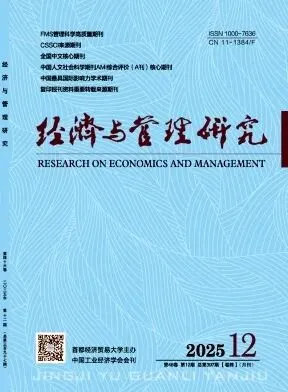
《经济与管理研究》于1980年创刊,是FMS管理科学高质量期刊、CSSCI来源期刊、全国中文核心期刊、中国人文社会科学期刊AMI综合评价(A刊)核心期刊、复印报刊资料重要转载来源期刊,并入选中国国际影响力学术期刊、国际商科教育认证机构AMBA认证的50本最具有影响力的中文商业和管理期刊。
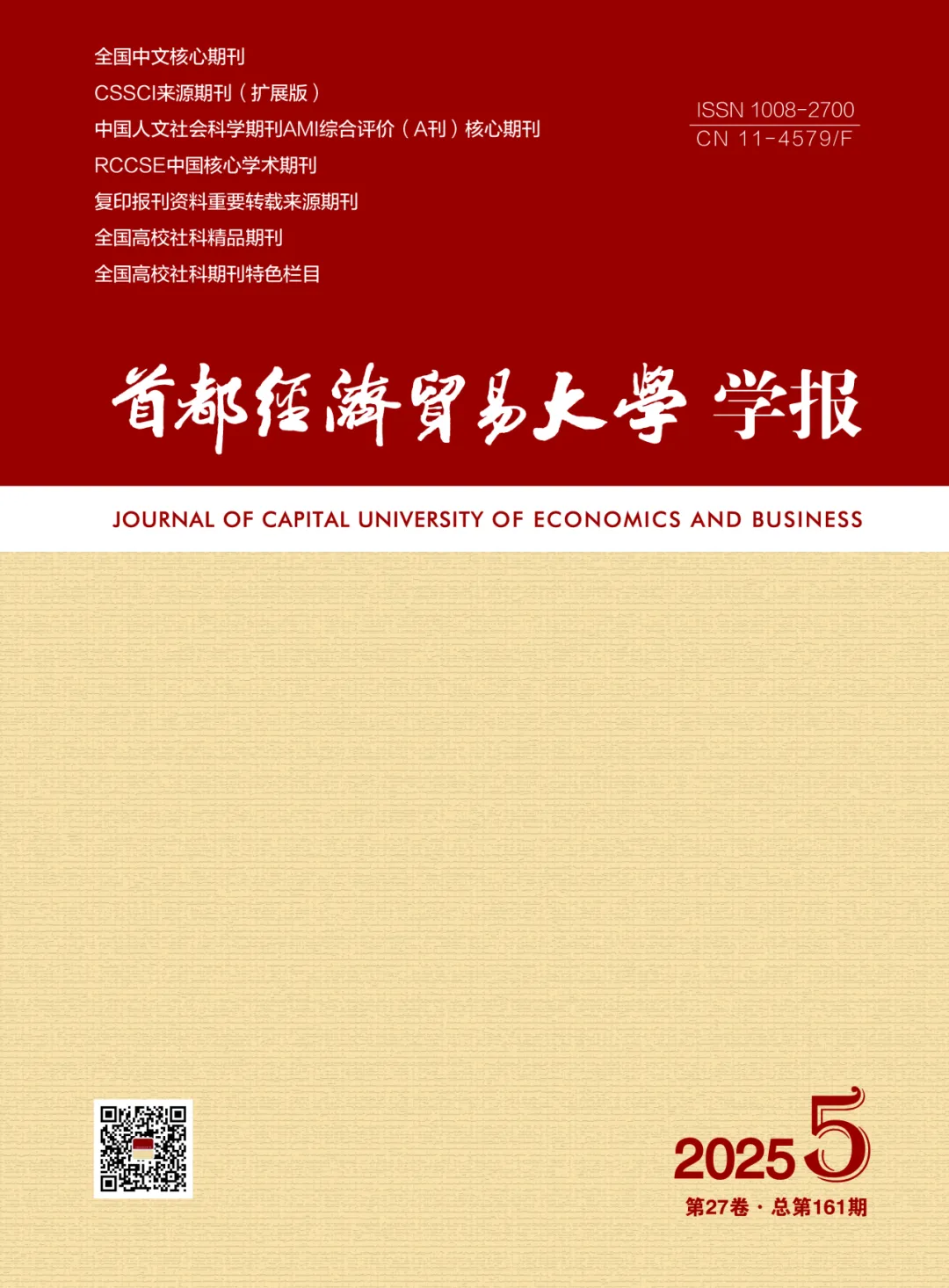
《首都经济贸易大学学报》于1999年创刊,是CSSCI(扩展版)来源期刊、全国中文核心期刊、中国人文社会科学期刊AMI综合评价(A刊)核心期刊、人大复印报刊资料重要转载来源期刊,并被全国高等学校文科学报研究会评为全国高校精品社科期刊。
联系我们
Contact Us

中国知网“中文精品学术期刊外文版数字出版工程”(简称JTP)自2015年启动,已与400余种学术期刊合作出版了6万余篇双语对照论文,积累了丰富的学术翻译/英语加工/学术推广经验。形成了集双语出版、主题电子书出版、双语讲座视频制作、期刊英文内容编校加工、资讯编译、海外推广为一体的全方位服务体系,全面助力期刊提升国际影响力。

JTP网址:https://jtp.cnki.net/Bilingual/
感兴趣的朋友请联系

联系人丨张老师
手机丨13661148416
座机丨010-82170818-8173
邮箱丨 zxd6974@cnki.net
