

互联网技术的更新迭代往往会带来生产力质的飞跃。而颠覆性技术出圈的早期也会有成千上万的项目死在实验室里,而作为ZK零知识证明的龙头Cysic目前的投研来看,已经出圈,确定性又多了一分。这一篇小编转自官网的白皮书,内容已经过于详细,小编不做过份解读。了解一个项目的灵魂,读懂创始人的思维。来吧跟我一起研究下Cysic的白皮书。
(https://hackmd.io/@Cysic/H1XlGr0jle)

TL;DR TL;博士:
ComputeFi is Cysic's vision for a decentralized compute economy, transforming GPUs, ASIC miners, and servers into a programmable, verifiable, and liquid resource. Today, compute remains siloed and centralized, driving up costs for AI, zero-knowledge proofs, and mining. ComputeFi solves this by matching providers and requesters through a decentralized marketplace, where tasks are executed and verified via cryptography, redundancy, or consensus. With Cysic’s vertically integrated hardware stack, from custom ASICs to GPU clusters and portable miners, ComputeFi creates scalable, real-world compute liquidity, positioning compute as the missing pillar of Web3 infrastructure alongside DeFi, storage, and bandwidth.
ComputeFi 是 Cysic 对去中心化计算经济的愿景,将 GPU、ASIC 矿机和服务器转变为可编程、可验证且流动性强的资源。如今,计算资源仍处于孤立和集中的状态,这使得人工智能、零知识证明和挖矿的成本居高不下。ComputeFi 通过去中心化的市场将提供者和请求者进行匹配,通过加密技术、冗余或共识来执行和验证任务,从而解决了这一问题。凭借 Cysic 自主研发的硬件堆栈,从定制的 ASIC 到 GPU 集群和便携式矿机,ComputeFi 创造了可扩展的、现实世界的计算流动性,将计算定位为与 DeFi、存储和带宽并列的 Web3 基础设施的缺失支柱。

In the digital economy, computation has become the most valuable raw material. Artificial intelligence models grow larger each year, consuming billions of GPU hours. Zero-knowledge proofs now underpin the scalability of blockchains, requiring millions of parallel proof generations to sustain Ethereum and its rollups. Cryptocurrency mining, once dominated by hobbyists, has evolved into an industrial-scale activity that secures hundreds of billions of dollars in value.
在数字经济中,计算已成为最有价值的原材料。每年,人工智能模型都在不断增大,消耗数十亿 GPU 小时。零知识证明如今支撑着区块链的可扩展性,需要数百万个并行证明生成来维持以太坊及其扩容方案的运行。曾经由业余爱好者主导的加密货币挖矿,如今已演变成一项工业规模的活动,保障着数千亿美元的价值。
Yet the supply of compute remains siloed, expensive, and centralized. Access to GPUs is largely monopolized by cloud providers. Proof generation is fragmented into closed prover services. Mining power is concentrated in the hands of a few industrial pools. For developers, researchers, and ordinary users, compute remains both scarce and inaccessible.
然而,计算资源的供应仍然处于孤立、昂贵且集中的状态。对 GPU 的访问在很大程度上被云服务提供商所垄断。证明生成分散在封闭的证明服务中。算力集中在少数几个工业矿池手中。对于开发者、研究人员和普通用户而言,计算资源仍然稀缺且难以获取。
At Cysic, we believe compute should be treated not as a privilege but as a publicly accessible resource — liquid, programmable, and verifiable. Just as decentralized finance (DeFi) unlocked capital from banks, ComputeFi unlocks compute from closed platforms.
在 Cysic,我们认为计算不应被视为一种特权,而应是一种公开可获取的资源——流动的、可编程的、可验证的。正如去中心化金融(DeFi)将资本从银行中解放出来一样,计算金融(ComputeFi)将计算从封闭平台中解放出来。
ComputeFi is the foundation of this vision. It is a decentralized compute infrastructure that financializes GPUs, ASICs, and other accelerators, transforming them into a globally accessible marketplace. Within ComputeFi, workloads of many types, from ZK proofs to AI inference to mining, can be requested, executed, and verified transparently.
ComputeFi 是这一愿景的基础。它是一个去中心化的计算基础设施,将 GPU、ASIC 和其他加速器金融化,将其转变为一个全球可访问的市场。在 ComputeFi 中,从零知识证明到人工智能推理再到挖矿等各种类型的工作负载都可以被透明地请求、执行和验证。
Background and Motivation背景与动机
The last decade has seen the progressive decentralization of key digital resources, such as finance, storage and bandwidth. But one resource remains stubbornly centralized: compute. Cloud providers like AWS, Google Cloud, and Azure dominate the AI landscape. Mining has consolidated into industrial-scale facilities. Prover networks remain experimental, and AI compute markets are fragmented into niche platforms.
过去十年间,诸如金融、存储和带宽等关键数字资源逐渐实现去中心化。但有一项资源仍顽固地处于集中状态:计算。亚马逊网络服务(AWS)、谷歌云和微软 Azure 等云服务提供商在人工智能领域占据主导地位。挖矿已整合为工业规模的设施。证明网络仍处于试验阶段,而人工智能计算市场则分散在各种小众平台上。
Compute is not only the most valuable digital commodity. It is also the most complex. Unlike storage or bandwidth, computation varies in type, complexity, and verification method. Training an LLM, generating a zkSNARK proof, and mining a Bitcoin block all require radically different hardware, software, and verification logic.
计算不仅是最有价值的数字商品,也是最复杂的。与存储或带宽不同,计算在类型、复杂性和验证方法上都各不相同。训练一个大型语言模型、生成一个零知识简洁非交互式知识论证(zkSNARK)证明以及挖掘一个比特币区块,都需要截然不同的硬件、软件和验证逻辑。
This complexity explains why no project has yet achieved a general-purpose compute market. Existing attempts remain siloed:
这种复杂性解释了为何至今还没有一个项目能实现通用计算市场。现有的尝试仍处于孤立状态:
- GPU rental platforms like Render and IO.net address AI inference but not proofs or mining.像 Render 和 IO.net 这样的 GPU 租赁平台可以满足人工智能推理的需求,但无法满足证明或挖矿的需求。
- Prover-as-a-service companies like Succinct or RiscZero address ZK workloads but not AI or HPC.像 Succinct 或 RiscZero 这样的零知识证明即服务公司专注于处理零知识工作负载,但不涉及人工智能或高性能计算。
- Mining pools tokenize hashpower but cannot flexibly reallocate it to new domains.矿池将算力代币化,但无法灵活地将其重新分配到新的领域。
The result is fragmentation: islands of compute liquidity that cannot be bridged into a unified economy.
其结果是碎片化:一个个计算流动性孤岛无法连接成统一的经济体系。
To unlock the next wave of innovation, compute must become:
要开启下一波创新浪潮,计算必须变得:
- Programmable: Just as capital in DeFi became composable via smart contracts, compute must be accessible through APIs and programmable workflows.可编程性:正如去中心化金融(DeFi)中的资本通过智能合约实现了组合性,计算也必须通过应用程序编程接口(API)和可编程工作流来实现可访问性。
- Verifiable: Users should not need to trust providers blindly. Correctness must be guaranteed by cryptographic proofs, redundancy, or consensus mechanisms.可验证性:用户不应盲目信任服务提供商。正确性必须通过加密证明、冗余或共识机制来保证。
- Liquid: Compute should be treated as an asset class. A GPU hour, an ASIC hash, or a zkSNARK proof should be interchangeable and tradable across domains.Liquid:计算应被视为一种资产类别。一个 GPU 小时、一个 ASIC 哈希值或一个零知识证明都应在不同领域之间可互换和交易。
- Accessible: Anyone, from an AI lab to a student with a gaming PC, should be able to request or provide compute.可访问性:从人工智能实验室到拥有游戏电脑的学生,任何人都应能够请求或提供计算能力。
This is the motivation behind ComputeFi: to make compute a liquid and trustless resource layer for the digital economy.
这就是 ComputeFi 的动机所在:让计算成为数字经济中一种流动且无需信任的资源层。
What is ComputeFi
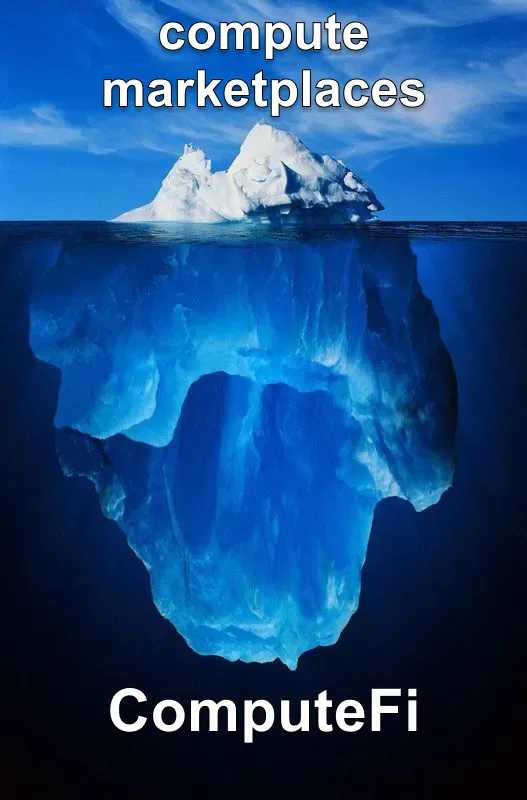
ComputeFi is the financialization of compute resources. It turns raw computation into a programmable, tradable, and verifiable primitive, just as DeFi transformed idle capital into liquidity pools. In ComputeFi, compute cycles and hashrates are contributed by providers, requested by users, and verified by the network. The result is a unified marketplace where ZK proofs, AI inference, and mining workloads coexist.
什么是ComputeFi
ComputeFi 是计算资源的金融化。它将原始计算能力转化为可编程、可交易和可验证的基本要素,就像 DeFi 将闲置资本转化为流动性资金池一样。在 ComputeFi 中,计算周期和哈希率由提供者贡献,由用户请求,并由网络进行验证。其结果是一个统一的市场,其中零知识证明、人工智能推理和挖矿工作负载共存。
ComputeFi is built on four foundational principles:
ComputeFi 建立在四个基本原则之上:
- Hardware-Agnostic: The network is open to GPUs, ASIC miners, CPUs, and specialized accelerators. No single hardware vendor dominates the protocol.硬件无关性:该网络对 GPU、ASIC 矿机、CPU 以及专用加速器均开放。没有任何一家硬件供应商能够主导该协议。
- Workload-Agnostic: ComputeFi supports multiple domains, from blockchain proving to AI to HPC. Modules define how each workload type is executed and verified.工作负载无关性:ComputeFi 支持多个领域,从区块链证明到人工智能再到高性能计算。模块定义了每种工作负载类型的执行和验证方式。
- Verifiable: Correctness is enforced at the protocol level. Different workloads employ different mechanisms — zkSNARK validity for proofs, redundancy for AI inference, and hash verification for mining.可验证性:正确性在协议层面得到强制执行。不同的工作负载采用不同的机制——零知识简洁非交互式知识论证(zkSNARK)的有效性用于证明,冗余用于人工智能推理,哈希验证用于挖矿。
- Composable: Developers can integrate ComputeFi into dApps, protocols, or AI services via standardized APIs, treating compute as a first-class resource.可组合性:开发者可以通过标准化的 API 将 ComputeFi 集成到去中心化应用程序、协议或人工智能服务中,将计算视为一种一流的资源。
Cysic is uniquely positioned to realize this vision because it integrates silicon design, infrastructure, and blockchain coordination. Unlike software-only protocols, Cysic can onboard real hardware, from ASICs to portable miners, ensuring that ComputeFi is not just theoretical, but practical and scalable.
Cysic 具有独特的优势能够实现这一愿景,因为它将硅设计、基础设施和区块链协调进行了整合。与纯软件协议不同,Cysic 能够接入真实的硬件设备,从专用集成电路(ASIC)到便携式矿机,确保计算金融(ComputeFi)不只是理论上的概念,而是切实可行且可扩展的。
Cysic Network Cysic网络
To understand how Cysic Network operates, we first define the actors, their interactions, and the threats the system must defend against.
要了解 Cysic 网络是如何运作的,我们首先定义参与者、他们的互动以及系统必须防范的威胁。
Roles 角色
There are several different actors in Cysic Network:
在 Cysic 网络中有几个不同的参与者:
- Compute Providers: These are individuals or organizations who contribute raw computational power to the network. Providers may range from a single GPU in a desktop computer to industrial-scale clusters of ASIC miners. Providers register their hardware, receive workloads, execute them, and submit results back to the network.计算服务提供者:这些是为网络贡献原始计算能力的个人或组织。提供者可能从台式机中的单个 GPU 到工业规模的 ASIC 矿工集群不等。提供者注册其硬件,接收工作负载,执行它们,并将结果提交回网络。
- Task Requesters: These are users, dApps, or enterprises that require computation. A requester may be a rollup operator needing zkSNARK proofs, a zkVM prover network requiring proving cycles, or a miner outsourcing hashpower to a decentralized pool. Requesters specify workload requirements (e.g., GPU memory, runtime constraints, deadline) when submitting tasks.任务请求者:这些是需要计算的用户、去中心化应用程序(dApp)或企业。请求者可能是需要零知识简洁非交互式知识论证(zkSNARK)证明的汇总操作员、需要证明周期的零知识虚拟机(zkVM)证明网络,或者是将哈希算力外包给去中心化矿池的矿工。请求者在提交任务时会指定工作负载要求(例如,GPU 内存、运行时限制、截止日期)。
- Verifiers: Independent participants who check the correctness of results. For some workloads, verification is trivial (e.g., hash difficulty checks, verifying ZK proofs). For others, it requires cryptographic proofs or redundancy (multiple providers executing the same AI inference). Verifiers anchor trust in the network.验证者:独立参与者,负责检查结果的正确性。对于某些工作负载,验证过程很简单(例如,哈希难度检查、验证零知识证明)。而对于其他工作负载,则需要加密证明或冗余(多个提供者执行相同的 AI 推理)。验证者为网络建立信任基础。
- Marketplace: The coordination layer of ComputeFi. The marketplace matches tasks with providers, balancing performance, fairness, and reliability. The marketplace presents a user-facing interface where requesters can submit tasks and monitor execution.市场:计算金融(ComputeFi)的协调层。市场将任务与提供者进行匹配,平衡性能、公平性和可靠性。市场提供了一个面向用户的界面,请求者可以在其中提交任务并监控执行情况。
For instance, the lifecycle of a ZK proof task is: the task requestor first specifies the essentials of a task, such as the software version, deadline, and reward. Multiple compute providers then proceed bidding for this task, with the rank of weighted sum of reserve tokens and bid. After the proof task is carried out by the winning provider, the result is sent out to multiple randomly selected verifiers to verify the result. After all the verification is done, the reward will be distributed to participated providers and verifiers and whole process is recorded on Cysic Network blockchain.
例如,零知识证明任务的生命周期是:任务请求者首先指定任务的基本要素,例如软件版本、截止日期和奖励。多个计算提供者随后对任务进行竞标,竞标排名依据的是储备代币和出价的加权总和。获胜的提供者执行证明任务后,将结果发送给多个随机选择的验证者进行验证。所有验证完成后,奖励将分配给参与的提供者和验证者,整个过程将记录在 Cysic Network 区块链上。
In ComputeFi, compute is represented as workload-specific units:在 ComputeFi 中,计算以特定工作负载的单位来表示:
- GPU cycles, expressed in FLOPs (floating-point operations)以每秒浮点运算次数(FLOPs)表示的 GPU 周期
- ASIC cycles, expressed in hashes per second.每秒哈希数,以ASIC 周期表示。
- Proofs, expressed in cycles in zkVM.在 zkVM 中以循环形式表达的证明。
The protocol normalizes heterogeneous resources into a comparable model so that different workloads can be fairly priced, allocated, and traded.
该协议将异构资源标准化为可比较的模型,以便对不同的工作负载进行公平定价、分配和交易。
Threat Model 威胁模型
To make sure every task runs smoothly, we need to defend against some attacks. We list some canonical attacks below:
为了确保每项任务都能顺利进行,我们需要防范一些攻击。下面列出了一些典型的攻击:
- Malicious Results: Providers may attempt to return incorrect or fabricated results.恶意结果:提供者可能会试图返回错误或伪造的结果。
- Dropouts: Providers may fail to deliver tasks due to hardware failure or intentional disruption.掉线:提供方可能会因硬件故障或故意中断而无法完成任务。
- Collusion: Groups of providers or verifiers may attempt to manipulate outcomes.共谋:提供者或验证者群体可能会试图操纵结果。
- Sybil Attacks: An adversary may create many fake identities to increase influence in scheduling or verification.女西比尔攻击:攻击者可能会创建许多虚假身份,以在调度或验证中增加影响力。
- Censorship: Schedulers or dominant providers may attempt to block certain tasks.审查制度:调度程序或占主导地位的供应商可能会试图阻止某些任务。
Architecture 体系结构
Cysic Network is designed as a modular stack, ensuring flexibility while preserving coherence across domains. It is built using Cosmos CDK as a layer-1 blockchain. The layered architecture from bottom to top can be described as:
Cysic 网络被设计为一个模块化堆栈,在保持跨领域一致性的同时确保灵活性。它使用 Cosmos CDK 构建为一层区块链。从底层到顶层的分层架构可以描述为:
- Hardware Layer: This is the physical layer of the Cysic Network, where CPU/GPU/FPGA servers, mining rigs and portable computing devices, including cellphones and miners, constitutes the foundation of the network.硬件层:这是 Cysic 网络的物理层,其中 CPU/GPU/FPGA 服务器、矿机以及包括手机和矿工在内的便携式计算设备构成了网络的基础。
- Consensus Layer: As Cysic Network is built upon Cosmos CDK, which uses CometBFT algorithm. CometBFT follows the Byzantine Fault Tolerance (BFT) consensus model, meaning it is designed to handle situations where some nodes in the network behave maliciously or fail to follow the protocol correctly. It tolerates up to one-third of the nodes failing or behaving maliciously without compromising the system’s integrity. The consensus in Cysic Network, Proof-of-Compute, is developped based on this consensus mechanism. In this updated consensus mechanism, not only the staked tokens, but the amount of computation pledged in the system is taken into the consensus reaching process.共识层:由于 Cysic 网络是基于 Cosmos CDK 构建的,而 Cosmos CDK 使用的是 CometBFT 算法。CometBFT 遵循拜占庭容错(BFT)共识模型,这意味着它被设计用于处理网络中某些节点恶意行为或未能正确遵循协议的情况。它能够容忍多达三分之一的节点出现故障或恶意行为,而不会影响系统的完整性。Cysic 网络中的共识机制——计算证明(Proof-of-Compute),正是基于这种共识机制开发的。在这一更新后的共识机制中,不仅考虑了质押的代币数量,还考虑了系统中承诺的计算量来达成共识。
- Execution Layer: This layer is responsible for job scheduling, workload routing, bridging, voting and some other basic functionalities of the network. The functionalities are achieved by various smart contracts deployed on the EVM-compatible blockchain.执行层:该层负责作业调度、工作负载路由、桥接、投票以及网络的其他一些基本功能。这些功能通过部署在兼容 EVM 的区块链上的各种智能合约来实现。
- Product Layer: The product layer is the interaction portal of multiple products in Cysic Network, which currently includes a ZK proof market, an AI inference framework, a crypto mining framework and some other products. These are domain-specific modules (ZK proving, AI inference, mining, HPC workloads). Each service defines how tasks are executed and verified.产品层:产品层是 Cysic 网络中多个产品的交互门户,目前包括零知识证明市场、AI 推理框架、加密货币挖矿框架以及其他一些产品。这些是特定领域的模块(零知识证明、AI 推理、挖矿、高性能计算工作负载)。每个服务都定义了任务的执行和验证方式。
The layered architecture provides several advantages. By separating concerns, it ensures that improvements or changes in one layer do not disrupt others. For example, new proof systems or AI models can be added at the product layer without modifying the underlying consensus or hardware logic. This modularity accelerates innovation, improves scalability, and makes the system resilient to evolving workloads. It also creates a clear interface for developers and hardware providers, enabling rapid onboarding of new compute resources while preserving protocol stability.
分层架构提供了诸多优势。通过分离关注点,它确保了一层的改进或变更不会影响其他层。例如,可以在产品层添加新的证明系统或人工智能模型,而无需修改底层的共识或硬件逻辑。这种模块化加速了创新,提高了可扩展性,并使系统能够适应不断变化的工作负载。它还为开发人员和硬件供应商创建了清晰的接口,能够快速引入新的计算资源,同时保持协议的稳定性。
Dual Token Model 双令牌模型
The goal of the Cysic Network is to establish a decentralized and reliable proving and verification service that fosters community growth and self-sustainability. The token will be used to incentivize provers, verifiers, and validators within the protocol, establishing an effective governance and reward distribution mechanism. Cysic Network uses a dual-token model, consisting of the network token and governance token. Each token plays a specific role in the network, working together to build the Cysic Network ecosystem:
Cysic 网络的目标是建立一个去中心化且可靠的证明与验证服务,促进社区发展和自我可持续性。代币将用于激励协议内的证明者、验证者和验证节点,建立有效的治理和奖励分配机制。Cysic 网络采用双代币模式,包括网络代币和治理代币。每种代币在网络中发挥特定作用,共同构建 Cysic 网络生态系统:
- $CYS The $CYS token is the native token of the Cysic Network and is used to pay transaction fees, block rewards, and other network-related activities. $CYS ensures the liveness and vitality of the network through its transaction fee mechanism and serves as one of the incentives for users to participate in network activities.CYS 代币是 Cysic 网络的原生代币,用于支付交易手续费、区块奖励以及其他与网络相关的活动。通过其交易手续费机制,$CYS 确保了网络的活跃度和生命力,并且是激励用户参与网络活动的因素之一。
- $CGT CGT美元: $CGT is the governance token and is non-transferable. It can be obtained by staking $CYS in a 1:1 conversion ratio. The un-staking process takes longer than the staking process, as implemented in the Cosmos SDK.CGT 是治理代币,不可转让。它可以通过以 1:1 的兑换比例质押 CYS 获得。解质押过程比质押过程耗时更长,这是按照 Cosmos SDK 的实现方式设定的。
Compute providers contribute their computing power to the pool, which in turn provides services to ZK, AI and crypto mining projects. In addition to receiving block rewards from the Cysic Network, users can also buy $CYS and stake them to gain voting power to govern the computing pool. The distribution of computing power can be dynamically adjusted based on several key factors, with the external token rewards from different projects being one of the main factors.
计算服务提供商将其计算能力贡献至共享池,该池进而为零知识证明(ZK)、人工智能(AI)和加密货币挖矿项目提供服务。除了从 Cysic 网络获得区块奖励外,用户还可以购买 $CYS 并进行质押以获取投票权来管理计算池。计算能力的分配可以根据几个关键因素进行动态调整,来自不同项目的外部代币奖励是其中的主要因素之一。
The Cysic Network requires computing providers to reserve a certain amount of $CGT initially to defend against malicious behavior. All eligible providers can connect to the Cysic Network by staking $CYS as collateral to maintain the reliability and sustainability of the network service.Cysic
网络要求计算服务提供商最初预留一定数量的 $CGT 以防范恶意行为。所有符合条件的提供商都可以通过质押 $CYS 作为抵押来连接 Cysic 网络,以维持网络服务的可靠性和可持续性。
Hardware-Software Co-Design, Application and Case Studies
硬件 - 软件协同设计、应用及案例研究
Cysic’s competitive advantage lies in its full-stack integration of hardware and protocol design.
赛西克的竞争优势在于其硬件与协议设计的全栈集成.
While most networks focus solely on software coordination, Cysic builds the silicon and infrastructure that power the protocol itself. This vertical integration ensures efficiency, scalability, and resilience against hardware supply shocks.
虽然大多数网络仅专注于软件协调,但 Cysic 则构建了支撑协议本身的芯片和基础设施。这种垂直整合确保了效率、可扩展性,并能抵御硬件供应冲击带来的影响。

- ZK ASICs:
- Cysic designs specialized ASICs tailored for zero-knowledge proofs, achieving orders-of-magnitude improvements in throughput and energy efficiency compared to commodity GPUs. These chips are purpose-built to sustain real-time Ethereum block proving and other cryptographic workloads.Cysic 设计了专门用于零知识证明的专用集成电路(ASIC),与通用图形处理器(GPU)相比,在吞吐量和能效方面实现了数量级的提升。这些芯片专为支持实时以太坊区块证明和其他加密工作负载而打造。
- GPU Clusters: GPU集群:
- General-purpose GPUs remain essential for AI inference and training. Cysic operates optimized clusters with custom CUDA kernels for verifiable workloads, enabling both high-throughput and trust-minimized execution.通用图形处理器(GPU)对于人工智能的推理和训练仍然至关重要。Cysic 运行经过优化的集群,配备定制的 CUDA 内核,用于可验证的工作负载,从而实现高吞吐量和信任最小化的执行。
- Portable Miners: 便携式矿工:
- Consumer-friendly Dogecoin and Bitcoin miners, branded under Cysic, are designed for low energy cost and easy onboarding. These devices integrate directly into the network, bringing retail users into the ComputeFi economy.
- 以 Cysic 为品牌的面向消费者的狗狗币和比特币矿机,专为低能耗和易上手而设计。这些设备可直接接入网络,将零售用户引入计算金融经济。
- Heterogeneous Onboarding:异质性入职:
- Beyond Cysic’s own devices, the protocol supports commodity GPUs and enterprise HPC clusters. This inclusivity ensures global participation and prevents centralization around a single hardware class.除了 Cysic 自身的设备外,该协议还支持通用图形处理器(GPU)和企业高性能计算(HPC)集群。这种包容性确保了全球范围内的参与,并防止围绕单一硬件类别形成中心化。
By aligning hardware and protocol development, ComputeFi ensures that supply is not just theoretical but grounded in real, deployable infrastructure.
通过协调硬件和协议开发,ComputeFi 确保供应不只是理论上的,而是基于真实、可部署的基础设施。
Applications 应用程序
The versatility of ComputeFi allows it to support multiple industries and use cases simultaneously.
Key applications include:ComputeFi 的多功能性使其能够同时支持多个行业和应用场景。关键应用包括:
AI Marketplaces 人工智能的市场
Developers can deploy machine learning models and serve inference queries on-demand. Requesters pay per inference, while providers execute tasks and verifiers ensure correctness. This enables verifiable LLM outputs, pay-as-you-go inference services, and decentralized alternatives to centralized AI APIs.开发人员可以按需部署机器学习模型并提供推理查询服务。请求者按推理次数付费,提供者执行任务,验证者确保正确性。这使得大型语言模型的输出可验证,推理服务按需付费,并且为集中式 AI API 提供了去中心化的替代方案。Blockchain Infrastructure区块链基础设施
Rollups and privacy-focused L1s require vast zkSNARK proving capacity. Instead of relying on closed prover-as-a-service models, they can outsource workloads to ComputeFi. The network delivers cryptographically verified results while distributing revenue back to providers.汇总合约和注重隐私的第一层区块链需要大量的零知识简洁非交互式知识论证(zkSNARK)证明能力。它们可以将工作负载外包给 ComputeFi,而不是依赖于封闭的证明即服务模式。该网络提供经过加密验证的结果,同时将收益分配给提供者。Mining Integration 矿业整合
Traditional hashpower is integrated as a form of compute liquidity. Bitcoin and Dogecoin miners participate in ComputeFi while continuing to secure their native networks. In parallel, mining rigs can be flexibly reallocated to secondary workloads, such as ZK or AI tasks, when profitable.传统算力被整合为一种计算流动性。比特币和狗狗币矿工在继续保障其原生网络的同时参与计算金融。与此同时,当有利可图时,挖矿设备可以灵活地重新分配给诸如零知识证明或人工智能等次要工作负载。Scientific HPC 科学HPC
Researchers in fields like genomics, climate modeling, and 3D rendering often face prohibitive cloud costs. ComputeFi provides access to affordable and verifiable compute capacity without relying on centralized providers, opening new opportunities for open science.在基因组学、气候建模和 3D 渲染等领域的研究人员常常面临高昂的云服务费用。ComputeFi 提供了无需依赖中心化供应商的经济实惠且可验证的计算能力,为开放科学开辟了新的机遇。
Through these applications, ComputeFi positions itself as the general-purpose compute backbone of the decentralized web.
通过这些应用,ComputeFi 将自身定位为去中心化网络的通用计算骨干。
Case Studies 案例研究
Ethereum Block Proving以太坊区块证明
Ethereum rollups produce millions of transactions daily that require zkSNARK proofs for finality. Traditional provers face bottlenecks in throughput and cost. By distributing proving workloads across a global pool of providers, ComputeFi enables real-time Ethereum block proving. Benchmarks demonstrate reduced latency, lower cost per proof, and higher resilience compared to centralized prover services.
以太坊的扩容方案(rollups)每天会产生数百万笔交易,这些交易需要零知识简洁非交互式知识论证(zkSNARK)证明才能最终确认。传统的证明器在吞吐量和成本方面面临瓶颈。通过将证明工作负载分配给全球的提供商池,ComputeFi 实现了以太坊区块的实时证明。基准测试表明,与集中式证明服务相比,其延迟更低、每份证明的成本更低且更具弹性。

Verifiable AI Inference可验证的人工智能推理
Consider a use case where a decentralized marketplace offers GPT-based inference. Requesters submit natural language queries; providers run them on GPUs; verifiers cross-check outputs with redundancy or probabilistic methods. The result is an AI API where users pay only for correct results, without trusting a black-box provider. This opens the door to verifiable AI assistants, content moderation systems, and autonomous agents.
设想这样一个用例:一个去中心化的市场提供基于 GPT 的推理服务。请求者提交自然语言查询;提供者在 GPU 上运行这些查询;验证者通过冗余或概率方法交叉检查输出结果。其结果是一个 AI API,用户只需为正确的结果付费,无需信任黑箱提供者。这为可验证的 AI 助手、内容审核系统和自主代理打开了大门。
Dogecoin Mining Integration狗狗币挖矿集成
Cysic’s portable Dogecoin miners exemplify how consumer hardware can plug directly into ComputeFi. Retail users deploy low-energy miners at home, contributing hashpower to secure Dogecoin while also earning participation rights in the compute marketplace. Over time, this expands decentralization of mining and builds grassroots adoption of ComputeFi.
Cysic 的便携式狗狗币矿机展示了消费级硬件如何直接接入计算金融(ComputeFi)。普通用户在家中部署低能耗矿机,为狗狗币提供算力保障的同时,还能获得计算市场的参与权。随着时间的推移,这将扩大挖矿的去中心化程度,并推动计算金融在基层的普及。
Conclusion 结论
Compute has become the most essential resource of the digital era, yet it remains the least accessible. Centralization by cloud providers and industrial miners has created scarcity, inflated costs, and limited innovation. To unlock the next wave of growth in AI, blockchain, and scientific research, compute must be made programmable, verifiable, and liquid.
计算已成为数字时代最核心的资源,但却是最难获取的。云服务提供商和工业矿工的集中化造成了资源稀缺、成本虚高以及创新受限。要释放人工智能、区块链和科学研究的下一波增长浪潮,计算必须具备可编程性、可验证性和流动性。
ComputeFi is Cysic’s answer.
ComputeFi 是 Cysic 的解决方案。
By transforming GPUs, ASIC miners, and accelerators into a decentralized marketplace, ComputeFi unifies previously siloed domains, ZK proving, AI inference, mining, and HPC, into a single global economy. Its layered architecture ensures modularity and scalability, while Cysic’s vertical integration of silicon, infrastructure, and protocol delivers unmatched real-world efficiency.
通过将 GPU、ASIC 矿机和加速器转变为一个去中心化的市场,ComputeFi 将此前各自独立的领域——零知识证明、AI 推理、挖矿和高性能计算——统一为一个全球性的经济体系。其分层架构确保了模块化和可扩展性,而 Cysic 在芯片、基础设施和协议方面的垂直整合则带来了无与伦比的实际效率。
Through ComputeFi, compute is no longer just a service — it becomes an asset class, accessible to anyone, anywhere. Just as DeFi unlocked capital and Filecoin decentralized storage, ComputeFi establishes the missing pillar of Web3 infrastructure: a decentralized compute economy.
通过 ComputeFi,计算不再仅仅是一项服务——它成为了一种资产类别,任何人都可以在任何地方获取。正如 DeFi 解锁了资本,Filecoin 去中心化了存储,ComputeFi 建立了 Web3 基础设施缺失的一根支柱:去中心化的计算经济。
Cysic’s mission is clear:
赛西克的使命明确:
to build the foundation of this economy and empower the next generation of applications across AI, cryptography, and beyond.
为打造这一经济基础并助力人工智能、密码学及其他领域的下一代应用发展提供动力。