漿果研讀|SCA 公平價值分配調查報告(3)
2026-08-24 13:18
漿果研讀|SCA 公平價值分配調查報告(3)
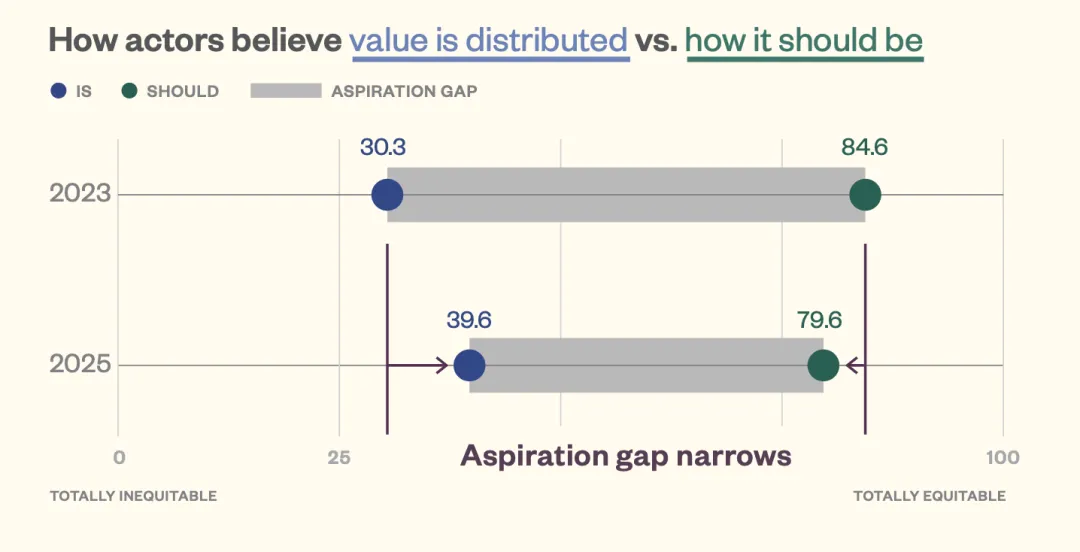
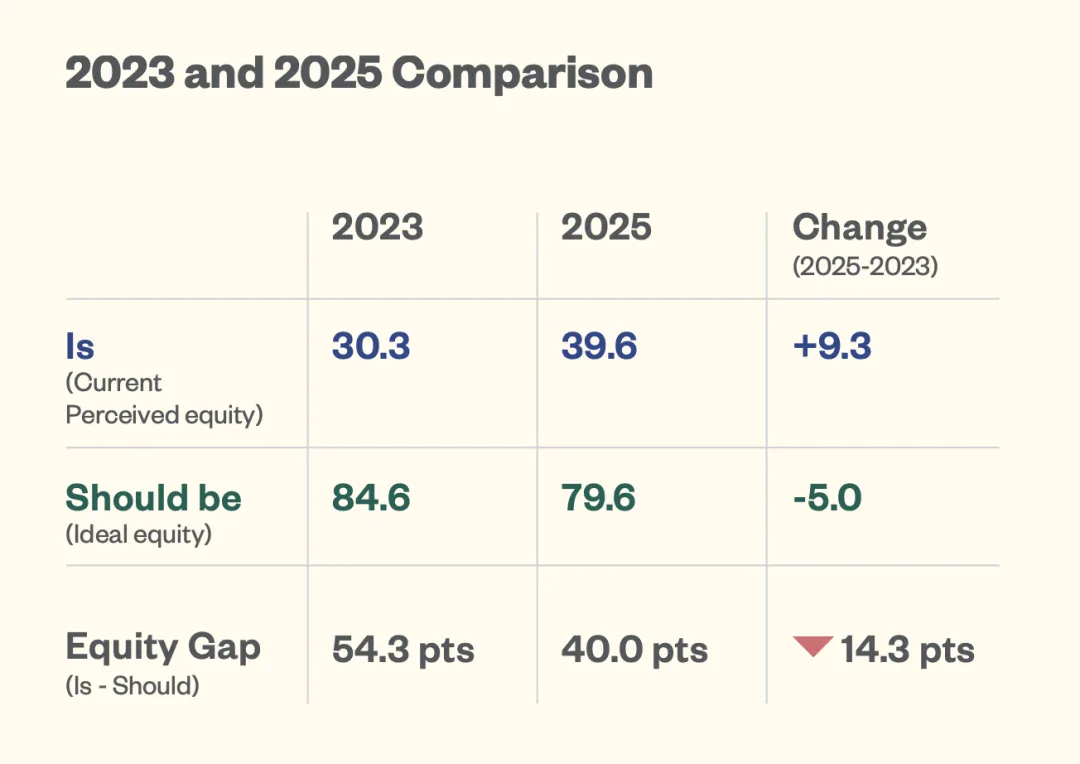
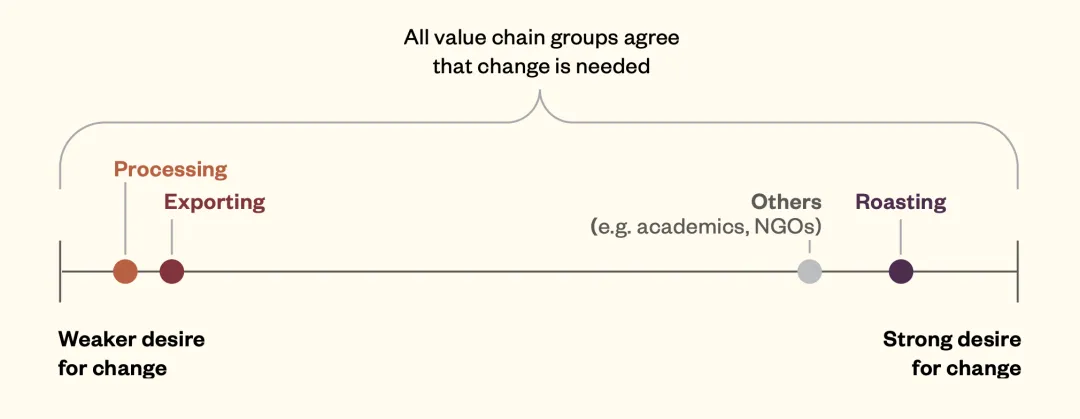
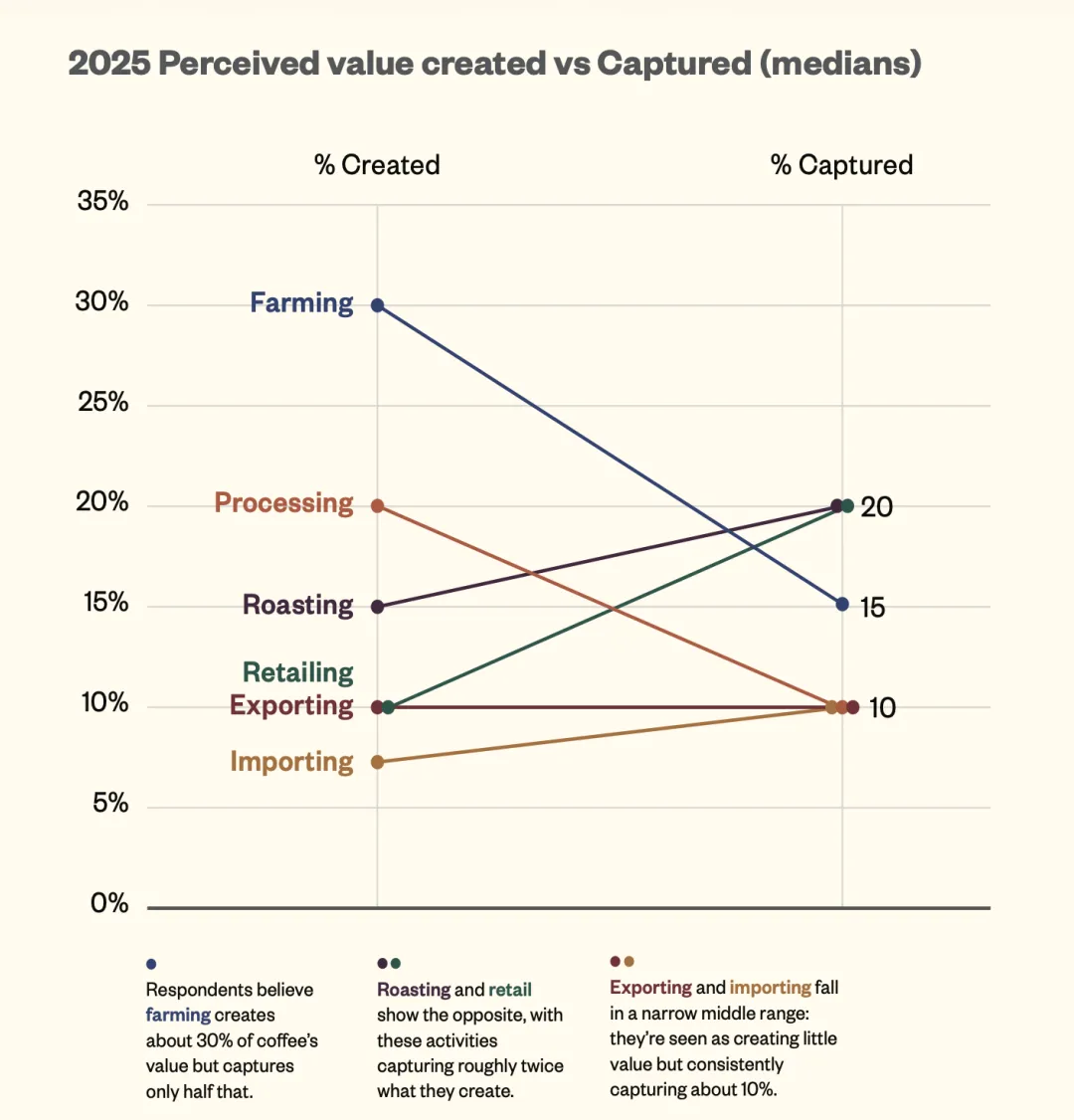
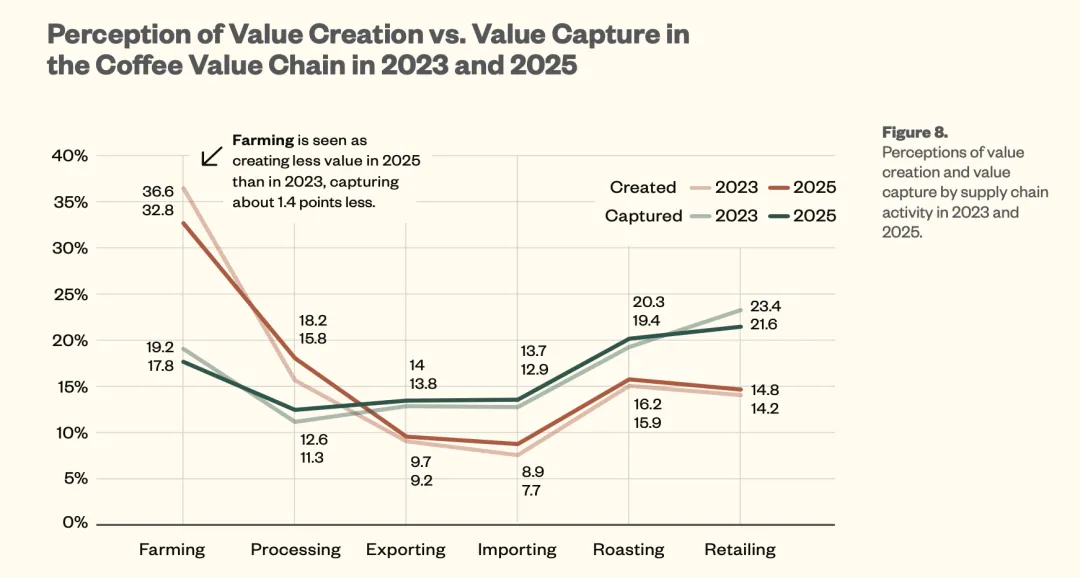
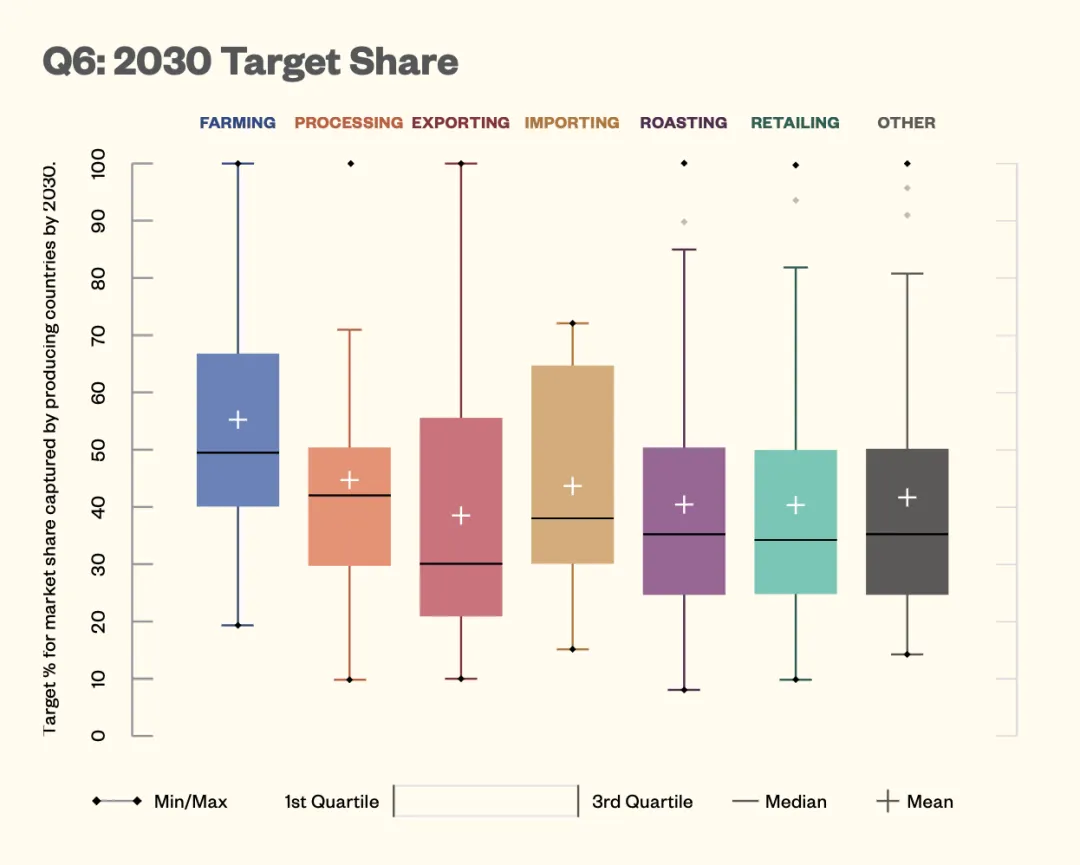
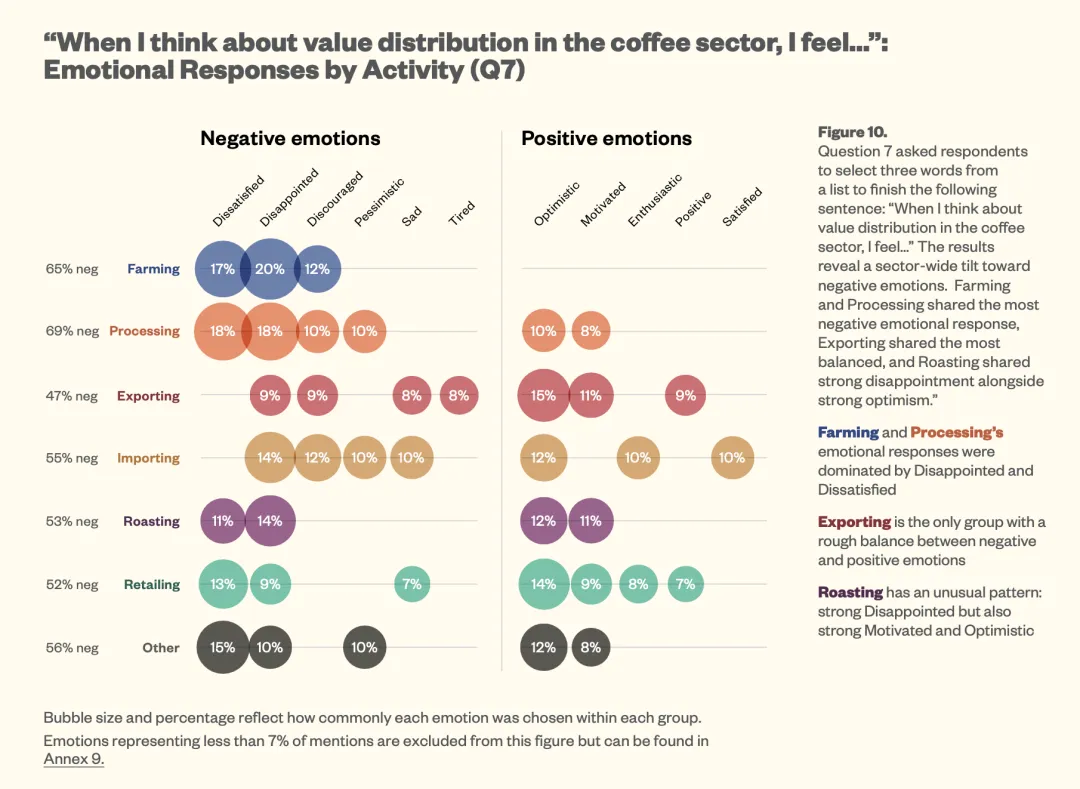
Figure 5. Based on Q2.1 and 2.2, this chart compares how respondents believed that value is and should be distributed in 2023 and 2025, showing a narrowing aspiration gap.圖 5. 基於問題 2.1 和 2.2,此圖表比較了受訪者在 2023 年和 2025 年對價值「現狀」和「應該」如何分配的信念,顯示期望差距正在縮小。When we compare the two questions, we find the survey's most important message:當我們比較這兩個問題時,我們發現了這項調查最重要的訊息:Respondents have diverse perceptions of how the coffee sector works today but they share a common vision for the future. In other words, people experience the current system very differently dpending on their role, but they largely agree on where it should go.受訪者對咖啡產業今天的運作方式有著不同的看法,但他們對未來有著共同的願景。換句話說,人們根據自己的角色,對當前系統的體驗非常不同,但他們在很大程度上同意它應該走向何方。The average gap between how value IS distributed and how it SHOULD be is approximately 40 points.價值「現狀」分配方式與「應該」分配方式之間的平均差距約為 40 分。This "aspiration gap" (also known as a perception gap) tells us that people across the coffee sector want substantial change, not minor adjustments.這個「期望差距」(也稱為認知差距)告訴我們,咖啡產業的各個角落都希望進行實質性的變革,而不是微調。Comparing 2023 results to 2025, we see some notable shifts:比較 2023 年和 2025 年的結果,我們看到了一些顯著的變化:Respondents rated the current system as +9.3 points more equitable.Respondents' expectations for an ideal system dropped by -5.0 points.The gap between aspiration gap (difference between IS and SHOULD) shrank by 14.3 points—a 26% reduction (see table 1).期望差距(「現狀」與「應該」之間的差異)縮小了 14.3 分——減少了 26%(見表 1)。Table 1. A comparison of mean scores for two questions about how coffee's value is and should be distributed asked in 2023 and 2025. We see that the "equity gap" narrows by 14.3 points, or 26.3%.表 1. 2023 年和 2025 年關於咖啡價值「現狀」和「應該」如何分配兩個問題的平均分數比較。我們看到「公平差距」縮小了 14.3 分,即 26.3%。What does a narrowing gap mean? It suggests moderate progress—people's view of reality and their hopes for the future are getting closer together. However, the remaining 40-point gap between knowing and doing is still substantial.差距縮小意味著什麼?這表明取得了適度的進展——人們對現實的看法和對未來的希望正在逐漸接近。然而,知行之間剩餘的 40 分差距仍然巨大。In the coffee sector, a broad range of stakeholders desire a more equitable system, but the way risk, opportunity, and power are currently divided makes it difficult to achieve that vision.在咖啡產業中,廣泛的利益相關者渴望一個更公平的系統,但風險、機會和權力當前的分配方式使得實現這一願景變得困難。This insight echoes themes from global governance research, inequality analyses, farmer livelihood studies, and relational models of specialty coffee.這一見解與全球治理研究、不平等分析、農民生計研究和精品咖啡的關係模型等主題相呼應。The 2023 baseline survey asked what should change in the coffee sector, but not whether stakeholders believed change was actually occurring.2023 年的基線調查詢問了咖啡產業應該改變什麼,但沒有詢問利益相關者是否相信改變正在實際發生。For 2025, we added a new question in this section to fill this gap. Question 3.1 asked respondents whether they agreed (on a scale of 0 to 100) that "value needs to be more equitably distributed in the coffee sector." Question 3.2 asked whether they agreed that "the coffee sector has made positive progress on value distribution."在 2025 年,我們在這一節增加了一個新問題來填補這個空白。問題 3.1 詢問受訪者是否同意(在 0 到 100 的量表上)「咖啡產業中的價值需要更公平地分配」。問題 3.2 詢問他們是否同意「咖啡產業在價值分配方面取得了積極進展」。The results reveal a striking contrast. On Q3.1, nearly everyone agreed strongly that more equitable distribution is essential—the mean score was 86.4 out of 100 across all groups.結果揭示了鮮明的對比。在問題 3.1 中,幾乎所有人都強烈同意更公平的分配是必要的——所有群體的平均分數為 86.4 分(滿分 100 分)。However, when we look more closely at different groups of respondents based on their stated role in the supply chain, an important pattern emerges: Processing and Exporting were at one end of the spectrum—expressing a weaker, or less urgent, sense that "coffee value needs to be more equitably distributed"—while Roasting and Other (which includes academics, NGOs, and certifiers) were at the opposite end—expressing a strong need for change.然而,當我們根據受訪者在供應鏈中的角色更仔細地觀察不同群體時,一個重要的模式出現了:加工和出口位於一端——表達了一種較弱或不那麼緊迫的感覺,認為「咖啡價值需要更公平地分配」——而烘焙和其他(包括學術界、非政府組織和認證機構)則位於另一端——表達了強烈的變革需求。Figure 6. A conceptual image based on sensemaking analysis that shows respondent groups' intensity of desire for change.圖 6. 基於意義建構分析的概念圖,顯示了受訪者群體對變革渴望的強度。The variation isn't about disagreement—it's about intensity. Groups agree that equity matters—everyone scored high. The variation lies in the intensity of their response.這種差異不是關於分歧——而是關於強度。各群體都同意公平很重要——每個人的分數都很高。差異在於他們回應的強度。Downstream actors further from green coffee production (like roasters and industry observers—Others) express the strongest belief that coffee value needs to be distributed more equitably. Meanwhile, upstream actors closer to production (like processors and exporters) score slightly lower.距離生豆生產較遠的下游行動者(如烘焙商和產業觀察者——其他)表達了最強烈的信念,認為咖啡價值需要更公平地分配。與此同時,更接近生產的上游行動者(如加工者和出口商)分數略低。On Q3.2, the pattern changes. While there was moderate to positive sentiment that "the coffee sector has made positive progress," scores varied much more widely: Farming and Exporting averaged around 50-52, while Importing, Processing, and Retailing averaged 66-71.在問題 3.2 中,模式發生了變化。雖然存在著「咖啡產業已取得積極進展」的中等到正面情緒,但分數的變化範圍大得多:種植和出口的平均分數約為 50-52,而進口、加工和零售的平均分數為 66-71。This reveals a more uneven landscape of lived experience. For many upstream actors, progress appears limited, inconsistent, or hard to see.這揭示了生活經驗更加不均勻的景況。對於許多上游行動者來說,進展似乎有限、不一致或難以察覺。They continue to navigate volatile prices, rising costs, and thin margins, and report little evidence of systemic improvement.他們繼續在波動的價格、上升的成本和微薄的利潤中艱難前行,並報告幾乎沒有系統性改善的證據。For midstream and downstream actors, progress is more visible—possibly shaped by traceability systems, evolving buyer and consumer expectations, and sustainability frameworks they interact with more directly.對於中游和下游行動者來說,進展更為明顯——可能受到可追溯性系統、不斷變化的買家和消費者期望以及他們更直接互動的永續性框架的影響。This sense of progress closer to the consuming level was captured in some of the open-ended responses at the end of survey, such as: "I think consumers are becoming more conscious about who and what their money supports."這種更接近消費層面的進步感,在調查結束時的一些開放式回應中被捕捉到,例如:「我認為消費者越來越意識到他們的錢支持了誰和什麼。」This contrast highlights a key tension:The sector is united in believing change is necessary but divided on whether that change is occurring in reality. Bridging this gap isn't just about designing better equity mechanisms—it's about ensuring that progress is felt, not just observed, across all parts of the value chain.產業在相信變革是必要的這一點上是團結的,但在這種變革是否在現實中發生這一點上存在分歧。彌合這一差距不僅僅在於設計更好的公平機制——還在於確保進步在價值鏈的所有部分都能被感受到,而不僅僅是被觀察到。Further statistical comparisons (post hoc) indicate that these differences are concentrated at the extremes of the value chain rather than evenly distributed, pointing to a clear "Observed vs. Lived Progress gap": progress is broadly perceived at the system level, but experienced unevenly depending on position in the chain.進一步的統計比較(事後檢驗)表明,這些差異集中在價值鏈的極端,而不是均勻分佈,指向一個明顯的「觀察到的進步與體驗到的進步之間的差距」:進步在系統層面上被廣泛感知,但根據在鏈條中的位置,體驗卻不均衡。For many actors close to production, including farmers and exporters, progress appears limited, inconsistent, or difficult to discern in daily practice.對於許多接近生產的行動者,包括農民和出口商,進步在日常實踐中似乎有限、不一致或難以辨別。These actors continue to navigate volatile prices, rising costs, and thin margins, and many report little evidence that the underlying conditions shaping value distribution have materially improved.這些行動者繼續在波動的價格、上升的成本和微薄的利潤中艱難前行,許多人報告說,幾乎沒有證據表明塑造價值分配的底層條件已得到實質性改善。This pattern aligns with prior research showing that sustainability and quality regimes often reconfigure governance and compliance requirements without substantially altering upstream risk exposure or income dynamics. In this context, equity is not an abstract aspiration but a lived condition.這種模式與先前的研究一致,該研究表明,永續性和品質體系通常會重新配置治理和合規要求,而不會實質性地改變上游的風險暴露或收入動態。在這種背景下,公平不是一種抽象的渴望,而是一種生活條件。By contrast, for actors operating closer to consumption—such as importers, and especially retailers—progress is more visible. This visibility may be shaped by engagement with traceability systems and due diligence requirements (including those linked to the EUDR or CSDDD), as well as buyer standards and Environmental, Social, and Governance reporting frameworks through which change becomes documented and legible.相比之下,對於在更接近消費端運營的行動者——如進口商,尤其是零售商——進步更為明顯。這種可見性可能受到與可追溯性系統和盡職調查要求(包括與 EUDR 或 CSDDD 相關的要求)以及買方標準和環境、社會和治理 (ESG) 報告框架的互動所塑造,這些框架使變革得以記錄和清晰呈現。As a result, progress is more readily observed through formal systems and narratives, even where its material effects remain unevenly distributed.因此,進步更容易通過正式系統和敘述被觀察到,即使其實質性影響仍然分佈不均。Taken together, these findings mirror the IS vs. SHOULD tension observed in Q2. While the sector is broadly aligned on the direction of change (Q3.1), Q3.2 reveals divergence in whether that change has been felt in the past two years.總的來說,這些發現反映了在問題 2 中觀察到的「現狀」與「應該」之間的張力。雖然產業在變革方向上大致保持一致(問題 3.1),但問題 3.2 揭示了在過去兩年中是否感受到這種變革方面存在分歧。The data suggest that this is not a clash of values, but a structural gap between progress that is visible in systems and progress that is felt on the ground—a distinction shaped by actors' differing exposure to risk, incentives, and institutional feedback loops.數據表明,這不是價值觀的衝突,而是在系統中可見的進步與在實地感受到的進步之間的結構性差距——這種區別是由行動者對風險、激勵和機構反饋迴路的不同暴露程度所塑造的。I think consumers are becoming more conscious about who and what their money supports.Where Value is Created and CapturedQuestions 4 and 5 asked respondents where they think value is created and captured across the supply chain.問題 4 和 5 詢問受訪者他們認為價值在供應鏈的哪裡被創造和獲取。The results match what we found in 2023: respondents see a structural misalignment or mismatch between where they believe value is created (upstream, close to green coffee production) and where they believe it is captured (downstream, close to roasted coffee consumption).結果與我們在 2023 年發現的一致:受訪者認為,在他們相信價值被創造的地方(上游,靠近生豆生產)和他們相信價值被獲取的地方(下游,靠近烘焙咖啡消費)之間存在結構性的錯位或不匹配。Respondents believe farming creates about 30% of coffee's value but captures only half that (15%). Figure 7 shows this gap as downward-sloping lines.受訪者認為種植創造了約 30% 的咖啡價值,但僅獲取了其中的一半 (15%)。圖 7 將這個差距顯示為向下傾斜的線條。Roasting and retail show the opposite pattern—upward-sloping lines—with these activities roughly twice the value they create.烘焙和零售顯示出相反的模式——向上傾斜的線條——這些活動獲取的價值大約是他們創造的兩倍。Exporting and importing fall in a narrow middle range: they're seen as creating little value but consistently capturing about 10%, acting mainly as a pass-through rather than adding or keeping much value.出口和進口落在一個狹窄的中間範圍:它們被視為創造很少的價值,但一貫獲取約 10%,主要作為價值傳遞而非增加或保留許多價值。Figure 7. Perceived value creation vs. capture in 2025 (medians)圖 7. 2025 年感知的價值創造與獲取(中位數)2023 and 2025 surveys (see figure 8).Figure 8. Perception of Value Creation vs. Value Capture in the Coffee Value Chain in 2023 and 2025圖 8. 2023 年和 2025 年咖啡價值鏈中對價值創造與價值獲取的感知One notable change is that farming is seen as creating less value in 2025 than in 2023, capturing about 1.4 points less.一個顯著的變化是,與 2023 年相比,2025 年種植被視為創造了更少的價值,獲取的價值大約少了 1.4 個百分點。This might seem counterintuitive given the climate and regulatory pressures—like the EU Deforestation Regulation (EUDR)—that farmers have faced recently. If anything, readers might expect their contribution to be recognized more, not less.考慮到農民最近面臨的氣候和監管壓力——如歐盟森林砍伐條例 (EUDR)——這可能看起來有違直覺。如果說有什麼不同的話,讀者可能期望他們的貢獻得到更多而非更少的認可。But the same pressures help explain the shift: climate stress and new regulations have created increased work across the entire value chain, and the work conducted by all actors is becoming more urgent and more visible.但同樣的壓力有助於解釋這種轉變:氣候壓力和新法規在整個價值鏈中創造了更多的工作,所有行動者所做的工作變得更加緊迫和更加明顯。Climate stress and supply problems have reinforced the view that farms shoulder the greatest burden for producing coffee—but have also made risk management by roasters, traders, and retailers more visible and valued.氣候壓力和供應問題強化了農場承擔了生產咖啡最大負擔的觀點——但也使烘焙商、貿易商和零售商的風險管理更加明顯和受到重視。Three important forces are at play:1. Climate stress and supply problems have reinforced the view that farms shoulder the greatest burden for producing coffee—but have also made risk management by roasters, traders, and retailers more visible and valued.1. 氣候壓力和供應問題強化了農場承擔了生產咖啡最大負擔的觀點——但也使烘焙商、貿易商和零售商的風險管理更加明顯和受到重視。2. New regulations (such as EUDR, US due diligence requirements, financial sector ESG rules) have put more focus on farming and processing as the starting point for compliance. But they've also increased the perceived contribution of downstream players who handle traceability, reporting, and legal risk.2. 新法規(如 EUDR、美國盡職調查要求、金融部門 ESG 規則)將更多焦點放在種植和加工作為合規的起點。但它們也增加了處理可追溯性、報告和法律風險的下游參與者的感知貢獻。3. Growing interest in regenerative farming and living income has strengthened the view that farm-level work is essential. Yet compliance work, carbon tracking, and brand management are now seen as significant value-creating activities in their own right.3. 對再生農業和生活收入日益增長的興趣強化了農場級工作至關重要的觀點。然而,合規工作、碳追踪和品牌管理現在被視為本身具有重要意義的價值創造活動。The result is a tension: respondents in both 2023 and 2025 broadly believe that coffee's core value—ecological, agricultural, and sensory—originates at the farm or processing stages.結果是一種張力:2023 年和 2025 年的受訪者都廣泛認為,咖啡的核心價值——生態、農業和感官——源自農場或加工階段。In 2025, we saw increased recognition that some of coffee's value is also built through downstream activities like compliance and risk management. EU-based importers, for instance, are now doing complex work to ensure their supply chains meet uncertain deforestation regulations.在 2025 年,我們看到越來越多的認知,認為咖啡的部分價值也透過下游活動(如合規和風險管理)來建立。例如,位於歐盟的進口商現在正在從事複雜的工作,以確保他們的供應鏈符合不確定的森林砍伐法規。And while farmers have long been exposed to volatile climate conditions, intermediaries are taking on more risk management to respond to harvest or shipping delays. These activities aren't new for traders and downstream players, but during times of increased volatility, they may feel like a more essential and visible part of the value chain.而且,雖然農民長期以來一直暴露在波動的氣候條件下,但中介機構正在承擔更多的風險管理,以應對收穫或運輸延誤。這些活動對貿易商和下游參與者來說並不新鮮,但在波動性增加的時期,它們可能感覺像是價值鏈中更必要和更明顯的一部分。From Baseline to Momentum: Shifting Market Share Ambitions for 2030Question 6 asked respondents to consider: "According to the 2020 Coffee Barometer, coffee-producing countries receive only about 10% of the sector's total global value, with the remaining 90% captured by post-export activities. Starting from that 10%, what would be a reasonable market share target for producing countries by the end of 2030?"問題 6 要求受訪者考慮:「根據 2020 年咖啡晴雨表,咖啡生產國僅獲得該產業全球總價值的約 10%,其餘 90% 由出口後活動獲取。從那 10% 開始,到 2030 年底,生產國合理的市場份額目標是多少?」The average target for value captured by producing countries in 2023 was 38.4%. In 2025, it rose to 42.4%—a notable increase that suggests growing ambition across the sector.2023 年,生產國獲取價值的平均目標為 38.4%。2025 年,這一數字上升至 42.4%——這是一個顯著的增長,表明整個產業的雄心日益增長。The range of responses also widened, from 8% to 100%, indicating that while most respondents see significant room for improvement, views differ on how much change is realistic.回應的範圍也擴大了,從 8% 到 100%,表明雖然大多數受訪者認為有巨大的改進空間,但對於多少變革是現實的,看法各不相同。Across most supply-chain groups—Exporters, Roasters, Retailers, Importers, Processors, and Others—targets clustered around similar values (see figure 9). The exception was Farming, where respondents set higher targets on average and showed a wider range of responses.在大多數供應鏈群體中——出口商、烘焙商、零售商、進口商、加工者和其他——目標集中在相似的值附近(見圖 9)。例外是種植業,受訪者平均設定了更高的目標,並顯示出更廣泛的回應範圍。Figure 9. Q6: 2030 Target ShareThis echoes what we saw in earlier questions: farmers not only perceive and experience larger gaps in value distribution (Q1-Q3) but also express the highest forward-looking ambitions for market participation.這呼應了我們在早期問題中看到的:農民不僅感知和體驗到價值分配中更大的差距(問題 1-3),而且還表達了最高的市場參與前瞻性雄心。These rising ambitions arrived during one of the most volatile years in recent coffee market history. Prices hit record highs in 2025, yet respondents didn't scale back their expectations—if anything, they raised them.這些日益增長的雄心出現在近期咖啡市場歷史上最動盪的年份之一。2025 年價格創下歷史新高,但受訪者並沒有降低他們的期望——如果說有什麼變化的話,他們反而提高了期望。This suggests many see the current turbulence as an opportunity: a moment when regulatory shifts, traceability demands, and climate pressures might loosen long-standing constraints on who captures value.這表明許多人將當前的動盪視為一個機遇:一個監管轉變、可追溯性要求和氣候壓力可能鬆動對誰獲取價值的長期限制的時刻。At the same time, the volatility has highlighted how much the system depends on upstream stability. Even as prices surged, the reliability and quality of supply remained tied to the work of smallholders and farmworkers.與此同時,波動性突顯了系統對上游穩定性的依賴程度。即使價格飆升,供應的可靠性和品質仍然與小農和農業工人的工作息息相關。Echoing Ruben's findings, the rise in ambitions coincides with the reality that the growers' labor, resilience, and quality practices form the foundation of the entire coffee system.呼應 Ruben 的研究發現,雄心的提升與種植者的勞動、韌性和品質實踐構成整個咖啡系統基礎的現實相一致。As one survey respondent wrote in the open-ended section, "Recuerden que sin productor no hay negocio." ("Remember that without the producer there is no business.")正如一位調查受訪者在開放式部分所寫的那樣,「Recuerden que sin productor no hay negocio.」(「記住,沒有生產者就沒有生意。」)Yet growers continue to face structural cash-flow constraints and heightened risk exposure—even during high-price years—reminding the sector that its future market positions ultimately depend on the stability and viability of those producing the crop.然而,種植者繼續面臨結構性的現金流限制和更高的風險暴露——即使在價格高漲的年份也是如此——這提醒產業,其未來的市場地位最終取決於那些種植作物者的穩定性和可行性。The targets that respondents set for 2030 reflect how different actors see their role in a changing system. Downstream and trading actors project steady, moderate growth—consistent with their relative stability. Upstream actors express higher ambitions and greater variation, suggesting hope and a desire for more influence in shaping the sector's future.受訪者為 2030 年設定的目標反映了不同行動者如何看待他們在不斷變化的系統中的角色。下游和貿易行動者預測穩定、溫和的增長——與他們相對的穩定性相一致。上游行動者表達了更高的雄心和更大的差異性,暗示了希望和渴望在塑造產業未來方面擁有更大的影響力。Emotions as Evidence: A System-Wide Signal of Sector SentimentIn the 2025 survey we introduced a new question, asking respondents to describe—in emotional terms—their perceptions of value distribution in the coffee sector.在 2025 年的調查中,我們引入了一個新問題,要求受訪者以情感術語描述他們對咖啡產業價值分配的看法。This question is important to us at the SCA. Value distribution is not an abstract concept, but a lived reality, and we wanted to investigate what we could learn by understanding how people feel.這個問題對我們 SCA 來說很重要。價值分配不是一個抽象概念,而是一個活生生的現實,我們想通過了解人們的感受來探索我們能學到什麼。The professionals who responded to the EVD survey have profits and livelihoods at stake in conversations about equity and shared value. Furthermore, how value is shared can also influence other outcomes, such as feelings of accomplishment, security, or community.回應 EVD 調查的專業人士在關於公平和共享價值的對話中,其利潤和生計息息相關。此外,價值的共享方式也會影響其他結果,例如成就感、安全感或社群感。Question 7 invited respondents to select three words describing how they feel when they think about value distribution in the coffee sector. When the 17 emotional terms are aggregated into positive and negative clusters, a clear pattern emerges across the entire value chain: negative emotions outweigh positive ones in every activity, revealing a sector that feels broadly unsettled about how value flows today. These results are shown in the heat map (figure 10).問題 7 邀請受訪者從列表中選擇三個詞來描述他們在思考咖啡產業價值分配時的感受。當這 17 個情感術語被聚合為正面和負面群組時,整個價值鏈中出現了一個清晰的模式:在每一項活動中,負面情緒都超過了正面情緒,揭示了一個對當前價值流動方式普遍感到不安的產業。這些結果顯示在熱力圖中(圖 10)。"When I think about value distribution in the coffee sector, I feel...": Emotional Responses by Activity (Q7)「當我想到咖啡產業的價值分配時,我感到……」:按活動分類的情緒反應 (Q7)Figure 10. Question 7 asked respondents to select three words from a list to finish the following sentence: "When I think about value distribution in the coffee sector, I feel..." The results reveal a sector-wide tilt toward negative emotions.圖 10. 問題 7 要求受訪者從列表中選擇三個詞來完成以下句子:「當我想到咖啡產業的價值分配時,我感到……」結果揭示了整個產業對負面情緒的傾向。Farming and Processing shared the most negative emotional response, Exporting shared the most balanced, and Roasting shared strong disappointment alongside strong optimism.種植和加工分享了最負面的情緒反應,出口分享了最平衡的情緒,而烘焙則分享了強烈的失望與強烈的樂觀。Farming and Processing's emotional responses were dominated by Disappointed and Dissatisfied.Exporting is the only group with a rough balance between negative and positive emotions.出口是唯一一個在負面和正面情緒之間大致平衡的群體。Roasting has an unusual pattern: strong Disappointed but also strong Motivated and Optimistic.烘焙有一個不尋常的模式:強烈的「失望」,但也有強烈的「有動力」和「樂觀」。The heatmap shows that the emotional burden is most acute upstream. Farming and Processing display the highest proportions of negative sentiment—65% and 69% respectively—with respondents frequently selecting words such as "dissatisfied," "disappointed," and "discouraged."熱力圖顯示,上游的情緒負擔最為嚴重。種植和加工顯示出最高比例的負面情緒——分別為 65% 和 69%——受訪者經常選擇「不滿」、「失望」和「沮喪」等詞語。This aligns with a study on the psychological well-being of farmers in Vietnam, which found that the volatility of international coffee prices was associated with emotional distress.這與一項關於越南農民心理健康的研究一致,該研究發現國際咖啡價格的波動與情緒困擾有關。Negative sentiment wasn't confined to producers. Exporting, Importing, Roasting, Retailing, and the "Other" category (academia, NGOs, certifiers) all fell in a narrow band of 52-56% negative.負面情緒不僅限於生產者。出口、進口、烘焙、零售和「其他」類別(學術界、非政府組織、認證機構)都落在 52-56% 的負面狹窄區間內。Even Exporting—the most balanced group—leaned negative overall. The emotions selected suggest concern, fatigue, and weakening confidence that the system can deliver fair or predictable outcomes.即使是出口——最平衡的群體——整體上也傾向負面。所選擇的情緒表明擔憂、疲勞以及對系統能否提供公平或可預測結果的信心減弱。Although the intensity of negative sentiment is higher upstream, the composition of emotions is remarkably consistent across the chain. All respondents from all value chain roles chose similar blends of negative words (sad, anxious, tired, discouraged) alongside positive ones (optimistic, motivated).雖然負面情緒的強度在上游更高,但情緒的組成在整個鏈條中驚人地一致。來自所有價值鏈角色的所有受訪者都選擇了相似的負面詞語組合(悲傷、焦慮、疲倦、沮喪)以及正面詞語(樂觀、有動力)。The sector isn't split into opposing emotional camps. Instead, there's a shared sense that things aren't working as they should be for anyone in the value chain.這個產業並沒有分裂成對立的情緒陣營。相反,有一種共同的感覺,即對於價值鏈中的任何人來說,事情都沒有按照應有的方式運作。Taken together, these emotional responses reinforce the foundation for the Shared Value Ecosystem approach. Diverse as they are in supply chain roles and nationalities, respondents are united in their belief that a better future is possible.總的來說,這些情緒反應加強了共享價值生態系統方法的基礎。儘管在供應鏈角色和國籍上多樣化,受訪者在相信更美好的未來是可能的這一點上是團結的。As one respondent wrote, there is a need to "be the change we want to see within our current role... to learn and advocate—doing what we can, and always believing that it can be done."正如一位受訪者所寫,有必要「在我們目前的角色中成為我們想看到的改變……去學習和倡導——做我們能做的,並始終相信它可以做到。」