

探究1997至2002年
新加坡收入不平等扩大的原因
姚书艺,李含蕊,刘佳玥,王亭玉,陆钰,徐佩时
一、现象与中心论点
1997-2002年,新加坡收入不平等加剧,低收入家庭首当其冲。
本文认为是短期经济冲击与长期产业转型共同作用的结果:金融危机下低收入者失业;产业升级扩大了带来不同技能劳动者的长期就业与收入差距。
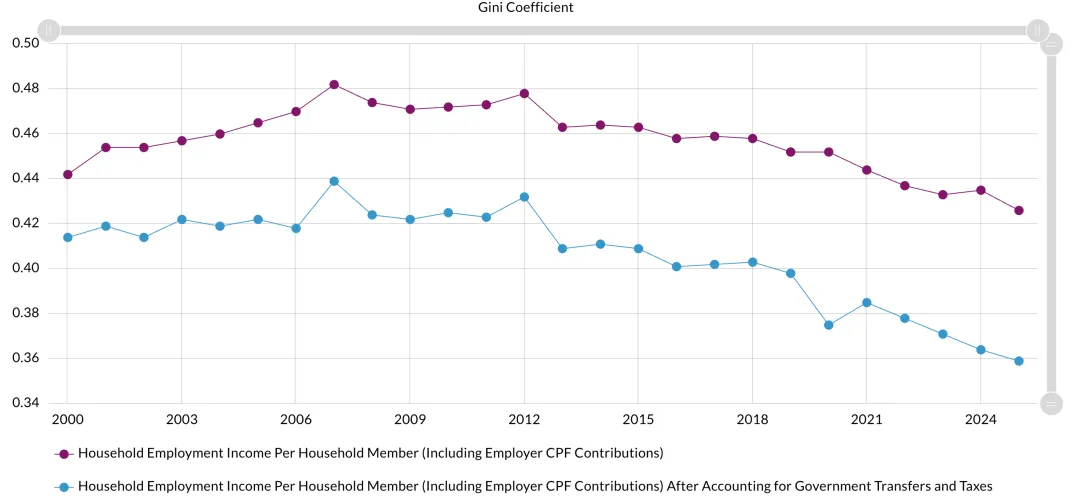
图1 新加坡基尼指数(https://tablebuilder.singstat.gov.sg/table/CT/17892)
二、金融危机的短期影响
1997—1998年亚洲金融危机削弱了新加坡主要贸易伙伴的购买力,外部需求和出口随之收缩。周边国家货币相对新加坡元大幅贬值,又削弱了新加坡商品的区域竞争力。
1998年,新加坡总贸易额下降7.5%,石油出口下降15.8%。由于劳动需求来自产品需求,出口减少迫使企业裁员、缩短工时或压低工资,而就业稳定性较弱的低技能劳动者受到的冲击更大。
失业人数由1997年的34,800人增至1998年的62,800人;收入最低10%居民的平均收入则由327新元降至258新元,跌幅约21%。因此,危机在短期内明显拉低了底层收入,并扩大了收入差距。
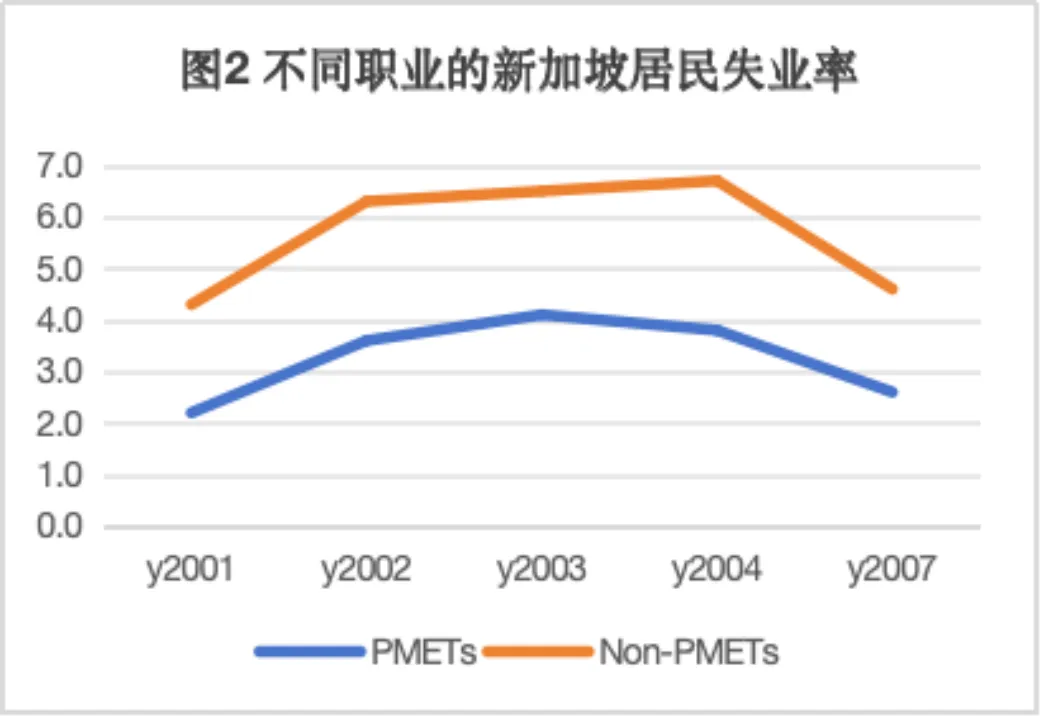
*PMET:专业人员、经理、行政/执行人员和技术人员
*本文以PMET和Non-PMET作为不同职业技能要求的近似分类,不能与高技能和低技能完全画等号;并且数据从2001年开始,没有涵盖1997-2000年
(https://data.gov.sg/datasets/d_11a640f1e61c1a680efeac8c775cdcb5/view)
三、产业转型的长期影响
然而,金融危机无法完全解释此后持续扩大的收入差距。危机还加快了新加坡的产业升级,并给劳动力市场带来新的挑战。
90年代初,新加坡通过国家科技计划和“产业21”,推动经济由劳动密集型制造业转向研发、金融及高附加值服务业。高技能劳动需求增加,抬高了相关岗位的工资;低技能岗位则逐渐减少,部分劳动者因技能不匹配而陷入结构性失业。
同时,低技能外来劳动力增加了低薪岗位的竞争。1998—2003年制造业就业下降、服务业就业上升,也说明就业并非只在数量上减少,而是在产业与技能结构上重新分配。例如Seagate于1999年裁减约1,600个新加坡岗位,并提出建立“规模更小、技术技能更强”的员工队伍,正反映企业重组对岗位技能结构的影响。
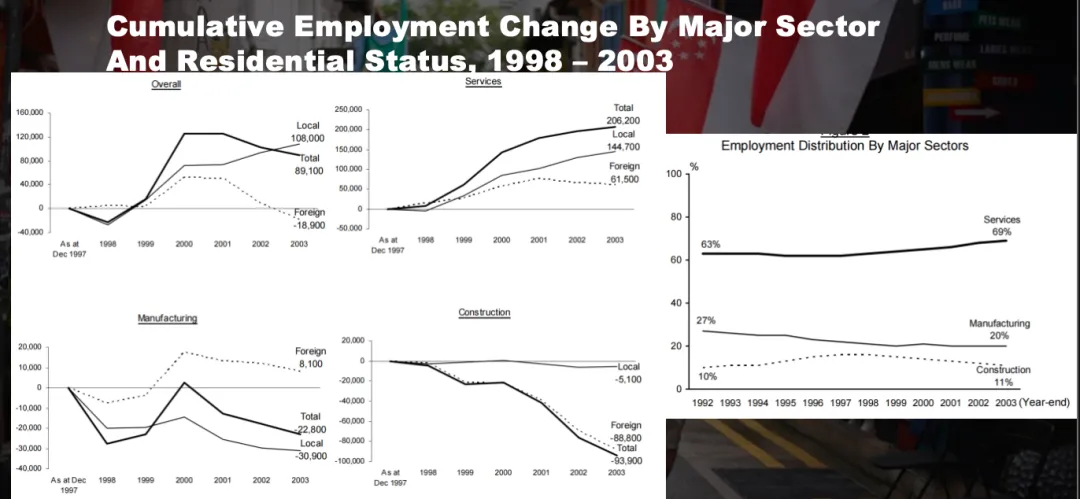
图3:12/1997-2003年新加坡主要行业及居民身份的累计就业变动(https://stats.mom.gov.sg/iMAS_PdfLibrary/mrsd-Employment-Trend-Structure.pdf)
四、政策评价
1997—2002年间,政府主要通过降低企业成本、补贴和职业培训稳定经济与就业。相关措施有助于企业渡过危机,却难以同时解决低收入家庭的即时困难与长期技能不匹配。
1999年的Manpower 21虽推动培训,但培训见效需要时间,部分低技能劳动者也难以迅速进入高附加值岗位;降低企业成本亦不保证企业保留低技能职位。
因此,虽然政策较重视提升长期竞争力,却缺少足够及时、精准的收入支持与岗位衔接。2007年后的工资补贴及持续培训,可视为对此的进一步回应。
五、结论
综上,金融危机是收入不平等扩大的导火索,产业升级下的技能溢价与劳动者技能错配则使差距长期存在。
政府既应通过针对性现金援助和工资支持来缓解低收入家庭的短期收入压力,同时加强再培训、岗位匹配和企业招聘激励,帮助劳动者适应产业转型。
其余参考来源:
Chew, V. (2025, October 27). Asian financial crisis (1997–1998). Singapore Infopedia. https://www.nlb.gov.sg/main/article-detail?cmsuuid=6a94eaac-75ec-41ff-b5ef-38154ccae4e0
Chung, C. (2026, February 19). Managing inflation in Singapore. Maxthon Blog. https://blog.maxthon.com/2026/02/19/managing-inflation-in-singapore/
Employment (Revised Wage Guidelines) Notification 1998, S 617/1998 (Sing.). https://sso.agc.gov.sg/SL/S617-1998?ProvIds=Sc-
Inland Revenue Authority of Singapore. (n.d.-a). Wage Credit Scheme (WCS) factsheet [Fact sheet]. https://www.iras.gov.sg/docs/default-source/media-releases/annex-a-wage-credit-scheme-(wcs)-factsheet.pdf
Inland Revenue Authority of Singapore. (n.d.-b). Wage Credit Scheme (WCS) FAQs [Fact sheet]. https://www.iras.gov.sg/media/docs/default-source/uploadedfiles/pdf/annex---wage-credit-scheme-(wcs)-faqs.pdf?sfvrsn=1445fd34_2
International Monetary Fund Staff. (1998, June). The Asian crisis: Causes and cures. Finance & Development, 35(2). https://www.imf.org/external/pubs/ft/fandd/1998/06/imfstaff.htm
Investing.com. (n.d.). Singapore dollar to U.S. dollar exchange rate (SGD/USD) [Data set]. https://cn.investing.com/currencies/sgd-usd
Macrotrends. (n.d.-a). Singapore education spending. https://www.macrotrends.net/global-metrics/countries/sgp/singapore/education-spending
Macrotrends. (n.d.-b). Singapore exports. https://www.macrotrends.net/global-metrics/countries/sgp/singapore/exports
Macrotrends. (n.d.-c). Singapore immigration statistics. https://www.macrotrends.net/global-metrics/countries/sgp/singapore/immigration-statistics
Macrotrends. (n.d.-d). Singapore youth unemployment rate. https://www.macrotrends.net/global-metrics/countries/sgp/singapore/youth-unemployment-rate
McAdam, P., & Willman, A. (2018). Unraveling the skill premium. Macroeconomic Dynamics, 22(1), 33–62. https://doi.org/10.1017/S1365100516000547
Ministry of Finance. (n.d.). Budget archives. https://www.singaporebudget.gov.sg/budget_archives
Ministry of Finance. (2026, July 14). Goods and Services Tax. https://www.mof.gov.sg/policies/taxes/goods-and-services-tax/
Ministry of Manpower. (n.d.). Ministry of Manpower. https://www.mom.gov.sg/
Ministry of Manpower. (2026, July 24). Progressive Wage Model for the cleaning sector. https://www.mom.gov.sg/employment-practices/progressive-wage-model/cleaning-sector
Radelet, S., & Sachs, J. D. (1998). The East Asian financial crisis: Diagnosis, remedies, prospects. Brookings Papers on Economic Activity, 1998(1), 1–90. https://doi.org/10.2307/2534670
Sachs, J. D. (n.d.). Malaysia’s structural economic change: Past, present, and future. Economic History of Malaysia. https://www.ehm.my/publications/articles/malaysias-structural-economic-change-past-present-and-future
Singapore Department of Statistics. (n.d.). Singapore Department of Statistics. https://www.singstat.gov.sg/
Singapore Department of Statistics. (2024, February 7). Key household income trends, 2023 [Report]. https://www.singstat.gov.sg/-/media/files/publications/households/pp-s30.ashx
Statbase. (n.d.-a). GDP: Singapore [Data set]. https://statbase.org/data/sgp-gdp/
Statbase. (n.d.-b). Government expenditure on education, budget share: Singapore [Data set]. https://statbase.org/data/sgp-education-expenditure-budget-share/
World Bank. (n.d.-a). Unemployment, total (% of total labor force) (modeled ILO estimate)—Singapore [Data set]. https://data.worldbank.org/indicator/SL.UEM.TOTL.ZS?locations=SG
World Bank. (n.d.-b). Unemployment, total (% of total labor force) (national estimate)—Singapore [Data set]. https://data.worldbank.org/indicator/SL.UEM.TOTL.NE.ZS?locations=SG
World Inequality Database. (n.d.). Singapore [Data set]. https://wid.world/country/singapore/
World Integrated Trade Solution. (n.d.). Singapore trade summary 1998 [Data set]. World Bank. https://wits.worldbank.org/CountryProfile/en/Country/SGP/Year/1998/Summarytext
编辑:姚书艺
责编:赵嵩