

(文末中文)
Austria First Half 2026: Electrification Wave Reshapes the Landscape, Chinese Brands on the Verge of a Breakthrough
In the first half of 2026, Austria's new car market performed strongly, with cumulative sales of 164,529 units, up 15% year-on-year. June alone saw 34,256 units sold, a sharp 22.9% increase – the highest for the month in recent years. At the core of this market expansion is electrification , which has also provided an unprecedented window for Chinese brands to break through.
⚡ I. Electrification: Reaching the Tipping Point, Reshaping Market Rules
Austria's electrification process underwent a qualitative shift in the first half of 2026. In June, BEV registrations reached 8,993 units, up 44% year-on-year, with market share breaking through 26% for the first time – hitting a record 26.3% . For the first half, BEV share stood at 24.3%, while traditional petrol (24.6%) and diesel (9.8%) shares continued to contract.
An even more telling signal: BEV registrations in Austria are now roughly on par with petrol cars – electrification has moved beyond the "early adopter" phase and entered the heart of the mass market. BEVs are becoming a mainstream consumer choice, not a policy‑driven niche option – a structural shift that provides Chinese brands with an unprecedented growth window.
? II. Brand Landscape: Traditional Forces Diverge, BYD Enters BEV Top Four
In the first‑half brand rankings, the Volkswagen Group still holds the top spot, but the landscape is loosening:
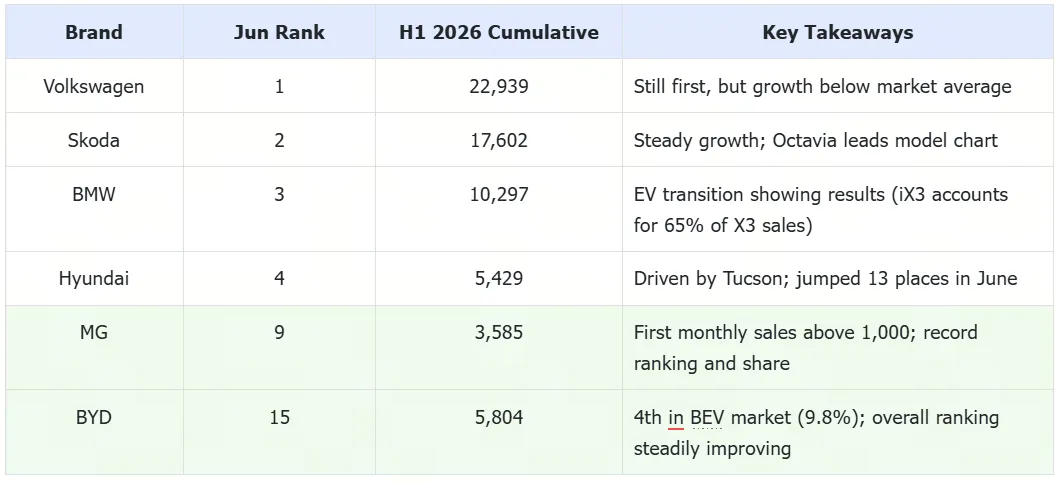
MG's historic breakthrough: In June, MG jumped to 9th place with 1,301 units and a 3.8% share – its first month over 1,000 units. This marks a significant step for a Chinese brand into the Austrian mainstream.
BYD's "BEV‑first" strategy: Though 15th overall, BYD ranked 4th among Austrian BEV brands in the first half, behind only Tesla, Skoda and BMW. In the BEV segment, BYD has already entered the first tier.
? III. Model Highlights: Chinese Brands Break into the Top Ranks for the First Time
June's model rankings showed several key shifts:
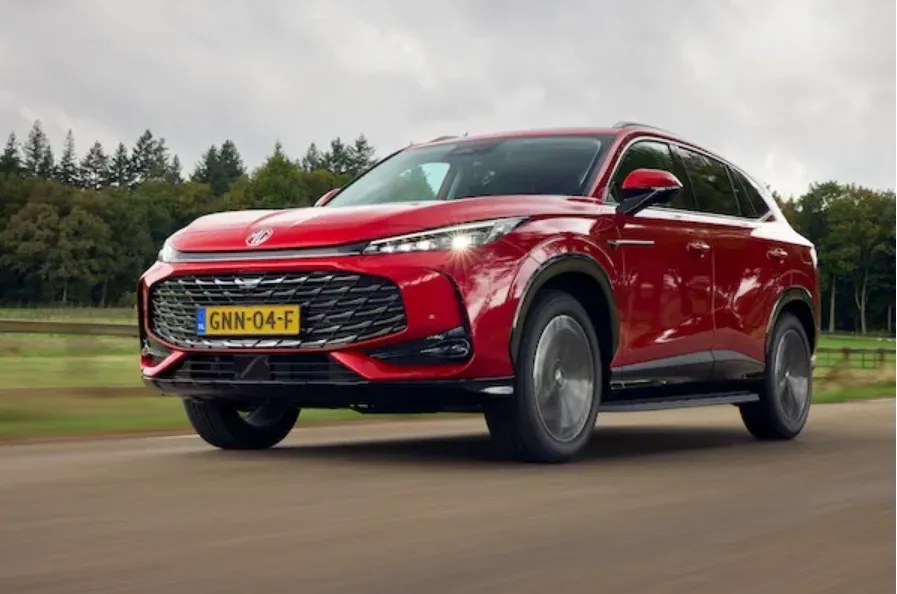
MG HS jumps to fourth: This is the highest ranking ever for a Chinese‑brand model in Austria. With a 510.1% year‑on‑year surge, the MG HS entered the top 20 for the first time and landed directly in fourth place – overtaking the BMW X3 and VW Golf.
BYD Seal holds 13th: Up 131.1% year‑on‑year, the Seal has remained in the top 15 for several consecutive months, showing stable market acceptance.
Hyundai Tucson jumps on electrification: After launching a new plug‑in hybrid version, the Tucson leapt from outside the top 20 in May to second place in June – proving the boost electrification brings to product competitiveness.
? IV. Drivers: Policy, Demand and Product Resonate Together
Policy certainty: The Austrian government extended EV purchase subsidies, giving consumers a clear price signal. Meanwhile, "fleet users" accounted for 64.2% of registrations, with BEVs making up 34% of that figure – a large and stable B‑side demand base supporting the EV market.
Structural shift in consumer demand: Austrian consumer acceptance of EVs has risen significantly. BEV share rapidly approaching petrol share shows that EVs are moving from a "policy‑driven alternative" to a "priority choice for mainstream consumption."
Chinese brands' product breakthrough: The MG HS and BYD Seal prove that Chinese brands can now compete with European local brands in design, performance and intelligence – no longer relying solely on a "low‑price strategy."
? V. Outlook: From "Made in China" to "Smart Made in China"
Austria's market evolution offers three key takeaways for Chinese brands:
Electrification is the best track for Chinese brands to overtake: In the BEV segment, BYD is already in the top four, and brand recognition is building quickly. As EVs become the mainstream choice, Chinese brands' technological strengths will translate into sustained market advantage.
Product and brand must rise together: The MG HS's breakthrough proves that Chinese brand products can compete in the mainstream. The next step is to complete the brand transition from "value pick" to "mainstream choice" through consistent quality and reputation building.
Austria is a "litmus test" for the European market: As a core German‑speaking market, Austrian consumers' high standards for quality and technology make it a key battleground for Chinese brands seeking to establish a European foothold.
The rise of Chinese brands in Austria may signal that a deeper restructuring of the entire European market is accelerating.
电动化浪潮重塑格局,中国品牌突破在即
2026年上半年,奥地利新车市场表现强劲,累计销量164,529辆,同比增长15%。其中6月单月销量34,256辆,同比大涨22.9%,创下近年来的同期新高。在这一轮市场扩张中,电动化是最核心的驱动力,也为中国品牌的突围提供了前所未有的契机。
⚡ 一、电动化:突破临界点,改写市场规则
奥地利市场的电动化进程在2026年上半年迎来了质变。6月,纯电动车(BEV)单月注册量达8,993辆,同比增长44%,市场份额首次突破26%,达到26.3%的历史新高。从上半年的累计数据来看,BEV市场份额已达24.3%,而传统汽油车(24.6%)与柴油车(9.8%)的份额正在持续萎缩。
一个更值得关注的信号是:奥地利BEV注册量已与汽油车基本持平,这意味着电动化已跨越“早期采用者”阶段,正式进入大众市场的核心地带。
BEV成为主流消费选择,而非政策驱动的边缘选项——这一结构性转变,为中国品牌提供了前所未有的增长窗口。
? 二、品牌格局:传统势力分化,比亚迪跻身BEV前四
上半年品牌排名中,大众集团仍居主导,但格局正在松动:
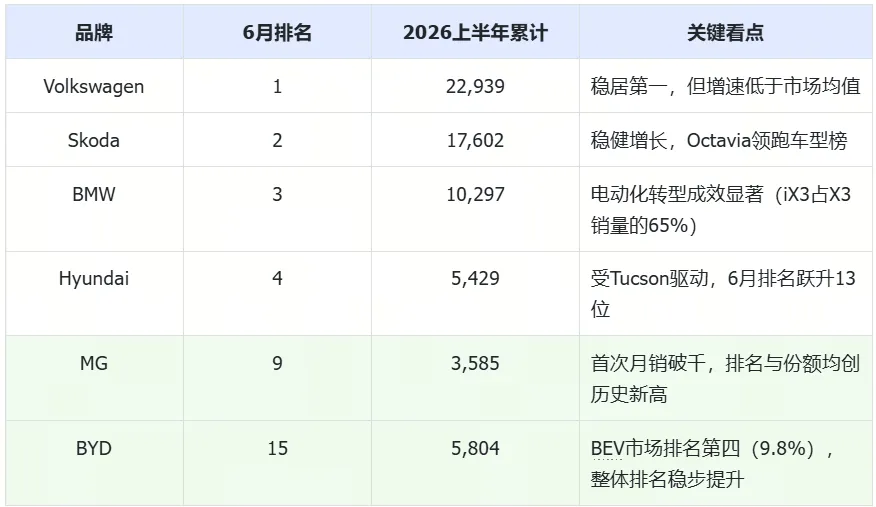
MG的历史性突破:6月,MG以1,301辆、3.8%的份额跃升至品牌第九位,首次月销破千。这一成绩标志着中国品牌在奥地利市场已具备跻身主流阵营的实力。
比亚迪的“BEV先行”策略:虽然整体排名暂居第15,但上半年比亚迪以9.8%的份额位列奥地利BEV品牌第四,仅次于特斯拉、斯柯达和宝马。在纯电细分市场,比亚迪已进入第一梯队。
? 三、车型亮点:中国品牌首次跻身前列
6月车型榜单呈现了几个关键变化:
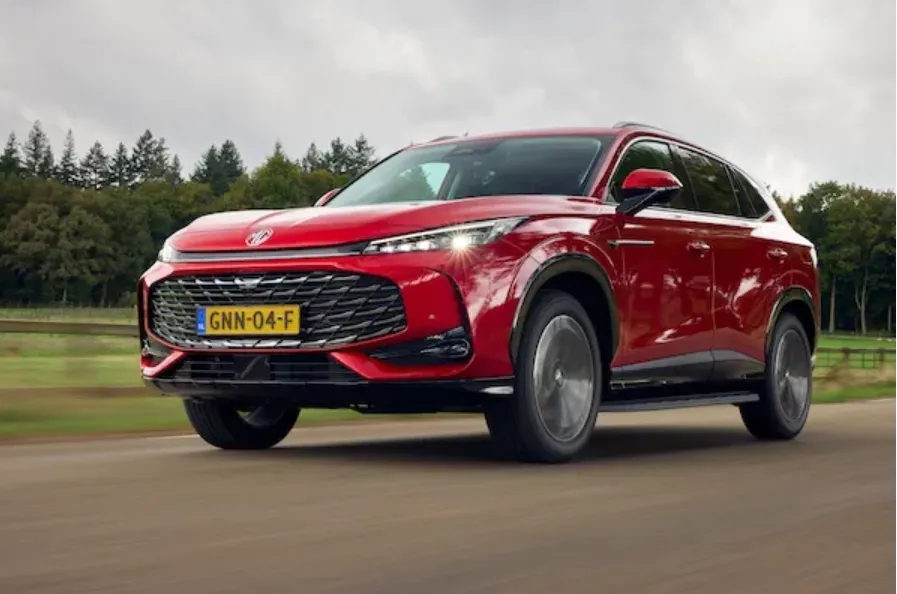
MG HS跃升至第四位:这是中国品牌车型在奥地利市场取得的历史最高排名。MG HS凭借510.1%的同比增长,首次进入车型前20便直接登上第四位,超越了宝马X3和大众高尔夫等传统劲旅。
比亚迪Seal稳居第13位:比亚迪Seal同比增长131.1%,连续多月位列车型前15,展现出稳定的市场接受度。
Hyundai Tucson因电动化跃升:新款插混版本推出后,Tucson从5月的前20之外直接跃升至6月的车型第二位,证明电动化对产品竞争力的提升作用。
? 四、驱动力分析:政策、需求与产品三力共振
政策端的确定性支撑:奥地利政府延续了电动车购置补贴政策,为消费者提供了明确的价格信号。同时,企业车队等“单位用户”占比达64.2%,其中BEV占比高达34%,这一庞大且稳定的B端需求,已成为支撑电动车市场的重要基石。
消费需求的结构性转向:奥地利消费者对电动车的接受度已显著提升。BEV市场份额快速逼近汽油车,表明电动车已从“政策驱动的备选方案”转变为“主流消费的优先选项”。
中国品牌的产品力突破:MG HS与比亚迪Seal的突破,证明中国品牌已在设计、性能与智能化层面具备了与欧洲本土品牌同台竞技的能力,不再是单纯依赖“低价策略”。
? 五、展望:从“中国制造”到“中国智造”的跨越
奥地利市场的演变,为中国品牌提供了三个关键启示:
电动化是中国品牌“弯道超车”的最佳赛道:在BEV细分市场,比亚迪已跻身前四,品牌认知正在快速建立。当电动车成为消费主流,中国品牌的技术积累将转化为持续的市场优势。
产品力与品牌力需同步提升:MG HS的榜单突破证明,中国品牌的产品已具备冲击主流市场的能力。下一步的关键在于通过持续的品质与口碑积累,完成从“性价比之选”到“主流之选”的品牌跃迁。
奥地利是欧洲市场的“试金石”:作为德语区核心市场之一,奥地利消费者对品质与科技的严格要求,使其成为检验中国品牌能否在欧洲站稳脚跟的重要战场。中国品牌在奥地利的崛起,可能预示着整个欧洲市场格局的深层重构正在加速到来。