阅读原文,请点击文末“阅读原文”?
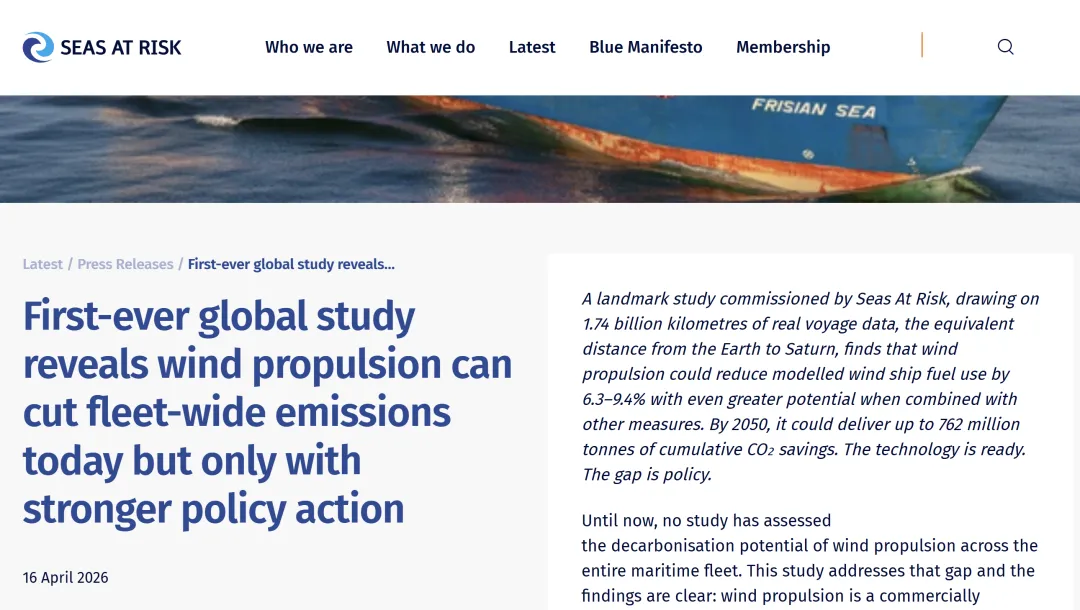
First-ever global study reveals wind propulsion can cut fleet-wide emissions today but only with stronger policy action
16 April 2026
Key findings
Significant, well-evidenced savings: Drawing on 1.74 billion km of real voyage data, wind propulsion can cut modelled wind-fleet-wide fuel use by 6.3–9.4%. These are conservative estimates; the true potential is greater when operational optimisation is applied, such as weather routing, slow steaming, hull optimisation for newbuild vessels and primary wind designs.
Bulk carriers and tankers first: The top 16% of vessels, predominantly bulk carriers and tankers, deliver 50% of total emissions savings. Targeted policy support for these ship types can unlock disproportionate near-term gains.
Reducing pressure on future fuel supply chains: Every tonne of fuel avoided through wind propulsion eases constraints on scarce e-fuel production, supports a more equitable transition, and allows renewable electricity to serve priority uses first.
Policy is the bottleneck, not technology: Without stronger incentives, wind propulsion delivers only 0.2% emissions reduction by 2050. The IMO’s Net-Zero Framework must reward real, early reductions and limit the use of trading mechanisms as a substitute for genuine progress. At the same time, strengthening/tightening the Carbon Intensity Indicator (CII) is critical to encourage the installation of wind assisted propulsion systems
Waiting is not a strategy: Decarbonisation goals set out in the International Maritime Organization (IMO)’s greenhouse gas strategy are coming up fast: 30% emission reduction by 2030, 80% by 2040 and fully decarbonised by 2050. Most ships operating in the 2030s are already in service. Retrofitting them now builds skills, supply chains, and momentum while locking in real cumulative reductions during the critical decade ahead. It also directly supports the IMO’s commitment of at least 5% – striving for 10% – uptake of zero or near zero emission technologies, fuels and energy sources by 2030.
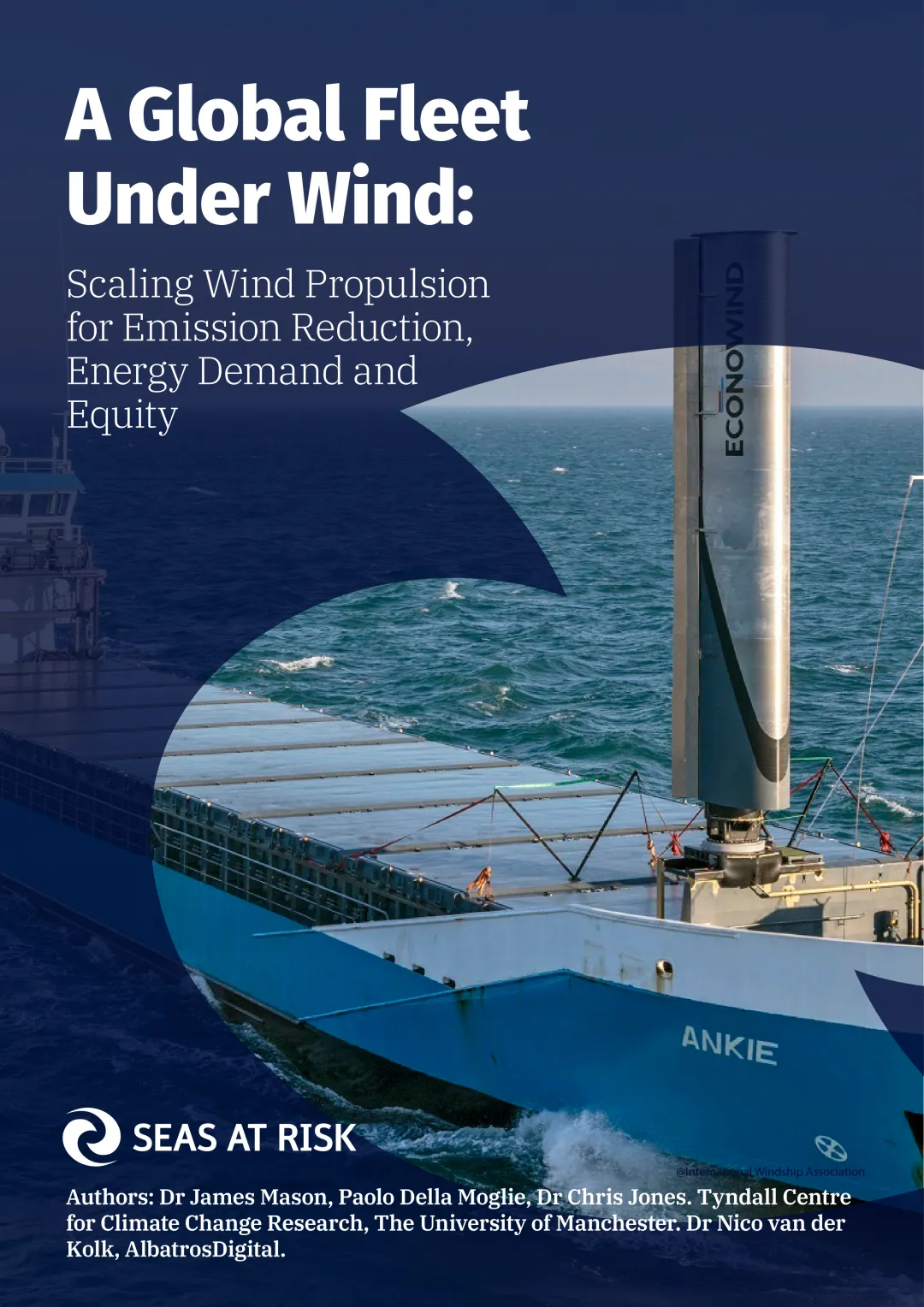
***
风力推进技术当下即可削减船队排放,但需更强有力的政策支持
2026年4月16日
主要发现
显著且有充分证据的节省效果:基于17.4亿公里的真实航行数据,风力推进可使模拟的全球风力船队燃料使用量减少6.3%–9.4%。这是保守估计;若结合运营优化(如气象定线、低速航行、新造船船体优化及原生风力设计),实际潜力更大。
散货船和油船优先:排名前16%的船舶(主要是散货船和油船)贡献了总减排量的50%。针对这些船型提供政策支持,可以在短期内释放不成比例的收益。
减轻未来燃料供应链压力:通过风力推进节省的每一吨燃料,都能缓解稀缺的电制燃料生产压力,支持更公平的转型,并让可再生电力优先用于关键领域。
政策是瓶颈,而非技术:若无更强有力的激励措施,到2050年风力推进仅能实现0.2%的减排。IMO的"净零框架"必须奖励真实的、早期的减排,并限制使用交易机制替代实质性进展。同时,加强/收紧碳强度指标(CII)对于鼓励安装风力辅助推进系统至关重要。
等待不是策略:国际海事组织(IMO)温室气体战略中设定的脱碳目标正在快速逼近——到2030年减排30%,到2040年减排80%,到2050年完全脱碳(编者注:与战略原文有出入)。大多数在2030年代运营的船舶已经投入使用。现在进行改装,可以在未来关键的十年中积累技能、供应链和动力,同时锁定真正的累积减排量。这也直接支持IMO的承诺:到2030年,零或近零排放技术、燃料和能源的使用比例至少达到5%,力争达到10%。
***
本公众号所载内容为原创或来源于研究机构报告、官方网站动态新闻等整理、翻译与转载,转载内容版权归原作者所有,如涉及作品内容、版权或其他问题,请与本公众号联系。转载内容不代表本公众号的观点。本公众号拥有对此声明的最终解释权。 |
***凡事多躬行,莫做纸上兵***