


Table of Contents(目录)
1.Introduction & Objectives(引言与目标)
2.Methodology & Sample(研究方法与样本)
3.Key Findings(主要发现)
4.Implications & Conclusion(启示与结论)


1. Introduction & Objectives
(引言与目标)

Research Purpose: Closing the Student-Trip Evidence Gap(研究目的:填补学生旅游的证据空白)
Objective 1: Behavioral Baseline Construction(目标 1:构建行为基线)
This study aims to construct a behavioral baseline by examining graduate students' destination preference formation, digital-channel reliance, price-sensitivity parameters, and amenity priorities.
本研究旨在通过考察研究生的目的地偏好形成、数字渠道依赖度、价格敏感度参数及设施优先级,构建研究生旅游行为基线。
Objective 2: Stakeholder-Oriented Insights
(目标 2:面向利益相关者的洞见)
The derived indicators are intended to provide references for universities designing extracurricular travel activities, Online Travel Agencies (OTAs) calibrating student-centric product inventories, and scenic spots upgrading youth-friendly infrastructure.
研究得出的指标旨在为设计课外出行活动的高校、校准学生导向型产品清单的在线旅游平台(OTA)以及升级青年友好型基础设施的景区提供参考。

2. Methodology & Sample
(研究方法与样本)

Cross-Sectional Survey: Instrument & Sampling Frame(横断面调查:工具与抽样框架)
Survey Instrument(调查工具)
A 14-item structured questionnaire was adopted, integrating nominal variables, Likert-scale items, and open-ended questions, covering socio-demographic characteristics, prior travel frequency, destination imagery, information-search modalities, expenditure sensitivity, and amenity salience.
采用包含 14 个条目的结构化问卷,整合了名义变量、李克特量表和开放式问题,涵盖社会人口统计学特征、过往旅行频率、目的地意象、信息搜索方式、支出敏感度及设施重要性。
Sampling Frame(抽样框架)
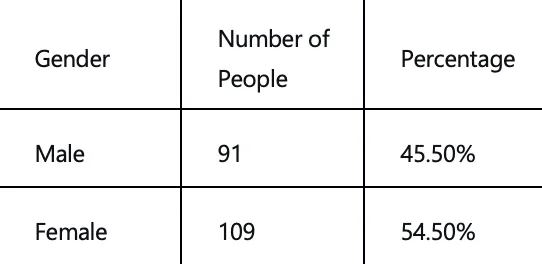
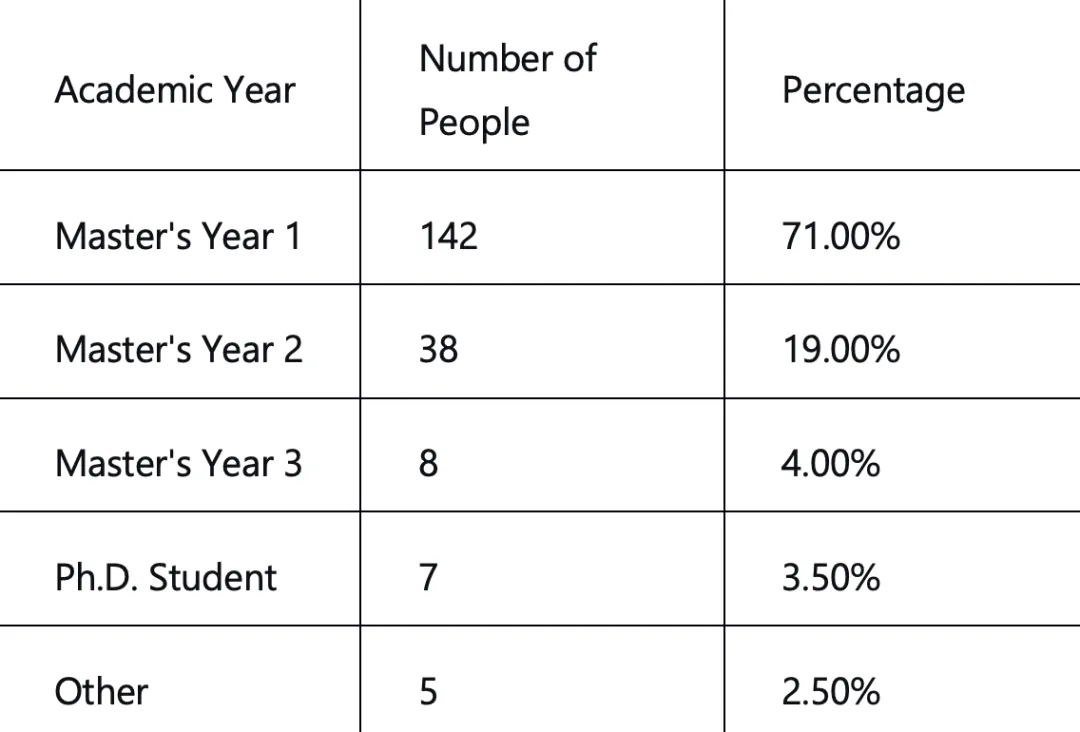
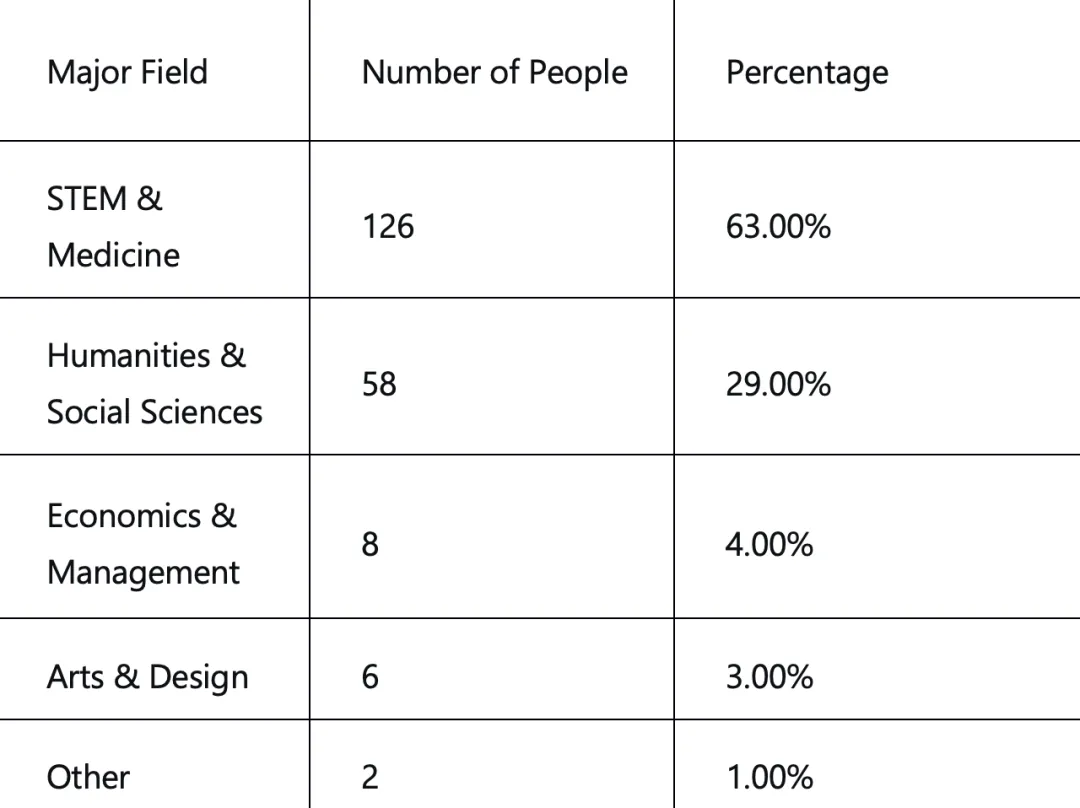
The questionnaire was distributed via campus networks and on-site intercepts. After data cleaning, 200 valid samples were retained, ensuring representativeness for analysis.
通过校园网络和现场拦截法发放问卷,数据清洗后保留 200 份有效样本,确保分析具有代表性。
Data Analysis(数据分析)
Descriptive statistics were conducted using SPSS v29 to calculate central tendencies and dispersion, laying an empirical foundation for subsequent interpretation.使用 SPSS v29 进行描述性统计,计算集中趋势和离散程度,为后续解读奠定实证基础。
Sample Demographics: Gender, Grade & Discipline(样本人口统计学特征:性别、年级、专业)

3. Key Findings(主要发现)

Finding 1: Natural & Cultural Attractions Dominate Preferences(发现 1:自然与人文景点占主导偏好)
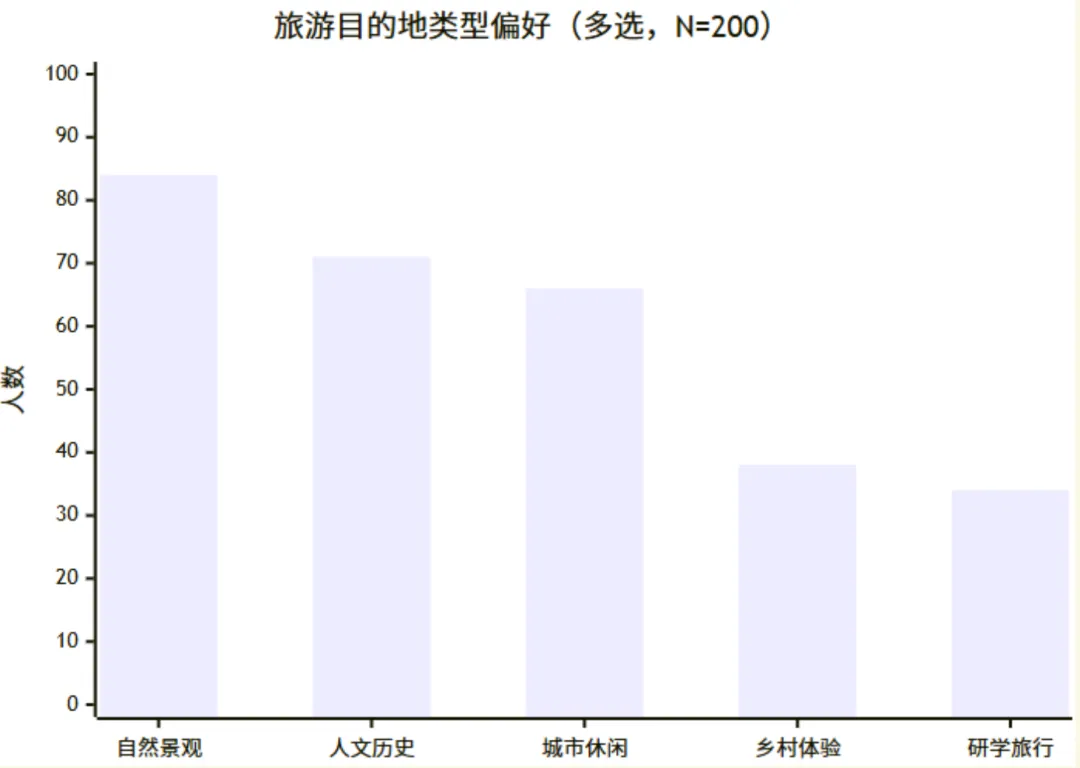
When asked about preferred destination types, 42% opted for natural landscapes, 35.5% chose cultural heritage sites, 33% selected urban leisure spots, and the remaining preferred rural experiences, study tours, etc.
当被问及偏好的目的地类型时,42% 的受访者选择自然景观,35.5% 选择人文历史遗址,33% 选择城市休闲场所,其余受访者偏好乡村体验、研学旅行等。
This indicates that graduate students simultaneously pursue psychological relaxation and cultural enrichment.
这表明研究生群体同时追求心理放松与文化体验的双重需求。
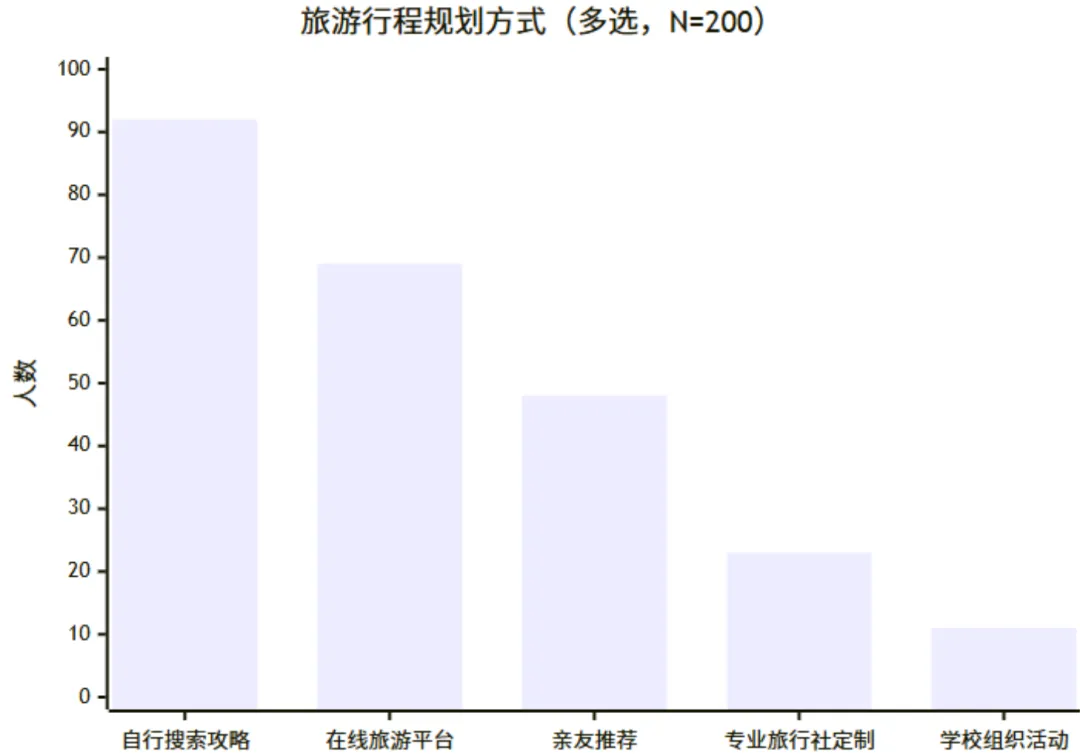
Finding 2: Digital Platforms Mediate Itinerary Construction(发现 2:数字平台主导行程规划)
Distribution of graduate students' itinerary planning methods shows that 46% relied on social content apps for self-directed information retrieval, 34.5% finalized bookings through online travel agencies, only 11.5% considered custom travel services from professional agencies, and the remaining relied on recommendations from relatives/friends or school-organized activities.
研究生行程规划方式的分布情况为:46% 依赖社交内容应用自行搜索攻略,34.5% 通过在线旅游平台完成预订,仅 11.5% 考虑专业旅行社的定制旅游服务,其余受访者依赖亲友推荐或学校组织的活动。
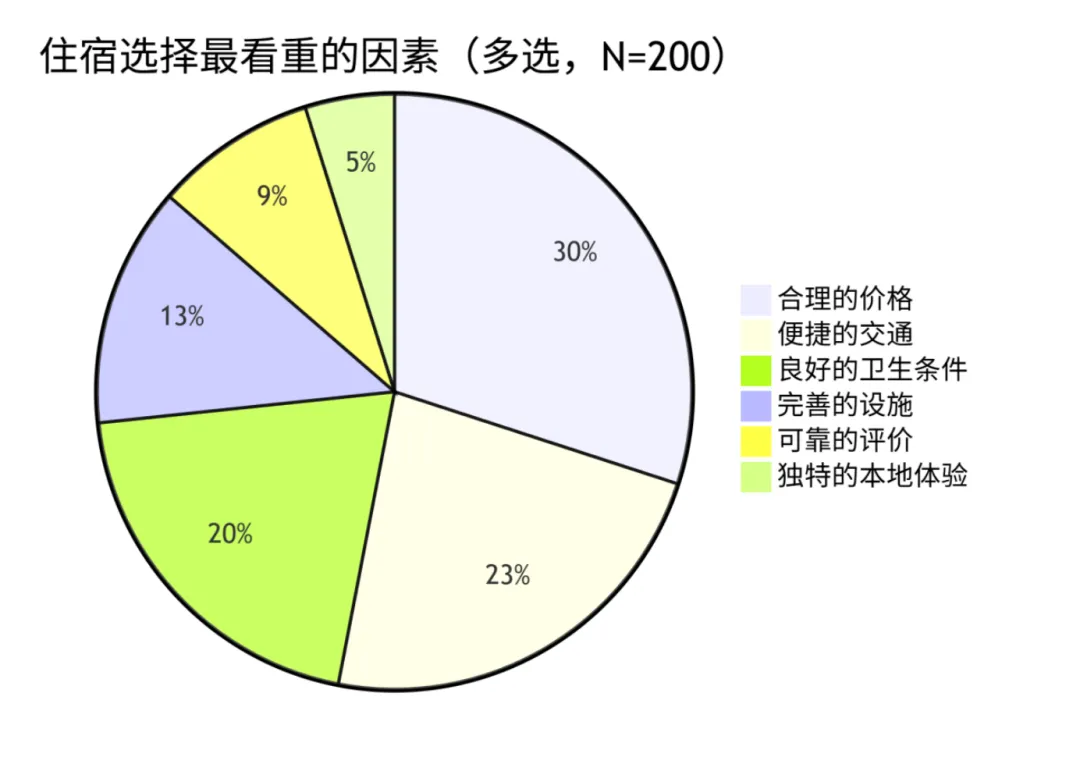
Finding 3: Price Elasticity Constrains Expenditure(发现 3:价格弹性约束支出)
Top considerations for accommodation selection (sorted by percentage) are: reasonable price (30%, primary factor), good hygiene conditions (23%), reliable reviews (20%), convenient transportation (13%), complete facilities (9%), and unique local experiences (5%).
住宿选择的核心考量因素(按占比排序)为:合理的价格(30%,首要因素)、良好的卫生条件(23%)、可靠的评价(20%)、便捷的交通(13%)、完善的设施(9%)以及独特的本地体验(5%)。
This reflects strong budget rigidity among graduate students.
这一结果反映出研究生群体存在较强的预算刚性。
4. Implications & Conclusion
(启示与结论)

Theoretical Contribution(理论贡献)
This study enriches youth tourism literature by quantitatively verifying three core characteristics within the graduate student group: preference dualism, digital dependency, and price sensitivity.
本研究通过定量验证研究生群体中 “偏好二元性”“数字依赖性” 和 “价格敏感性” 三大核心特征,丰富了青年旅游领域的相关文献。
Managerial Implications(管理启示)
For Universities(对高校)
Universities can integrate low-cost short-distance travel modules into transferable-skill curricula to enhance students' practical experience and skill development.
高校可将低成本短途旅行模块融入可转移技能课程,提升学生的实践体验与技能发展。
For Online Travel Agencies (OTAs) & Scenic Managers(对在线旅游平台与景区管理者)
OTAs can deploy student verification algorithms to launch segmented pricing strategies. Scenic spots should prioritize the improvement of functional facilities over investing in spectacular but low-utilization attractions.
在线旅游平台(OTA)可部署学生身份验证算法,推出细分定价策略;景区应优先完善功能性设施,而非投资利用率低的景观类项目。
Conclusion(结论)

This survey converts graduate students' travel behaviors into measurable constructs, providing empirical references for travel product design, platform strategy formulation, and infrastructure investment.
本调查将研究生旅游行为转化为可量化的指标,为旅游产品设计、平台策略制定和基础设施投资提供了实证参考。
Aligning product supply with verified preference orders can transform latent demand into actual consumption.
使产品供给与已验证的偏好顺序对齐,可将潜在需求转化为实际消费。
END

英语小组-第20组
曾可心 251092301026
胡玉双 251092301027
冯怡新 251092301028
伍子骏 250152303025
陈烨宇 250152303027
审核:王亚舟
--第997篇

点赞
收藏
分享